

Best Time of Year to Elope in West Virginia (Seasons, Waterfalls, Foliage & What to Actually Expect)
West Virginia is stunning in every season — and that's not marketing language, it's just the honest truth. The same mountain ridgeline that drips with rhododendrons in June turns into a cathedral of burgundy and gold by October. The same waterfall you photograph in a summer mist becomes a frozen curtain of ice by February. If you're trying to figure out the best time of year to elope in West Virginia, the answer is genuinely personal — and it starts with knowing what each season actually gives you and what it costs you. This guide breaks it all down, season by season, location by location, so you can stop guessing and start picturing your actual day. If you're still in the early stages of planning, start with the full How to Elope in West Virginia guide for the complete picture — permits, legalities, locations, and everything in between.
West Virginia Elopement Seasons at a Glance
Not sure where to start? Here's a quick overview of what each season offers before we dig into the details.
| Season | Months | Highlights | Watch Out For | Best For |
|---|---|---|---|---|
| Spring | March–May | Peak waterfall flow, wildflowers, moody fog, fresh green | Mud, unpredictable temps, wet trails | Waterfall elopements, moody/atmospheric photos |
| Summer | June–August | Lush canopy, rhododendron blooms (June), long days | Humidity, lower waterfall flow, more visitors | Forest immersion, gorge elopements, overnight stays |
| Fall | Sept–Nov | Peak foliage, crisp air, low humidity, golden light | Peak crowds at popular overlooks, booking fills fast | Foliage elopements, Dolly Sods, New River Gorge |
| Winter | Dec–Feb | Frozen falls, snow-covered ridges, total solitude | Road closures, icy trails, limited access | Intimate/moody elopements, Blackwater Falls ice |
Spring Elopements in West Virginia (March–May)
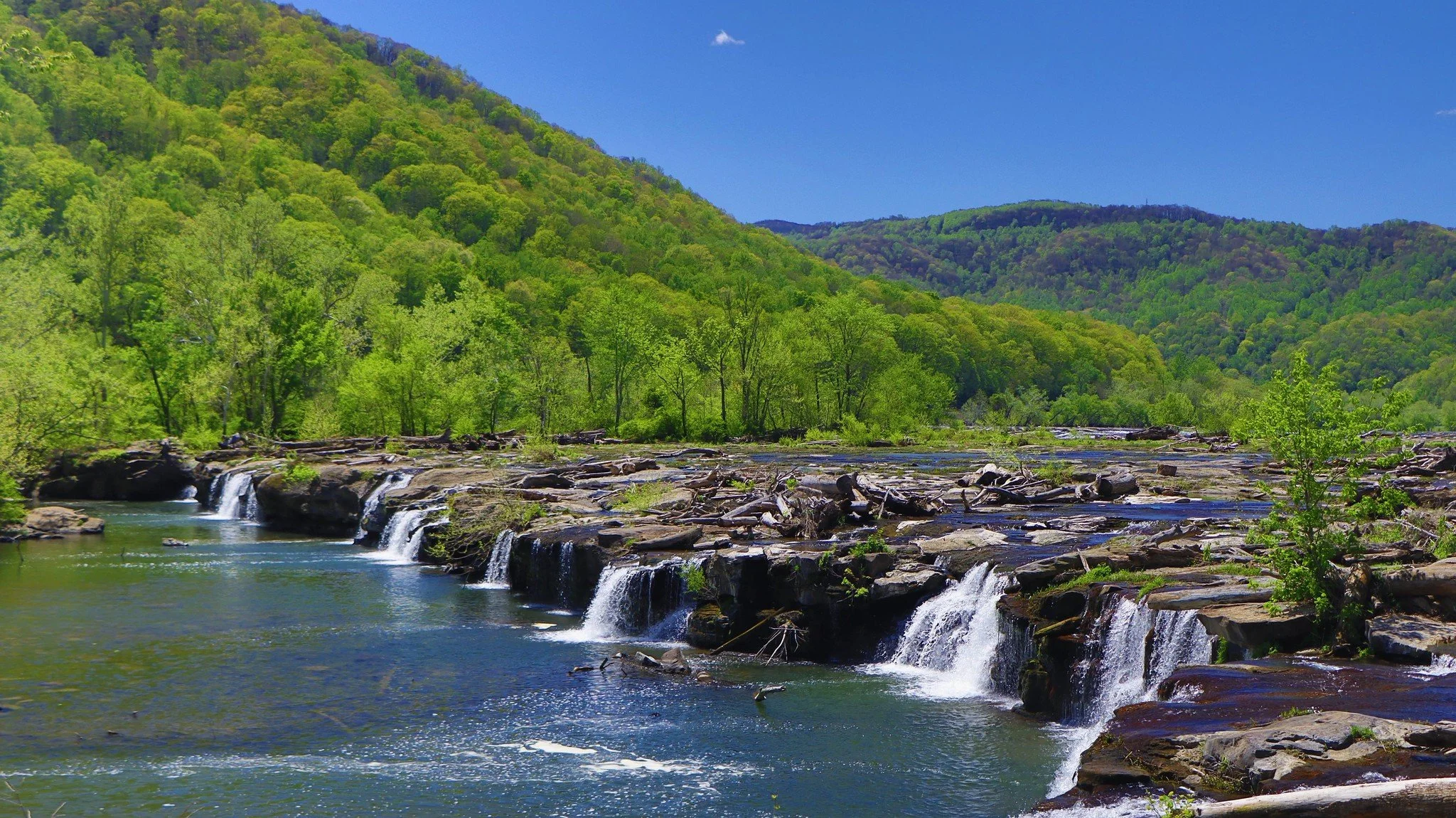
Spring in West Virginia is loud — not in a crowded way, but in a the waterfalls are absolutely thundering way. Snowmelt from the Alleghenies combines with spring rains to push waterfall flow to its annual peak, and the landscape transitions from bare gray winter to the most electric green you've ever seen — sometimes within a matter of weeks.
Why Spring Is Waterfall Season
If a waterfall elopement is at the center of your vision, spring is your season. Every major waterfall in West Virginia — Blackwater Falls, Elakala Falls, Falls of Hills Creek, Swallow Falls — is running at or near full force from late February through May. The mist, the roar, the sheer presence of moving water creates something photographs simply can't fully capture. You feel it in your whole chest. That said, high water also means slippery rocks and potentially flooded lower trail sections, so the hike in matters. We'll plan access accordingly. For a full breakdown of WV's most accessible waterfall spots, see the Waterfall Elopement Locations in West Virginia guide.
Wildflowers and Trillium Season
Late April through mid-May brings trillium, Virginia bluebells, wild geranium, and fire pink blooming across the forest floor — especially in hollows and along creek drainages. New River Gorge's rim trails are known for spring ephemeral wildflowers, and the gorge itself gets a soft, filtered green light as leaves emerge overhead. It's a genuinely different landscape than any other time of year.
What to Expect from the Weather
March is unpredictable — you might get 65°F and sunshine or 35°F and sleet. April stabilizes significantly, with temperatures ranging from the upper 40s to mid-60s at elevation. May is often the sweet spot: warm enough for comfort, cool enough that you won't be overheating during a hike. Rain is frequent in spring, which actually works in favor of dramatic, moody light — overcast skies are a photographer's quiet preference for waterfall sessions. Fog rolls through the hollows and ridgelines in the early morning, and if you're willing to start before 8am, you'll have images that feel like they were made inside a painting.
The One Thing Nobody Warns You About
Mud. WV trails in March and early April can be genuinely sloppy — especially anything with a north-facing aspect that doesn't get full sun. If you're planning a hike-in ceremony, footwear matters more in spring than any other season. Sturdy trail shoes or waterproof boots are the practical call, even if you're wearing a flowy dress over them. We'll always talk through this in planning.
Summer Elopements in West Virginia (June–August)
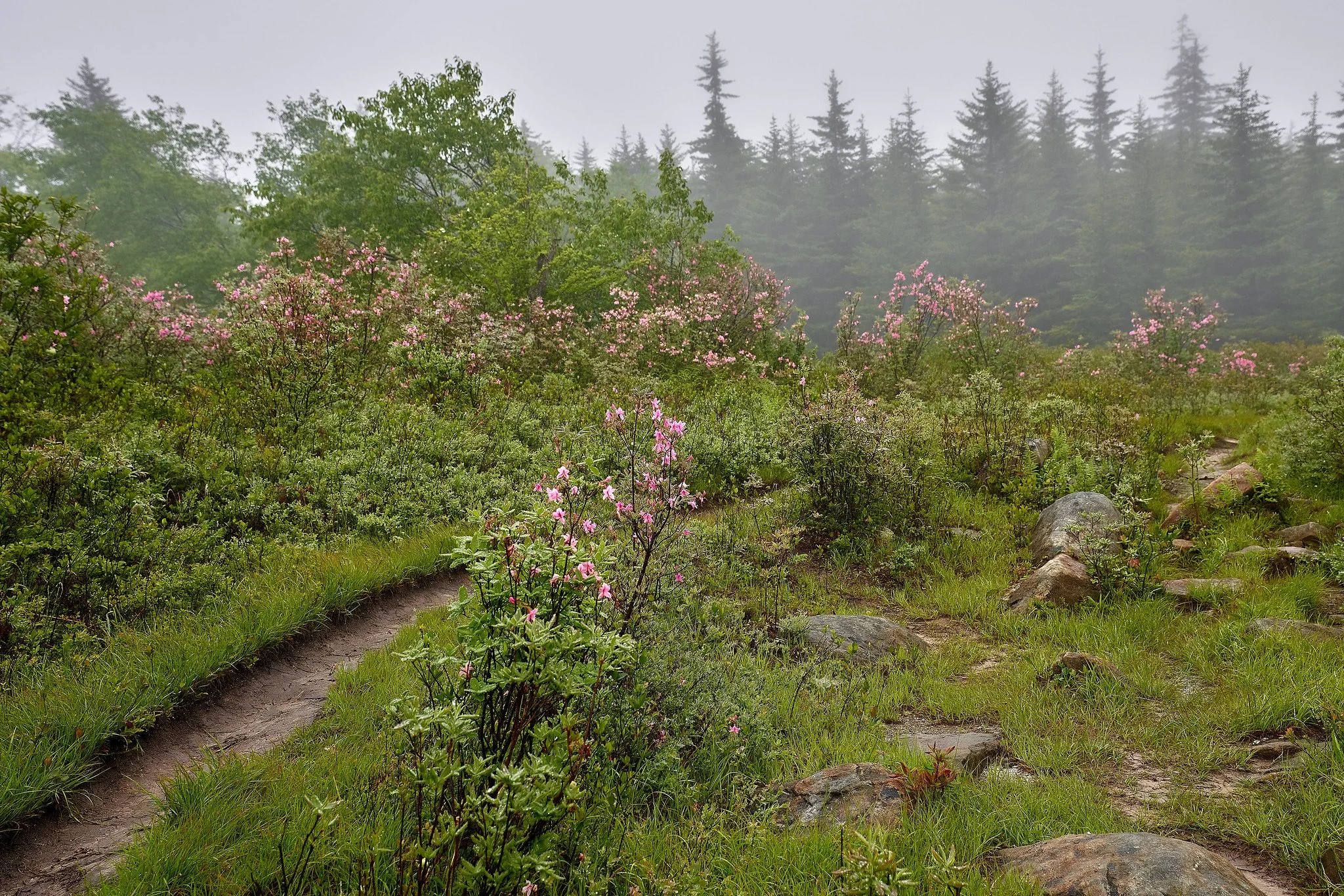
Summer in West Virginia gets underrated. Yes, the humidity at lower elevations can be real — especially July and August in the gorge. But the higher elevations of the Monongahela National Forest and Dolly Sods are a completely different experience: 10–15 degrees cooler than the valley floor, low humidity on most mornings, and a lushness to the landscape that's almost aggressive. Everything is alive and green in a way that feels saturated, like someone turned up the color temperature on the whole state.
Rhododendron Season (Mid-June)
This is one of West Virginia's most underrated natural events. Catawba rhododendron blooms across high-elevation ridgelines in mid-to-late June, turning entire mountainsides into a soft lavender-pink. Dolly Sods and the Spruce Knob area are particularly dramatic. If you time your elopement around peak bloom — typically the second and third weeks of June — you get a backdrop that no other season can replicate. It's fleeting, it's stunning, and it photographs beautifully in both golden-hour warmth and flat overcast light.
Waterfall Flow in Summer
Waterfall flow drops in summer — particularly in August during dry stretches. Blackwater Falls and Elakala will still run, but you won't get the roaring curtains of spring. What you do get is easier access, more consistent trail conditions, and a forest that feels fully alive around you. If the falls themselves are central to your plan, spring is the stronger choice; if the falls are a backdrop and the forest experience is primary, summer is perfectly fine.
Golden Hour Timing in Summer
Sunset in West Virginia in late June runs close to 9pm — which means golden hour starts after 8pm. This shifts the day considerably. If you want that warm directional light, you're not starting your hike at 5pm; you're starting it at 6:30 or 7. This actually works beautifully for full-day coverage: we can do a forest ceremony in soft mid-morning light, spend the afternoon exploring, and end with golden hour somewhere with a long view.
Fall Elopements in West Virginia (September–November)
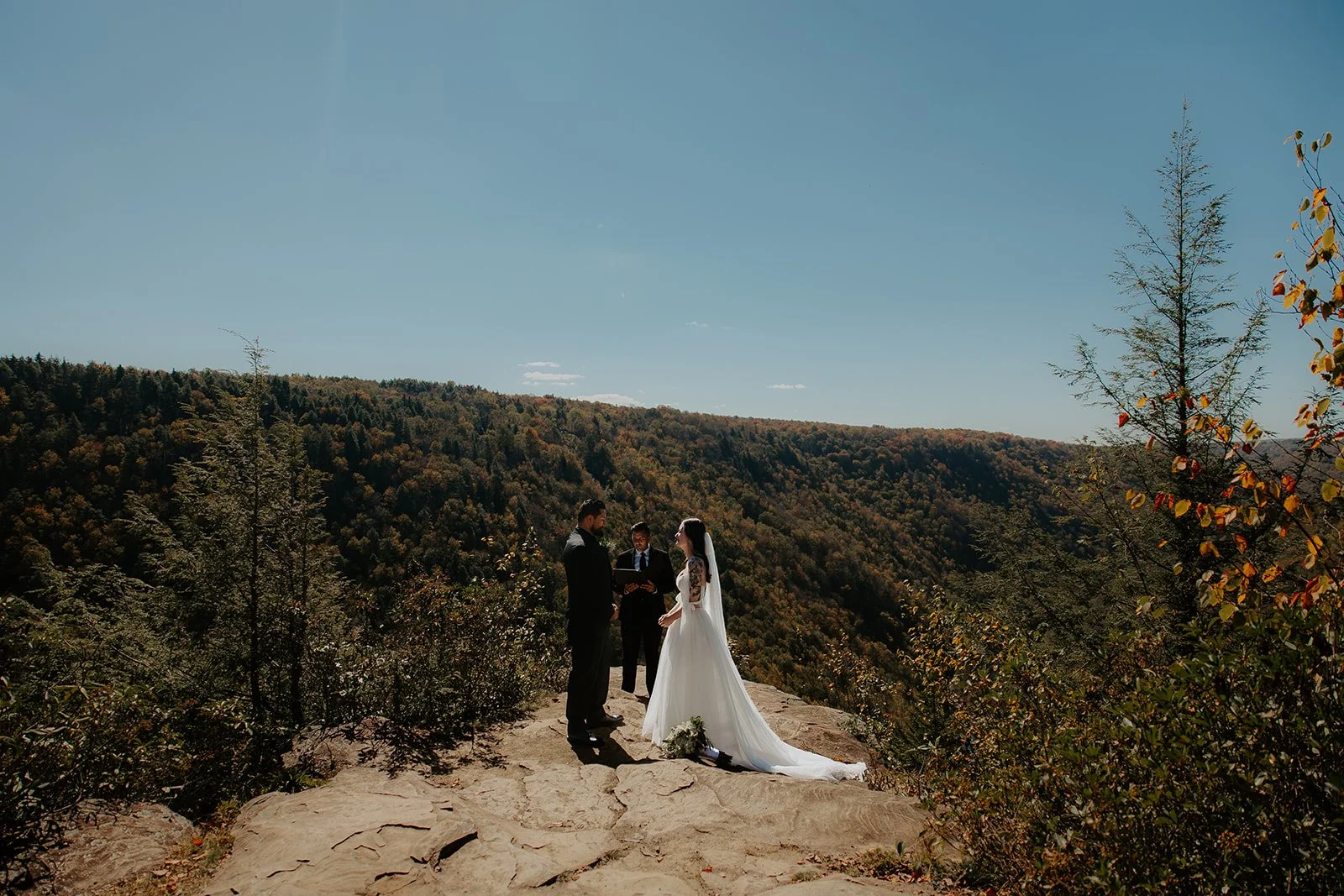
Fall is West Virginia's most requested season — and the reason is obvious the moment you've seen a West Virginia October. The canopy shifts from green to a full-spectrum display of ochre, scarlet, wine, and gold, and the light gets that low, amber quality that makes every photograph look intentional. The air is crisp, the humidity has finally broken, and the crowds at popular overlooks are real but manageable if you're willing to start early or move off the main path.
West Virginia Fall Foliage Timing by Elevation
Foliage in West Virginia is not uniform — it moves from high elevation to low over the course of about six weeks, which means there's a long window to work with if you're flexible on exact dates.
| Location | Elevation | Peak Foliage Window | Notes |
|---|---|---|---|
| Dolly Sods Wilderness | 3,700–4,700 ft | Late September – Early October | Earliest color in WV; open heath barrens turn wine-red |
| Canaan Valley / Blackwater Falls | 3,200–3,500 ft | Early – Mid October | Iconic amber falls + surrounding forest color |
| Monongahela National Forest (Spruce Knob area) | 3,000–4,800 ft | Early – Mid October | Highest point in WV; sweeping ridge views in color |
| New River Gorge | 700–2,000 ft | Mid – Late October | Gorge canopy at its most dramatic; peak by Oct 18–25 |
| Lower elevation forests & hollows | <1,500 ft | Late October – Early November | Last color of the season; warm maples and oaks |
The practical implication: if you're committed to foliage, you have roughly a six-week window (late September through early November) to work with across different elevations. That flexibility is a real advantage when you're planning around work schedules, travel logistics, or permit availability.
Fall Weather: What to Actually Expect
September at higher elevations can swing from 70°F afternoons to 40°F mornings — layers are non-negotiable. By mid-October, daytime highs at Dolly Sods or Canaan Valley are often in the 40s and 50s. Lower elevations like New River Gorge stay warmer through October, with comfortable 60s most days. Wind is a real factor on open ridgelines — Dolly Sods in October will test whatever outerwear you brought. For a full packing conversation, we handle all of that during planning.
Navigating Fall Crowds
The Grandview Overlook at New River Gorge and the main Blackwater Falls boardwalk get genuinely busy on peak fall weekends — particularly the third weekend of October when the gorge hits its color peak. The solution isn't avoiding these places; it's knowing where to step off the main path. There are hidden gem locations throughout WV that offer equivalent — sometimes better — scenery without the traffic. Arriving at sunrise gives you a window before the day-trippers appear, and that golden morning light on fall foliage is worth the early alarm.
Winter Elopements in West Virginia (December–February)
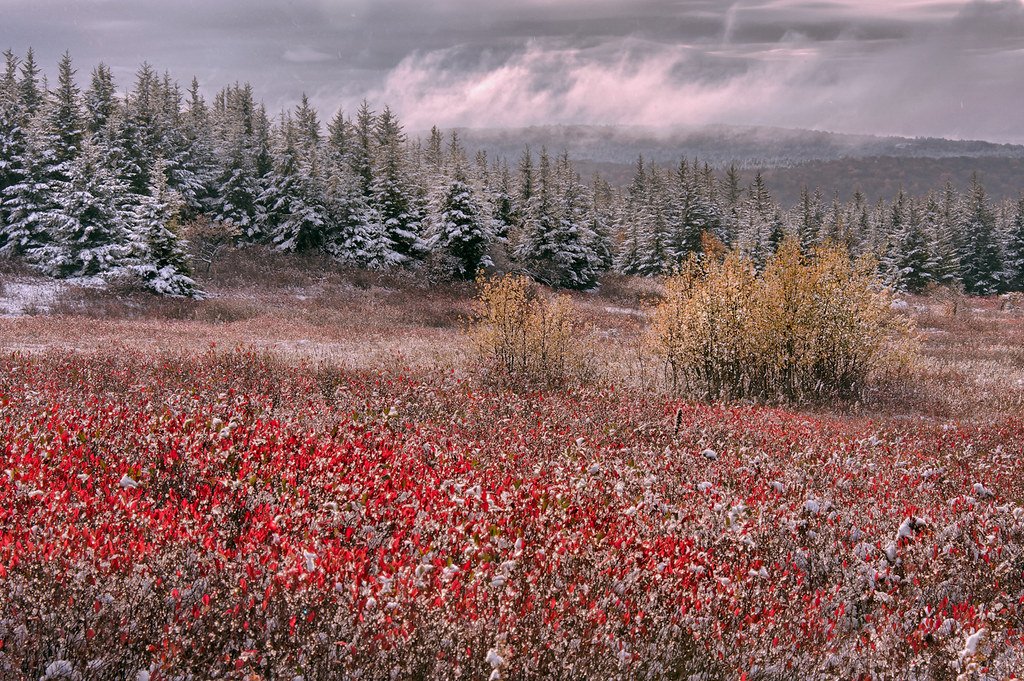
Winter elopements in West Virginia are for the couples who want something that feels genuinely earned — who understand that the effort of showing up in the cold is part of the intimacy. When the canopy is bare and the falls are frozen and the snow is undisturbed except for your footprints, the photographs tell a completely different story than any other season. Quieter. Starker. More honest.
Frozen Blackwater Falls
Blackwater Falls in January or February — when the falls have frozen into amber-colored ice formations — is one of the most visually distinct elopement settings in the entire Eastern U.S. The falls don't freeze every year; it requires an extended cold snap. But when they do, the combination of the tannin-stained amber ice and surrounding snow is genuinely unlike anything else. See the full Blackwater Falls Elopement Guide for permit details and access notes. Keep in mind that Blackwater Falls permits are at the higher end of the WV permit cost range.
Dolly Sods in Snow
Dolly Sods gets significant snowfall — it sits at nearly a mile above sea level and catches weather systems that pass right over lower elevations. The open heath barrens under a white sky, with no leaves on the scrub oaks and the whole plateau to yourselves, creates a surreal and genuinely moving setting. Access roads may be gated or impassable in heavy snow, so winter Dolly Sods elopements require flexibility on dates and a solid backup plan.
Practical Notes for Winter Elopements
Road closures are real in WV winters — Canaan Valley and Dolly Sods access roads are sometimes closed for days after major snowfall events. If you're planning a winter elopement at elevation, build in a contingency date or a backup location at lower elevation. That said, winter is the one season where you are essentially guaranteed solitude. You will not share a waterfall with strangers on a Tuesday in January. For couples who value privacy above almost everything else, winter quietly delivers exactly that.
Waterfall Timing in West Virginia: Season by Season
West Virginia has more named waterfalls than almost any state on the East Coast — and timing your visit correctly changes the experience significantly. Here's what to expect from the state's major falls throughout the year. For location-by-location details and access notes, see the full Waterfall Elopement Locations guide.
| Waterfall | Spring | Summer | Fall | Winter |
|---|---|---|---|---|
| Blackwater Falls | ⭐⭐⭐⭐⭐ Peak roar | ⭐⭐⭐ Steady flow | ⭐⭐⭐⭐ Foliage frame | ⭐⭐⭐⭐⭐ Frozen (in cold years) |
| Elakala Falls | ⭐⭐⭐⭐⭐ Peak flow | ⭐⭐⭐ Reduced, still beautiful | ⭐⭐⭐⭐ Hemlock + color | ⭐⭐⭐ Ice formations |
| Falls of Hills Creek | ⭐⭐⭐⭐⭐ Dramatic volume | ⭐⭐⭐ Moderate | ⭐⭐⭐⭐ Color-framed cascade | ⭐⭐ Variable / partial ice |
| Sandstone Falls | ⭐⭐⭐⭐⭐ High water | ⭐⭐⭐ Wide, accessible | ⭐⭐⭐⭐ Lower flow, fall color | ⭐⭐ Low season |
What to Wear for a West Virginia Elopement (by Season)
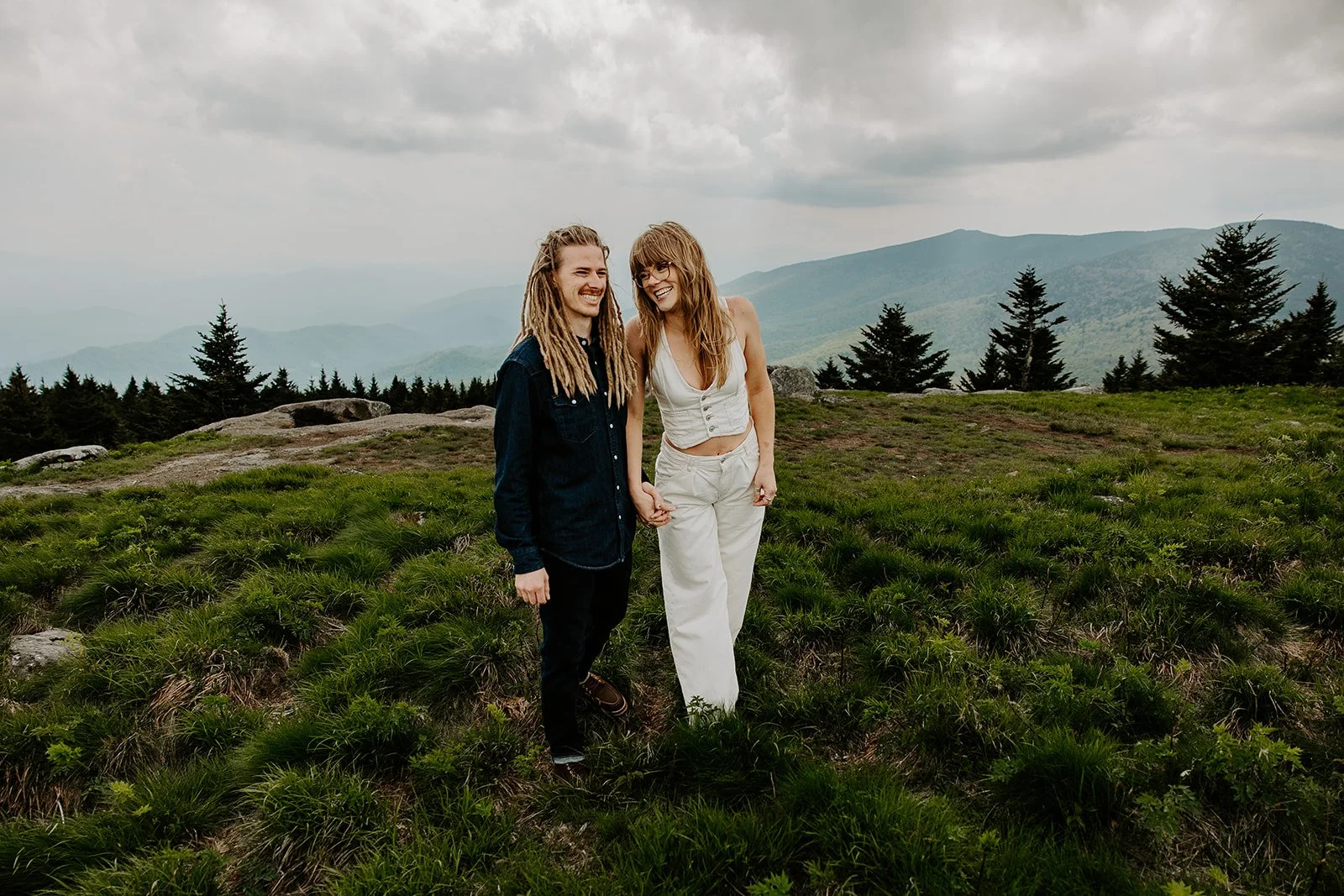
This question comes up in every planning conversation, and rightfully so — WV is not a wear-your-bridal-gown-and-heels kind of landscape. The good news is that the most beautiful outfits for a WV elopement are also the most practical ones, and they look better in the environment than anything overly formal.
Spring
Lightweight layers you can add and remove. A flowy midi or maxi dress in linen, cotton gauze, or chiffon works beautifully against wet rocks and green forest — especially if the colors are earthy, sage, cream, or deep plum. Bring a light jacket or structured cardigan. Footwear: waterproof trail shoes or ankle boots — something with grip. You willencounter mud.
Summer
Natural fabrics that breathe — linen, cotton, lightweight gauze. If you're hiking in, dress for the hike and add a detail for ceremony (a floral crown, a meaningful piece of jewelry, a suit jacket carried in). Evening golden hour often gets cooler quickly at elevation, so a light layer in your pack is worth it. Boots or trail shoes again — the gorge trails are rocky.
Fall
This is the season for richer tones — rust, terracotta, wine, forest green, oatmeal, cream. A fitted wool blazer over a simple dress, a structured coat, a knit layer — all of it works and photographs beautifully against the foliage palette. Wind is a real factor on open ridgelines; plan for it with your hair situation. Mid-October at elevation: plan for temps in the 40s–50s and dress accordingly.
Winter
Warmth first, style second — but both are completely achievable. A long puffer coat in a neutral or deep color worn over a simple dress. Fleece-lined leggings under a skirt. A faux-fur wrap or shawl that doubles as warmth and texture. Good thermal base layers under everything. Winter elopement outfits often look the most editorial because the stark background rewards bold silhouette choices.
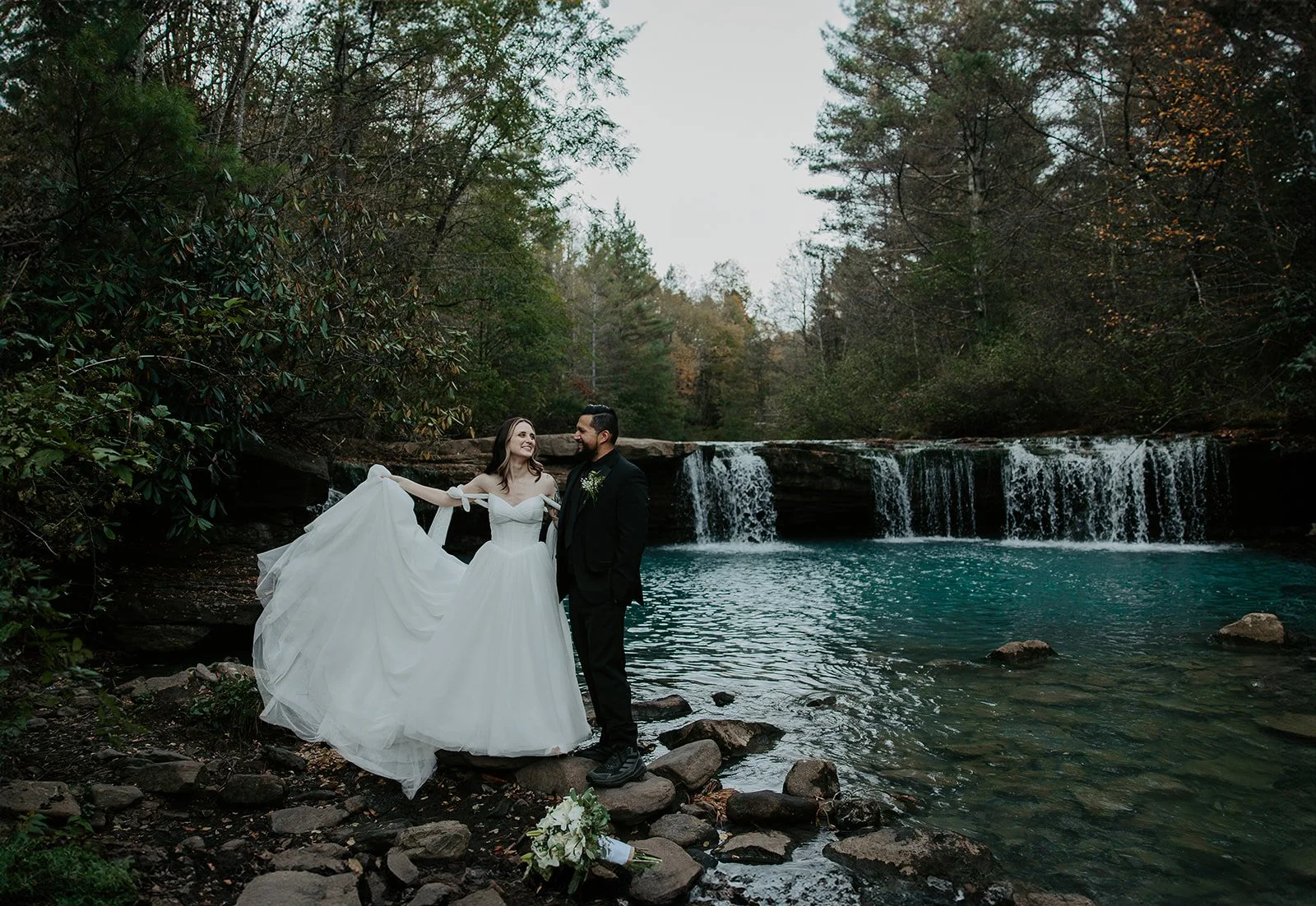
Weekday vs. Weekend: A Note Worth Making
In every season, a Tuesday or Wednesday will give you a meaningfully different experience than a Saturday at the same location. Popular overlooks at New River Gorge and Blackwater Falls that feel crowded on a fall Saturday are often entirely empty by 8am on a Thursday. Beyond solitude, weekday permits are sometimes easier to secure, and there's something genuinely freeing about eloping on a day that isn't traditionally designated for it. If your schedules have any flexibility, midweek is almost always worth choosing.
Permits in West Virginia: Does Season Affect Availability?
Most WV public land permits don't operate on a seasonal quota system — but peak season (especially October weekends) is when permit holders are most likely to be requesting the same overlooks and trailheads simultaneously. It's not that permits are more difficult to get in fall; it's that competition for specific ceremony sites increases. The practical advice: apply early regardless of season, and have a backup location in mind. For the full permit breakdown by land type, fees, and how to apply, see the Do You Need a Permit to Elope in West Virginia? guide.
Does Season Affect the Cost of Your Elopement?
For photography and most vendor costs, no — pricing doesn't typically fluctuate by season. Where season can affect cost is in accommodations and travel: fall weekends in the Canaan Valley and New River Gorge areas see lodging rates increase significantly, and last-minute bookings during peak foliage weekend can be difficult. Booking your lodging 4–6 months in advance for an October date is a genuine recommendation, not a soft suggestion. Permit fees themselves are consistent year-round. For a full cost breakdown including permit fees, officiant options, and photography investment, see the How Much Does It Cost to Elope in West Virginia? guide.
As a guided public-lands elopement photographer who has planned WV elopements in every season, I build all of the logistical variables — seasonal access, permit windows, trail conditions, lodging proximity — directly into the planning process so you're not navigating it alone. If you're curious what that looks like for your specific date and location, view my packages here.
Season-by-Season Highlights by Location
Dolly Sods Wilderness
Dolly Sods is a genuine four-season location, but it has two standout windows: late September through early October for the earliest and most dramatic fall color in the state, and June for rhododendron bloom. Winter at Dolly Sods — when accessible — is extraordinary and completely solitary. Summer is beautiful but unremarkable compared to its seasonal peaks. For the full planning guide including access roads and permit details, see the Dolly Sods Elopement Guide.
New River Gorge
Mid-to-late October is New River Gorge's peak, when the gorge canopy — stretching over a thousand feet below the rim — turns gold and amber and the light pours through in shafts. Spring is underrated here for wildflowers along the rim trails. Summer is comfortable at elevation and lush in the forest. The gorge is hikeable year-round; winter access to most trails remains open. See the full New River Gorge Elopement Guide for ceremony sites and permit details.
Blackwater Falls State Park
Spring brings peak waterfall roar. Fall brings the most photographed version of the falls — amber water framed by turning maples and red spruces. Winter, in a cold year, brings frozen formations that are genuinely unlike anything else in the Eastern U.S. Summer is steady and accessible. Note that Blackwater Falls State Park operates at the higher end of WV's permit cost range year-round. See the full Blackwater Falls Elopement Guide.
Monongahela National Forest
The Monongahela is the most flexible location in WV across all seasons — the sheer scale of the forest means there's almost always a section that works regardless of conditions elsewhere. Spring for wildflowers and waterfall flow along tributary streams; fall for color at Spruce Knob and along the Highland Scenic Highway; winter for snow and solitude in the interior. The Monongahela National Forest Elopement Guide covers the best ceremony zones and permit requirements.
A Real West Virginia Elopement: Alexa + Josh, October
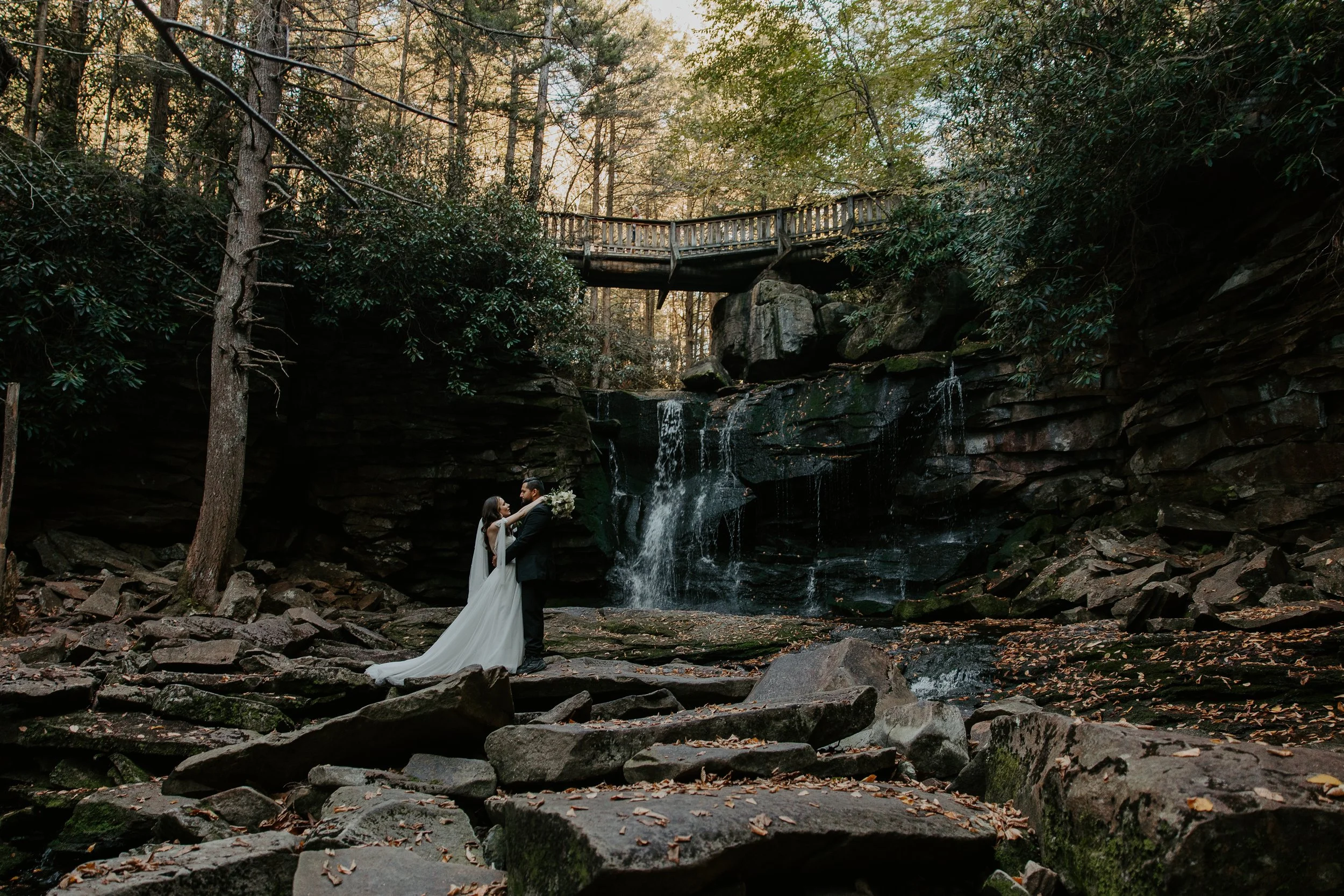
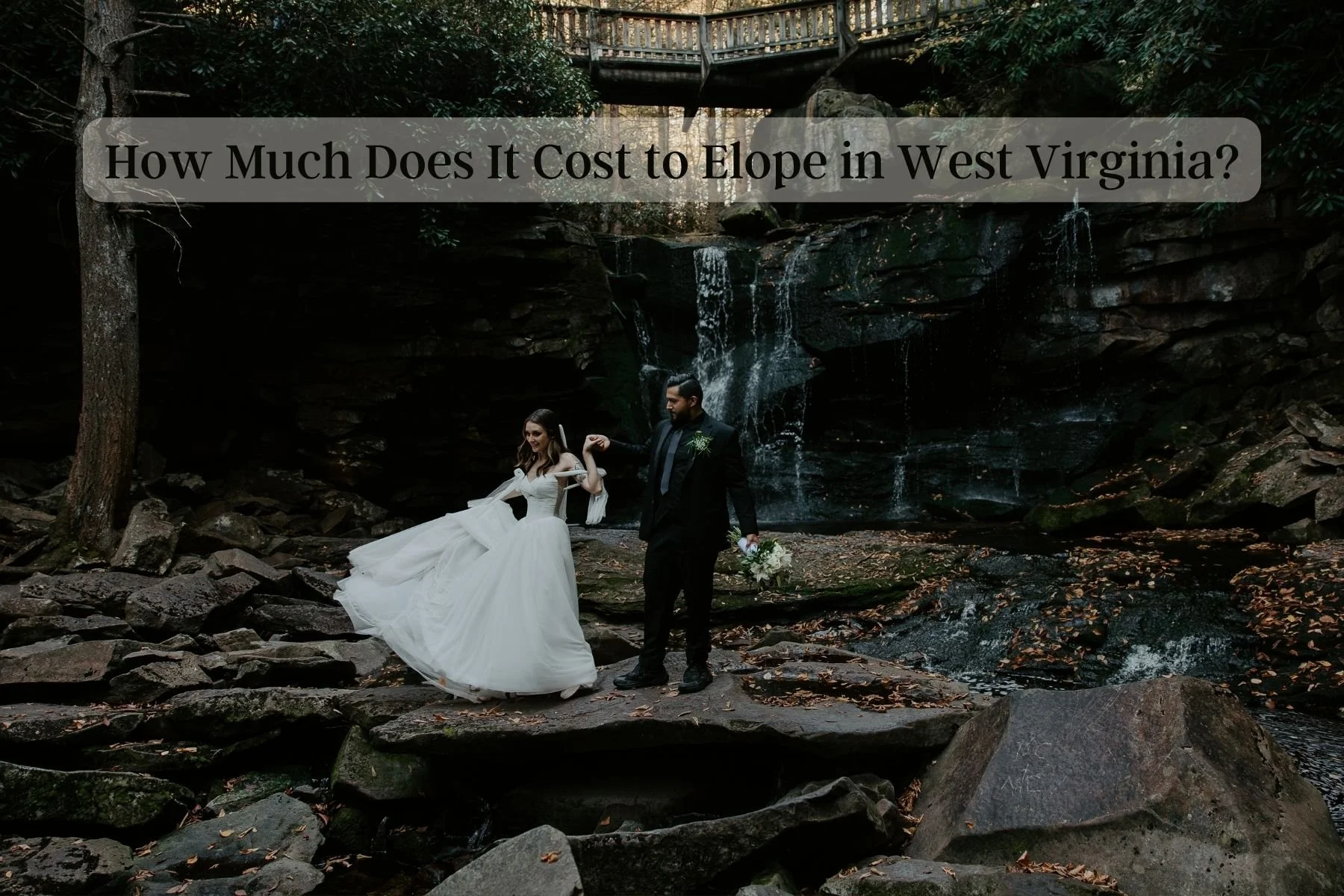
Alexa and Josh drove from Michigan to West Virginia for their elopement — they'd never been before, and they chose it entirely because of the waterfalls. They were not wrong. Their ceremony was at Pendleton Point inside Blackwater Falls State Park, standing on the canyon rim with views stretching out over the mountain ridges and the Blackwater River below. After vows, we spent the afternoon waterfall hopping — boardwalk down to Blackwater Falls, then deeper into the park to Elakala Falls, where the three of us just stood at the base and listened to the water rushing over the sandstone. Josh had baked a strawberry lemon cake. There was a wicker picnic basket, champagne, and a blanket laid out on the ground. Nobody was in a hurry. That's what an October day in West Virginia actually looks like when you build it around presence instead of a schedule.
Alexa + Josh — Blackwater Falls State Park, West Virginia — October
Keep Exploring West Virginia


FAQs About Best Time of Year to Elope in West Virginia
-
The best time depends on your priorities. Spring (March–May) offers peak waterfall flow and wildflowers. Fall (late September–October) offers the most dramatic foliage, with high elevations like Dolly Sods peaking in late September and New River Gorge peaking mid-to-late October. Winter can be extraordinary for frozen waterfalls and total solitude. There is no universally best season — only the one that matches your vision.
-
West Virginia fall foliage peaks across a six-week window depending on elevation. High-elevation areas like Dolly Sods (3,700–4,700 ft) peak in late September to early October. Canaan Valley and Blackwater Falls peak in early to mid October. New River Gorge, at lower elevation, peaks mid to late October — typically around October 18–25.
-
West Virginia waterfalls are at peak flow from late winter through spring — roughly February through May — when snowmelt and spring rains combine to maximize volume. Flow decreases in summer, particularly August in dry years. Fall flow varies with rainfall. In cold winters, waterfalls like Blackwater Falls can partially or fully freeze, creating dramatic ice formations.
-
Permit requirements in West Virginia are consistent year-round and do not change based on season. However, fall weekends — especially the third and fourth weeks of October — see the highest demand for ceremony permits at popular sites. Applying early for a fall date is strongly recommended. Permit fees range from $0 to $300+ depending on the land management agency.
-
Yes — for the right couple. Winter in West Virginia offers complete solitude, snow-covered ridgelines, and the potential for stunning frozen waterfall formations at Blackwater Falls and Elakala Falls. The tradeoffs are real: road closures, icy trails, and cold temperatures require preparation and flexibility. Couples who prioritize privacy and a dramatic, stark landscape often find winter to be their favorite season in WV.
-
Outfit planning in West Virginia is season-specific. Spring and fall require layers you can remove, and waterproof footwear is practical for wet and muddy trails. Summer calls for breathable natural fabrics. Winter requires warm base layers under your wedding attire. In all seasons, trail shoes or boots with grip are recommended over heels for any location requiring a hike.
Ready to Choose Your Season?
There's no wrong answer — there's just your answer. Whether you're dreaming of frozen falls in February, thundering spring waterfalls in April, rhododendrons in June, or a gold-and-amber October ridge, West Virginia will meet you exactly where you are. What matters most is that the day feels like yours. If you're ready to start narrowing it down with someone who's planned WV elopements in every season and every condition, I'd love to hear what you're envisioning. Send me a message — let's figure out your season together.


West Virginia has ancient forests, tannin-stained waterfalls, and some of the least crowded public land on the East Coast. Here's why it belongs at the top of your elopement list.