

Why West Virginia Is Ideal for Couples Who Love Forests & Waterfalls
There are states that get attention for elopements — and then there are states that actually deserve it. West Virginia sits quietly in the second category, largely undiscovered, and that is exactly why couples who love forests and waterfalls keep finding their way here. If you have been dreaming of exchanging vows somewhere green and ancient and genuinely wild, this is the guide that makes the case. And before you dive in, How to Elope in West Virginia covers everything from the legal steps to the logistics in one place.
The Forests Here Are Different
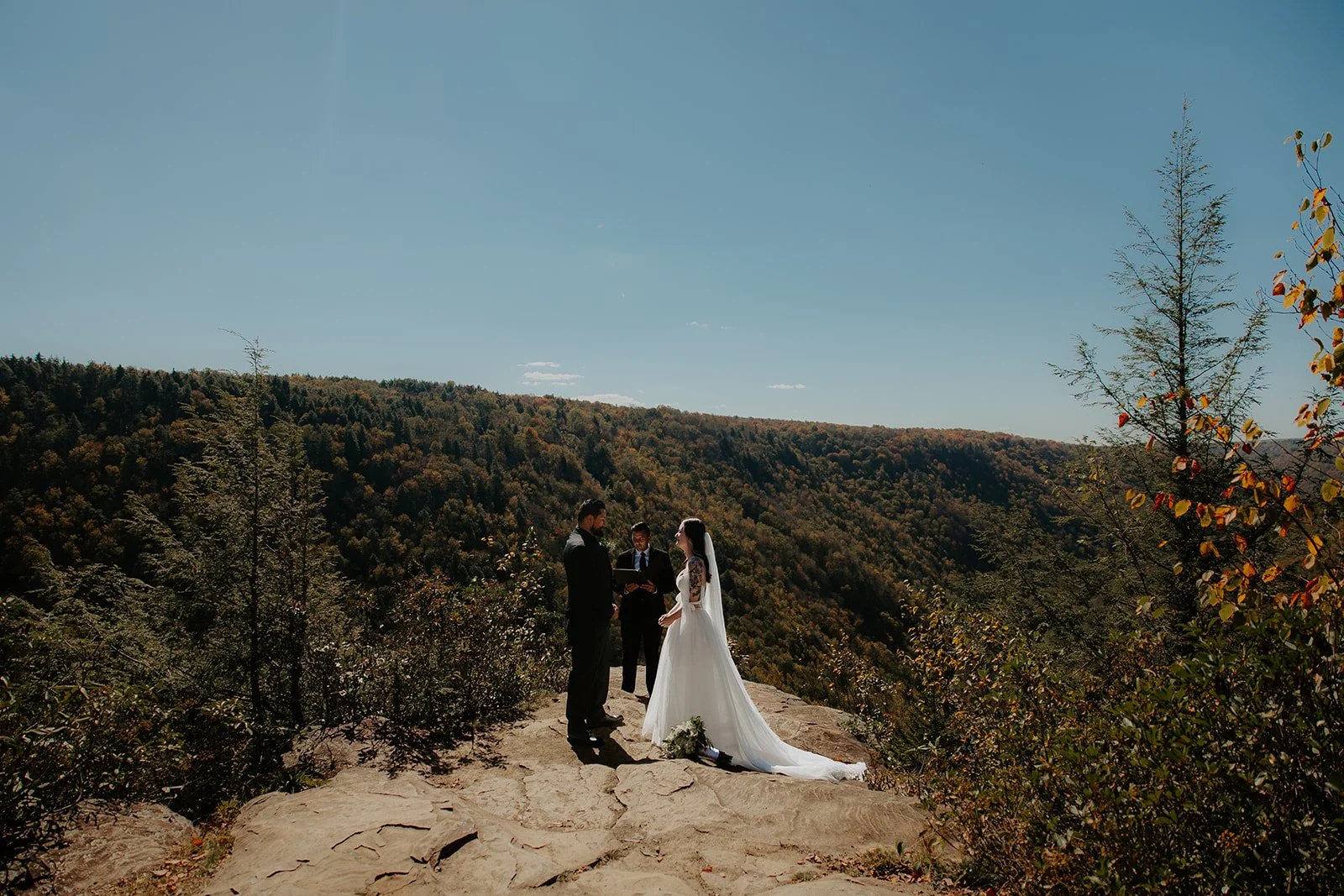
Most places that advertise forest elopements are offering you a nice tree line. West Virginia is offering you the Monongahela National Forest — 920,000 acres of Appalachian wilderness — and a dozen other landscapes on top of that. The forests here are not a backdrop. They are the main character.
Ancient Appalachian hardwoods. The eastern deciduous forest in West Virginia includes red oak, sugar maple, yellow birch, and black cherry that have been growing, largely undisturbed, for centuries. In fall, they turn in a way that feels almost excessive.
Spruce forest at elevation. Dolly Sods and the high ridges of Monongahela have a northern boreal feel — red spruce, blueberry heath, open bog — that looks nothing like any other Appalachian location. It reads more like the Canadian wilderness than the mid-Atlantic. If your aesthetic runs toward open, windswept, and otherworldly, nothing in the eastern U.S. compares.
Rhododendron and mountain laurel. In late spring and early summer, the understory explodes in pink and white. Hiking to a ceremony site through rhododendron in full bloom is one of the most visually extraordinary things you can experience in the eastern U.S.
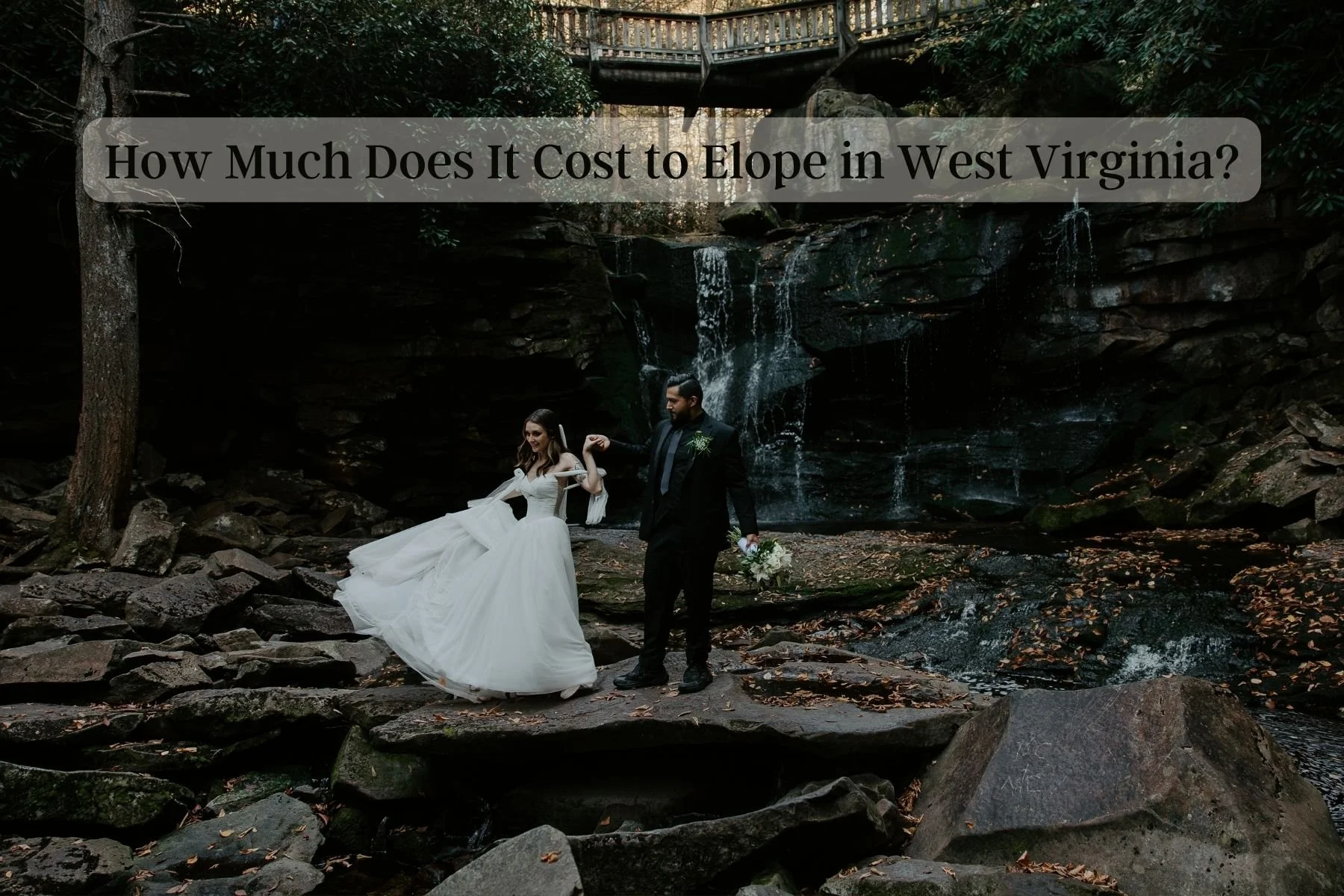
Hemlock hollows. At lower elevations near stream corridors, old hemlock groves create a cathedral-like forest environment — cool, dim, moss-covered, and completely quiet. Elakala Falls at Blackwater Falls State Park is surrounded by exactly this.
For couples whose vision is deep in the forest with no one else around, West Virginia delivers in a way that very few East Coast states can. The Monongahela National Forest Elopement Guide goes deeper on specific ceremony locations, permit access, and what planning looks like on federal land.
The Waterfalls Are Genuinely World-Class
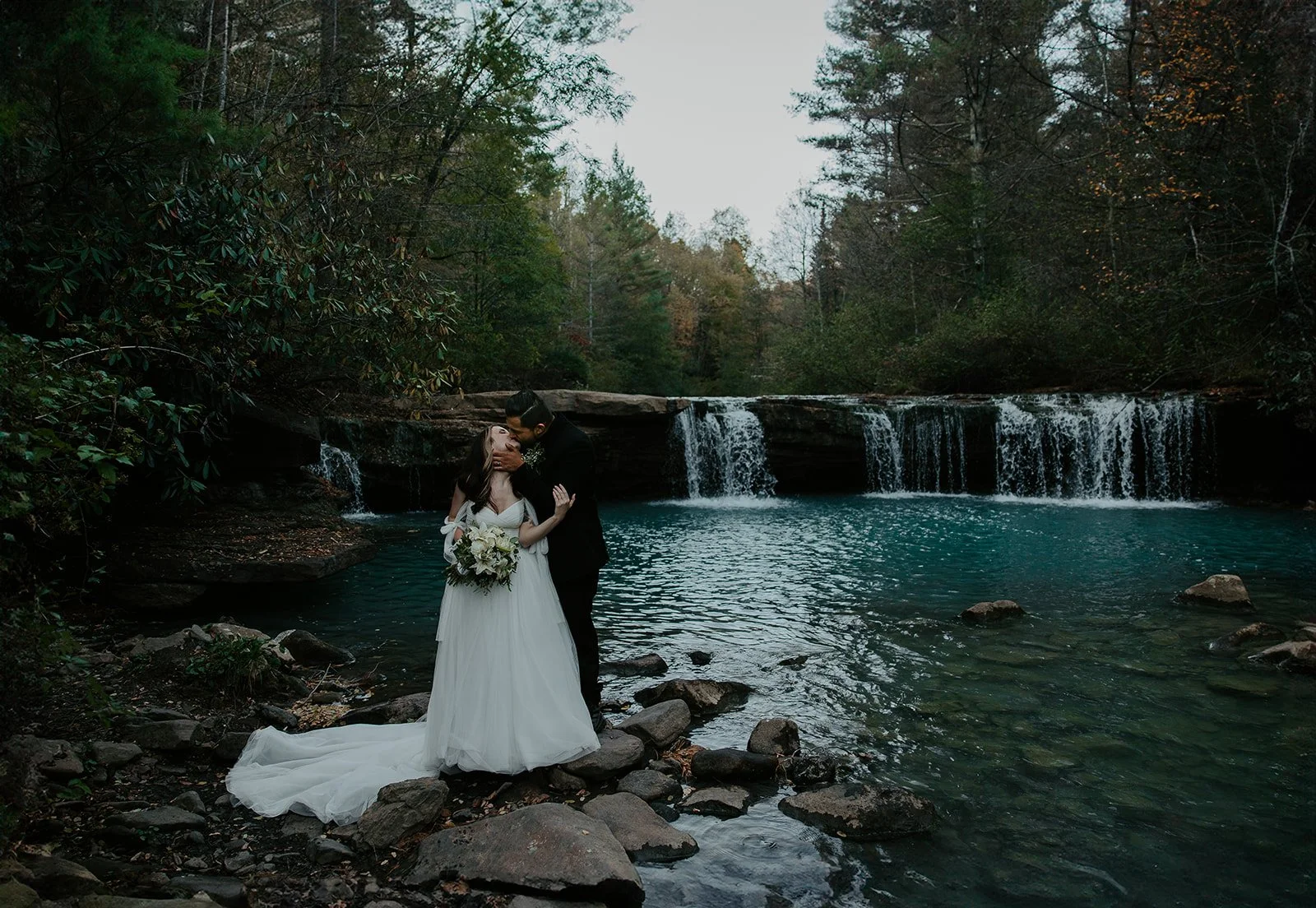
West Virginia has over 30 named waterfalls, most of them accessible via short to moderate hikes on public land, and the eastern Appalachians concentrate an unusual number of them in a small geographic footprint. These are not roadside novelties. They are the kind of waterfalls that become the ceremony location.
The tannin-stained water at Blackwater Falls — amber against dark rock and moss — is one of the most photographically distinctive waterfall environments in the eastern U.S. The coloration comes from the decaying spruce and hemlock needles upstream, and it creates an image quality you cannot replicate anywhere else.
For a full breakdown of WV waterfall locations with trail details and ceremony access notes, see Waterfall Elopement Locations in West Virginia (Easy Access Options).
It Is Genuinely Uncrowded
West Virginia is one of the least visited states in the country. Even Blackwater Falls State Park — the most popular state park in WV — has weekdays and off-season windows that feel completely private. Dolly Sods Wilderness sees a fraction of the traffic of comparable Appalachian wilderness areas in Virginia or North Carolina.
For elopement couples, this matters more than almost anything else. You are not trying to sneak a ceremony in between tour groups. You are trying to have a moment that belongs entirely to you. West Virginia makes that easy in a way that more heavily trafficked states simply do not.
The Hidden Gem Elopement Locations in West Virginia guide takes this further for couples who want locations that feel genuinely private even on peak weekends.
Every Season Delivers Something Different
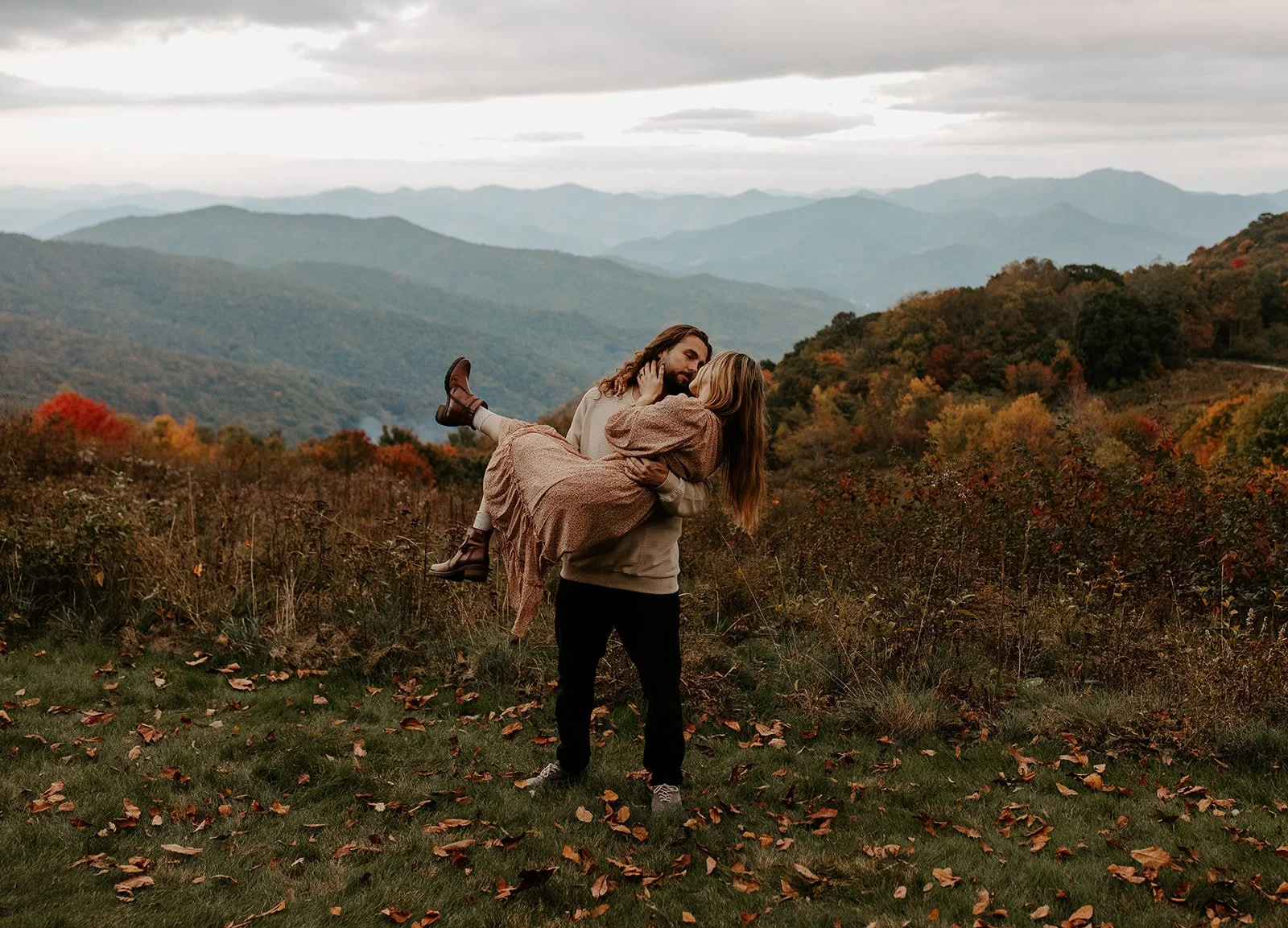
Some elopement destinations have one good window. West Virginia has four genuinely distinct and beautiful seasons, each producing a completely different landscape.
Spring (April–June): Waterfall volume is at its highest from snowmelt and spring rain. Rhododendron begins blooming in late May at lower elevations and moves up the ridges through early July. Wildflowers across the Allegheny Highlands, fiddlehead ferns, and bright chartreuse canopy. Mornings are cool and misty.
Summer (June–August): Full green canopy overhead, waterfalls still running strong, high-elevation locations like Dolly Sods are comfortable and spectacular. The forest keeps lower elevations cool near water even on warm days.
Fall (September–November): This is West Virginia's signature season. The fall color — particularly at Blackwater Falls and on the high-elevation balds at Dolly Sods — is among the best in the eastern United States. Peak color typically arrives early October at higher elevations and mid-to-late October at lower elevations. Midweek dates see significantly less traffic than weekends.
Winter (December–March): Blackwater Falls partially ices over and looks completely surreal against the dark stone canyon. Dolly Sods in snow is unlike anywhere else on the East Coast — total solitude, wide open, and stark in the best possible way. A very specific aesthetic that some couples find more compelling than any other season.
For a full season-by-season breakdown organized by specific location, the Best Time of Year to Elope in West Virginia guide covers it in detail.
The Landscape Variety Goes Beyond Forests and Waterfalls
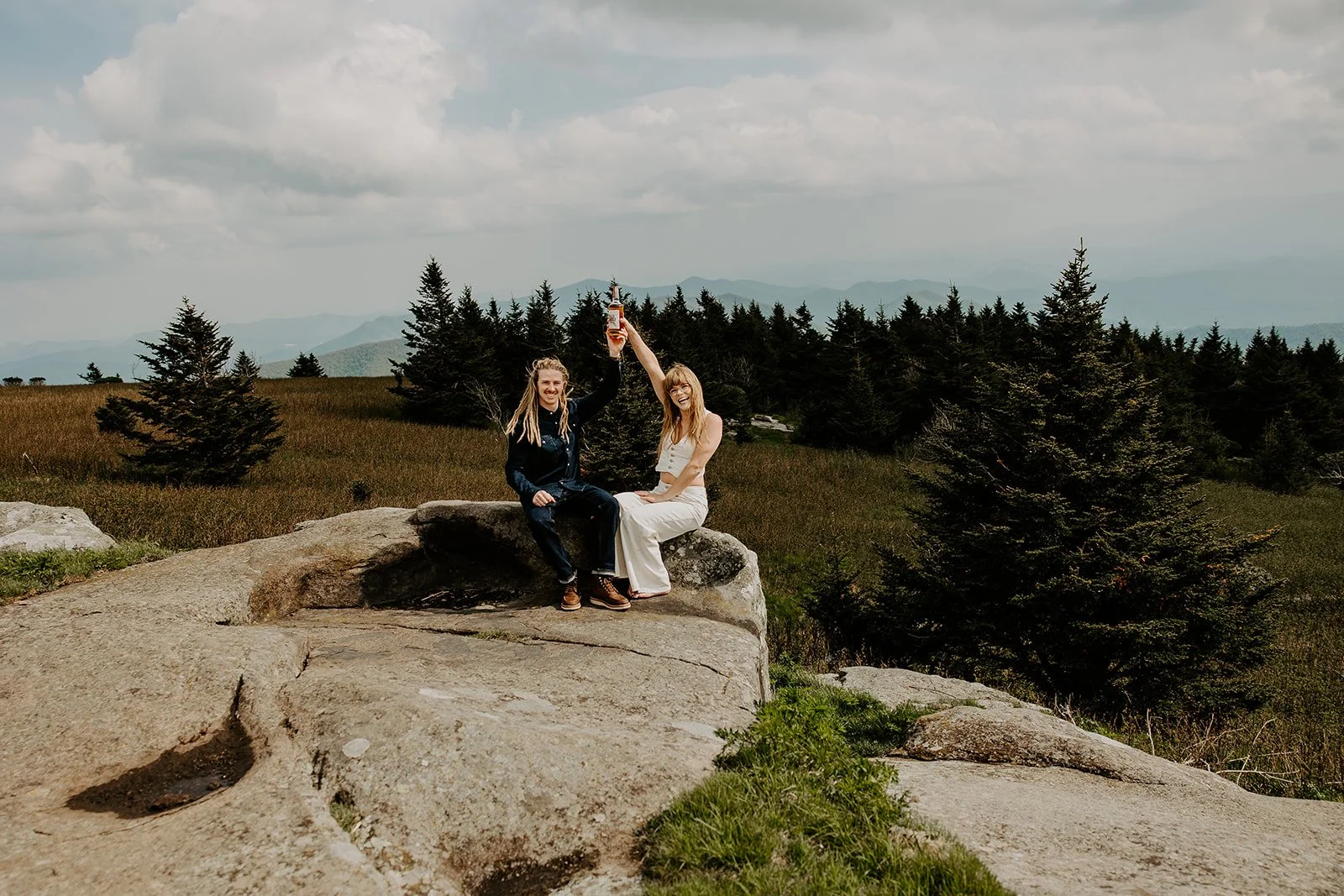
West Virginia is known for forests and waterfalls, but the full landscape range is broader than most couples realize before they start planning.
Canyon rim overlooks. Pendleton Point and Lindy Point at Blackwater Falls State Park give you canyon views that stretch for miles across the Blackwater Gorge — a completely different visual from a forest floor ceremony, still entirely surrounded by wilderness.
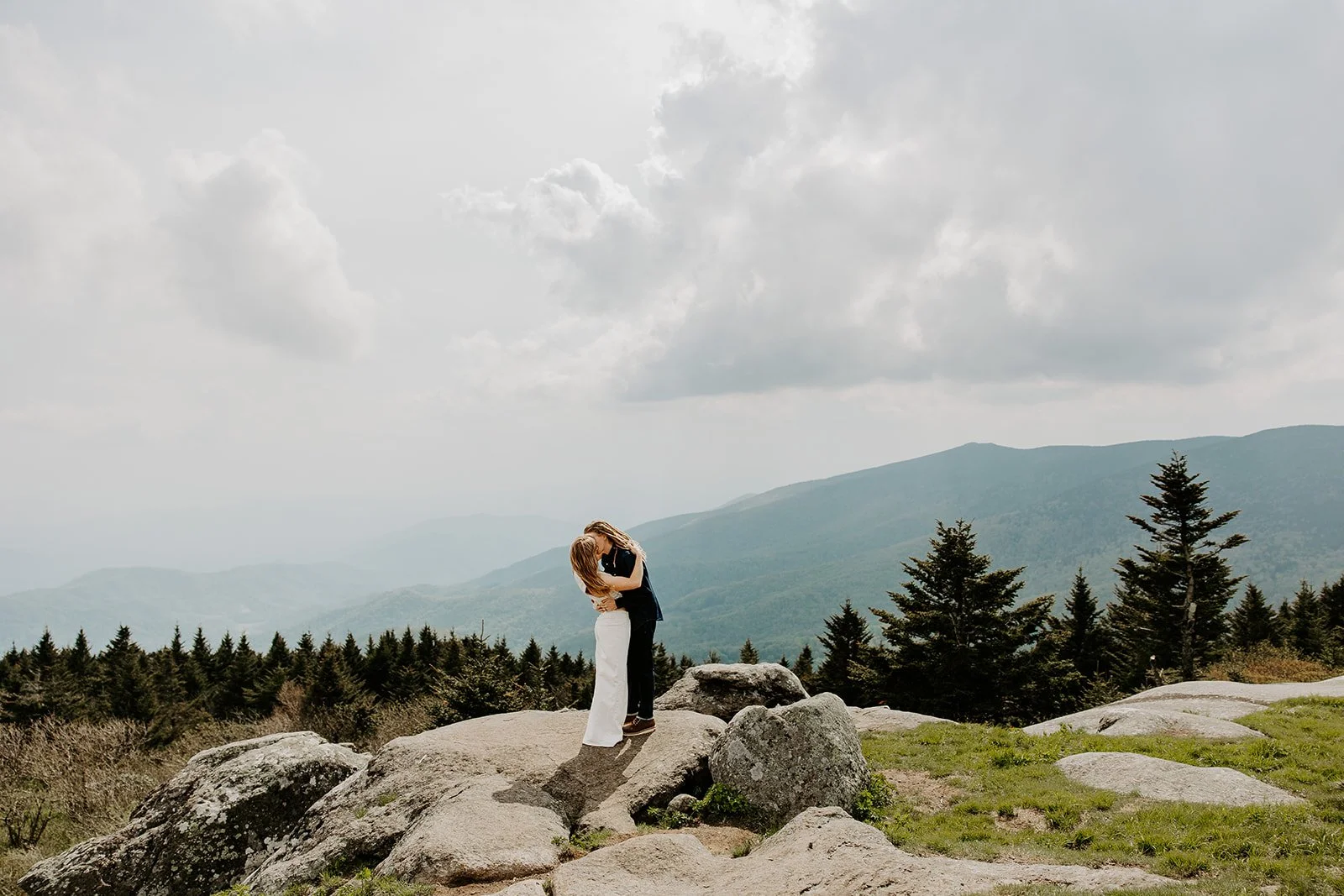
High-elevation rock outcrops. Dolly Sods Wilderness has open rocky balds at elevation where the forest gives way to low scrub and long views across the Allegheny Front. These feel more like the Scottish Highlands than Appalachia.
River gorge environments. The New River Gorge offers dramatic canyon walls, river access, and the iconic New River Gorge Bridge as a backdrop option.
Meadows and balds. The high meadow systems around Spruce Knob and across the Cranberry Glades provide open, expansive ceremony options with forest on three sides.
If none of the above fits what you are picturing, the Best State Parks for an Intimate Elopement in West Virginia guide rounds out the full range of accessible public-land options.
The Photography Here Is Exceptional
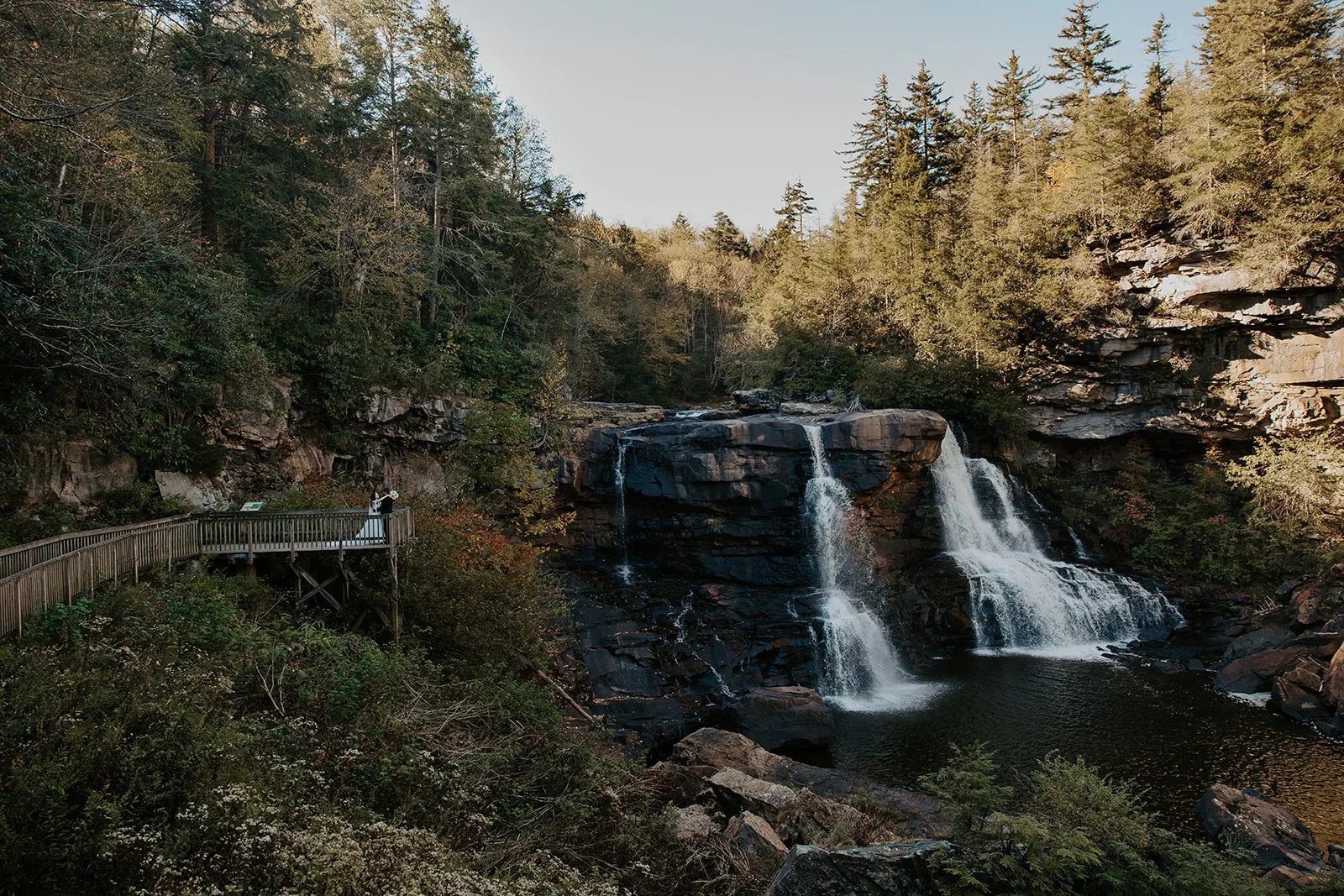
I have photographed elopements across dozens of national parks, national forests, and public lands from the Pacific Northwest to the Southeast. West Virginia has something that does not show up at every location: layered depth. The forests have foreground, midground, and background that create naturally complex images without working hard for them. The waterfalls add movement and sound. The amber-tinted light at golden hour through a full deciduous canopy is warm and filtered in a way that makes nearly every moment feel intentional.
Couples who describe their aesthetic as moody, earthy, or nature-immersed consistently love what WV produces. The landscape carries a significant amount of the visual weight, and the images feel less like staged photography and more like documentation of something real.
If you want to see what a full West Virginia elopement day looks like in images and planning, view my packages here.
What Does It Actually Cost?
West Virginia is one of the more budget-accessible elopement destinations in the eastern U.S. The marriage license fee is $56, ceremony permits range from $0 to $300+ depending on location (Blackwater Falls State Park is at the higher end of that range), and accommodation throughout the state remains genuinely affordable outside of peak October weekends in the Canaan Valley area.
For a full breakdown of every cost category — photography investment, officiant fees, travel, permits, and how to build a realistic total budget — the How Much Does It Cost to Elope in West Virginia? guide covers it all.
Is West Virginia Right for You?
This place is not for every couple. If you are looking for desert landscapes, ocean cliffs, or alpine tundra, West Virginia is not your answer. But if your version of the perfect elopement involves dense forest, moving water, the smell of moss and cold air, and the feeling of being genuinely far from the ordinary — this is one of the best places in the country to find it. And it is still largely undiscovered, which means you can have it almost entirely to yourself.
For the full practical guide — permits, legal steps, vendor guidance, and how to start planning — How to Plan a Stress-Free West Virginia Elopement is the next place to go.
Frequently Asked Questions
-
Yes — and genuinely so, not just as a marketing answer. The Monongahela National Forest alone covers 920,000 acres of Appalachian wilderness, and WV state parks add dozens of additional ceremony-viable forest environments. The lack of crowds compared to neighboring states makes it especially well-suited for couples who want privacy and immersion.
-
Blackwater Falls, Elakala Falls, and the Falls of Hills Creek are the most accessible. Seneca Creek Falls and Pendleton Falls require more of a hike but offer greater seclusion. See the full Waterfall Elopement Locations in West Virginia guide for details.
-
It depends on the specific location and land management agency. Most ceremonies on state park land require a permit; some National Forest locations do not, or require only a free or low-cost permit. The Do You Need a Permit to Elope in West Virginia? guide covers this by land type.
-
Fall (late September–October) for foliage and dramatic color; late spring (late May–June) for rhododendron bloom and high waterfall volume; winter for solitude and ice formations. Each season has a distinct look. See the Best Time of Year to Elope in West Virginia guide for a full breakdown.
-
For most locations, 3–6 months is a comfortable window. Peak fall weekends (especially early October) book up faster for accommodations. Permit applications for some state parks have minimum advance notice requirements. Working with a photographer who knows the land well helps move the planning process significantly faster.
Learn More About Eloping in West Virginia


Let's Start Planning Your West Virginia Elopement
If any of this resonates — if you are picturing yourself in a waterfall canyon or on a high-elevation bald with the Alleghenies spread out in every direction — I would love to hear about your day. Every West Virginia elopement I plan starts with a conversation about what matters most to you two, and we build from there. Reach out here and let's talk.


West Virginia has ancient forests, tannin-stained waterfalls, and some of the least crowded public land on the East Coast. Here's why it belongs at the top of your elopement list.