

How to Plan a Stress-Free West Virginia Elopement
Planning an elopement should feel simple, intentional, and deeply meaningful—not overwhelming.
West Virginia is one of the most underrated places on the East Coast for couples who want a quiet, nature-focused wedding day. With misty mountain overlooks, forest trails, and dozens of waterfall locations tucked inside state parks and national forests, it offers a setting that naturally encourages couples to slow down and be present.
But planning an elopement in a place you may have never visited can raise a lot of questions. From choosing the right location to understanding permit requirements and building a relaxed timeline, the logistics can quickly feel confusing without guidance.
This guide walks you through how to plan a calm, stress-free West Virginia elopement, including where to elope, when to visit, and how to create a meaningful experience surrounded by nature.
If you're just starting your research, you may also want to read my step-by-step guide on how to elope in West Virginia, which covers everything from legal requirements to choosing the right ceremony location.
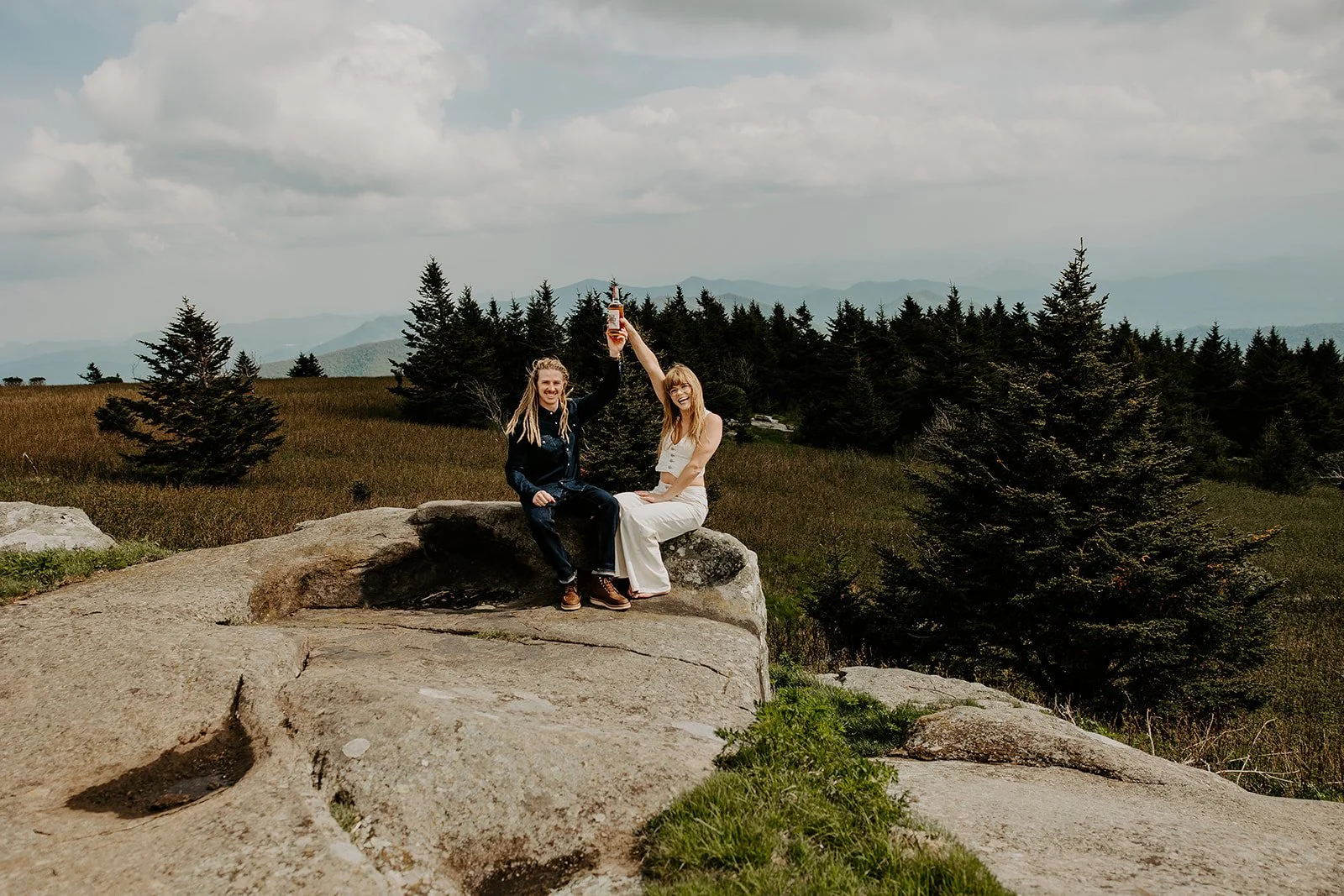
West Virginia Elopement Planning At-a-Glance
If you’re considering West Virginia for your elopement, here’s a quick overview of what makes it such a peaceful, beautiful place to plan a nature-focused wedding day.
| Category | Key Info |
|---|---|
| Best scenery | Waterfalls, Appalachian mountain overlooks, forest trails, and scenic state parks |
| Best time of year | May–June for strong waterfalls and lush greenery, October for fall foliage |
| Permit requirements | Some state parks require special use permits, while other public-land locations may have fewer restrictions |
| Ideal group size | Most locations work best for 2–20 people, depending on the ceremony site and permit rules |
| Accessibility | Many scenic overlooks and waterfall areas are accessible by short walks rather than long hikes |
| Closest airports | Pittsburgh, Charleston, Washington D.C., and sometimes Roanoke depending on your location |
| Ideal timeline | Sunrise or sunset ceremony with a relaxed day built around meaningful experiences rather than rushing |
West Virginia is particularly appealing for couples who want a beautiful outdoor setting without the heavy crowds and complex permit systems often found in larger national parks.
Why West Virginia Is Perfect for a Stress-Free Elopement
For couples who want an intimate, nature-focused wedding day, West Virginia offers an incredible balance of scenery, privacy, and accessibility.
Unlike many high-traffic national parks, much of West Virginia’s landscape remains quiet and uncrowded. Scenic overlooks, forest trails, and waterfall locations are often just a short walk from the trailhead, making them ideal for couples who want a beautiful location without a long or strenuous hike.
The state is also home to a wide variety of landscapes, from the rugged cliffs of the New River Gorge region to the quiet forests and alpine plateaus of Monongahela National Forest. This variety makes it easy to design an elopement day that feels personal and meaningful.
Couples drawn to waterfalls will find countless options across the state, many of which are surprisingly accessible. If you’re dreaming of exchanging vows beside a waterfall, I’ve shared some of the most scenic options in this guide to waterfall elopement locations in West Virginia.
For couples who prefer something more secluded, West Virginia also offers many lesser-known overlooks and forest locations. You can explore some of these quieter options in my guide to hidden gem elopement locations in West Virginia.
Whether you imagine a quiet ceremony beside a waterfall or a sunset celebration overlooking the Appalachian Mountains, West Virginia makes it easy to create an elopement day that feels peaceful, intentional, and completely your own.
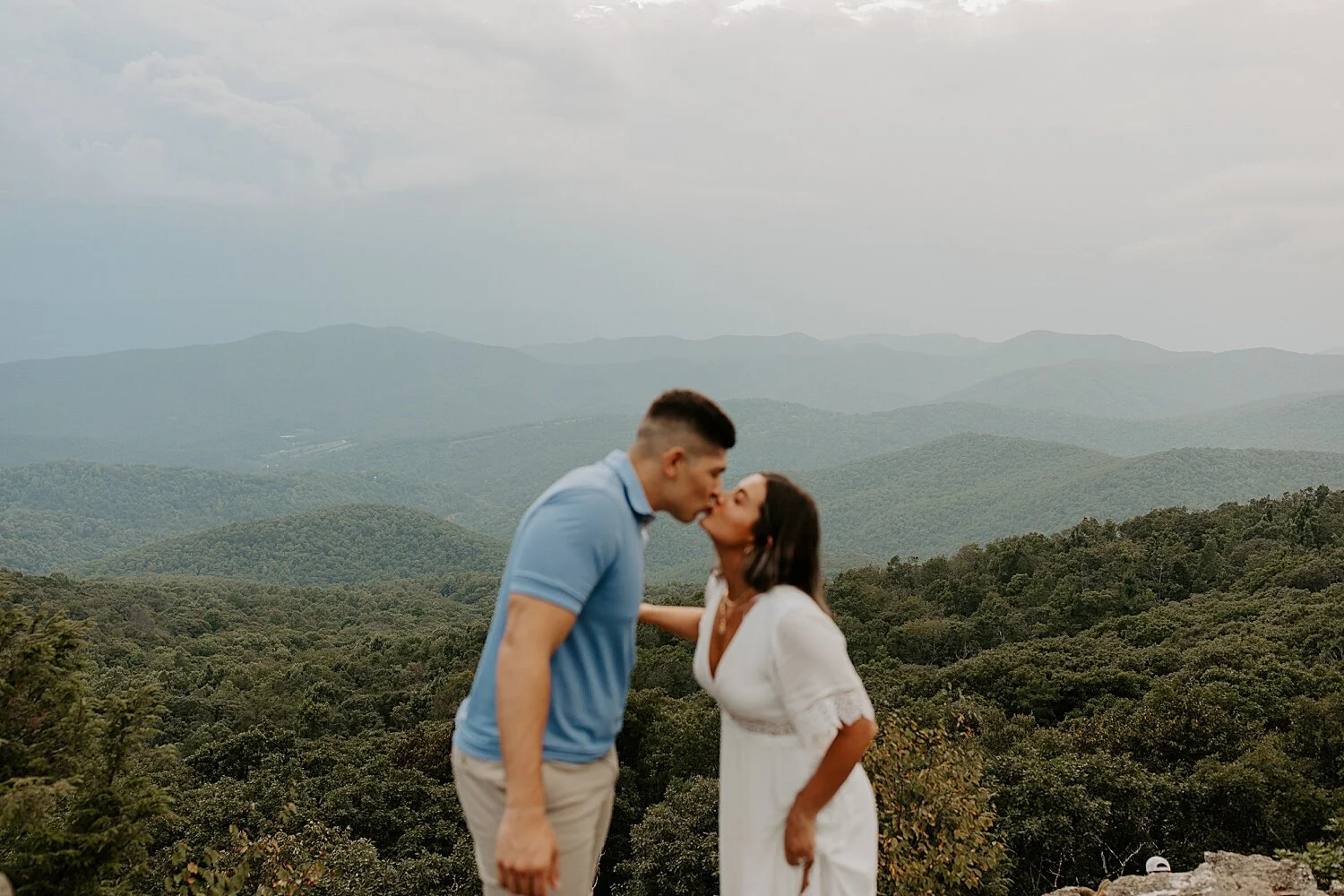
Step 1: Choose the Right Location for Your West Virginia Elopement
One of the first decisions you’ll make when planning your elopement is choosing the type of landscape that feels most meaningful to you.
West Virginia offers an incredible range of scenery within a relatively small area. Couples can exchange vows beside waterfalls, on quiet mountain overlooks, deep in Appalachian forests, or inside scenic state parks that offer easy access for family members.
The right location often depends on a few factors:
• how private you want the ceremony to feel
• whether you’re inviting guests
• how accessible the location needs to be
• what kind of scenery you feel most connected to
Below are a few of the most popular types of elopement locations throughout West Virginia.
State Parks
West Virginia’s state parks are often the easiest places to plan an elopement because they offer beautiful scenery with relatively straightforward access.
Many parks include scenic overlooks, waterfalls, forest trails, and historic structures that create a naturally beautiful backdrop for a ceremony. They’re also a great option for couples inviting a small group of family or friends, since many ceremony locations are just a short walk from parking areas.
Some of the most popular parks for intimate elopements include:
• Blackwater Falls State Park
• Babcock State Park
• Canaan Valley Resort State Park
• Watoga State Park
Each park has its own permit requirements and designated ceremony areas, so it’s important to research the specific rules before finalizing a location.
If you’d like to explore some of the best options, I’ve put together a full guide to the best state parks for an intimate elopement in West Virginia.
Waterfall Locations
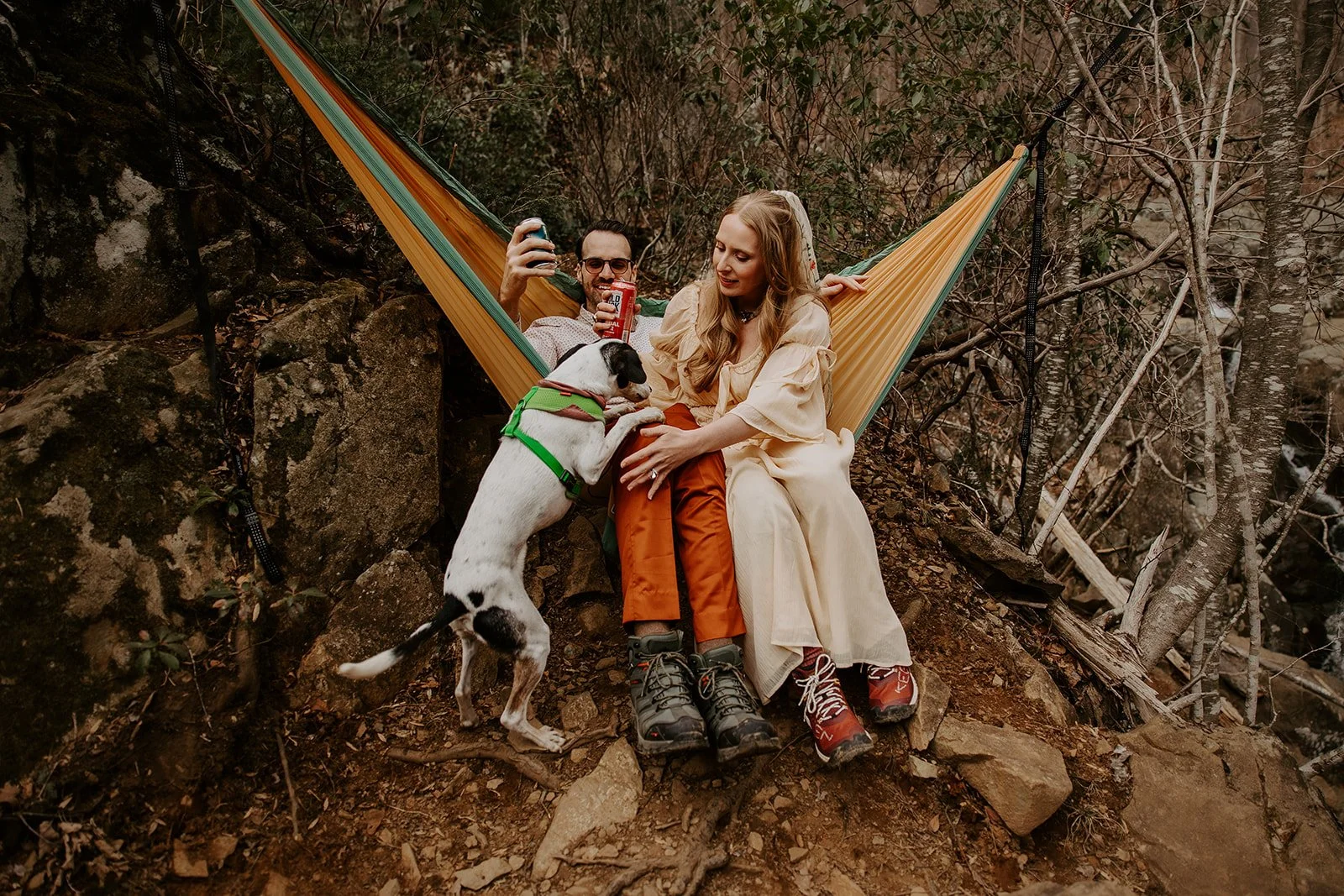
For couples who feel most connected to water, West Virginia offers dozens of beautiful waterfall locations that create a dramatic and intimate ceremony setting.
Many of these waterfalls are surprisingly accessible, often requiring only a short hike or scenic walk from the trailhead.
Some of the most scenic waterfall locations in the state include:
• Blackwater Falls
• Elakala Falls
• Cathedral Falls
• Sandstone Falls
Waterfalls are especially beautiful in the spring and early summer when rainfall keeps the flow strong and the surrounding forests vibrant.
If you're dreaming of exchanging vows beside a waterfall, you can explore more options in my guide to waterfall elopement locations in West Virginia.
Quiet Mountain Overlooks & Forest Locations
If privacy is your top priority, West Virginia is full of quiet overlooks and forest locations that offer a more secluded experience.
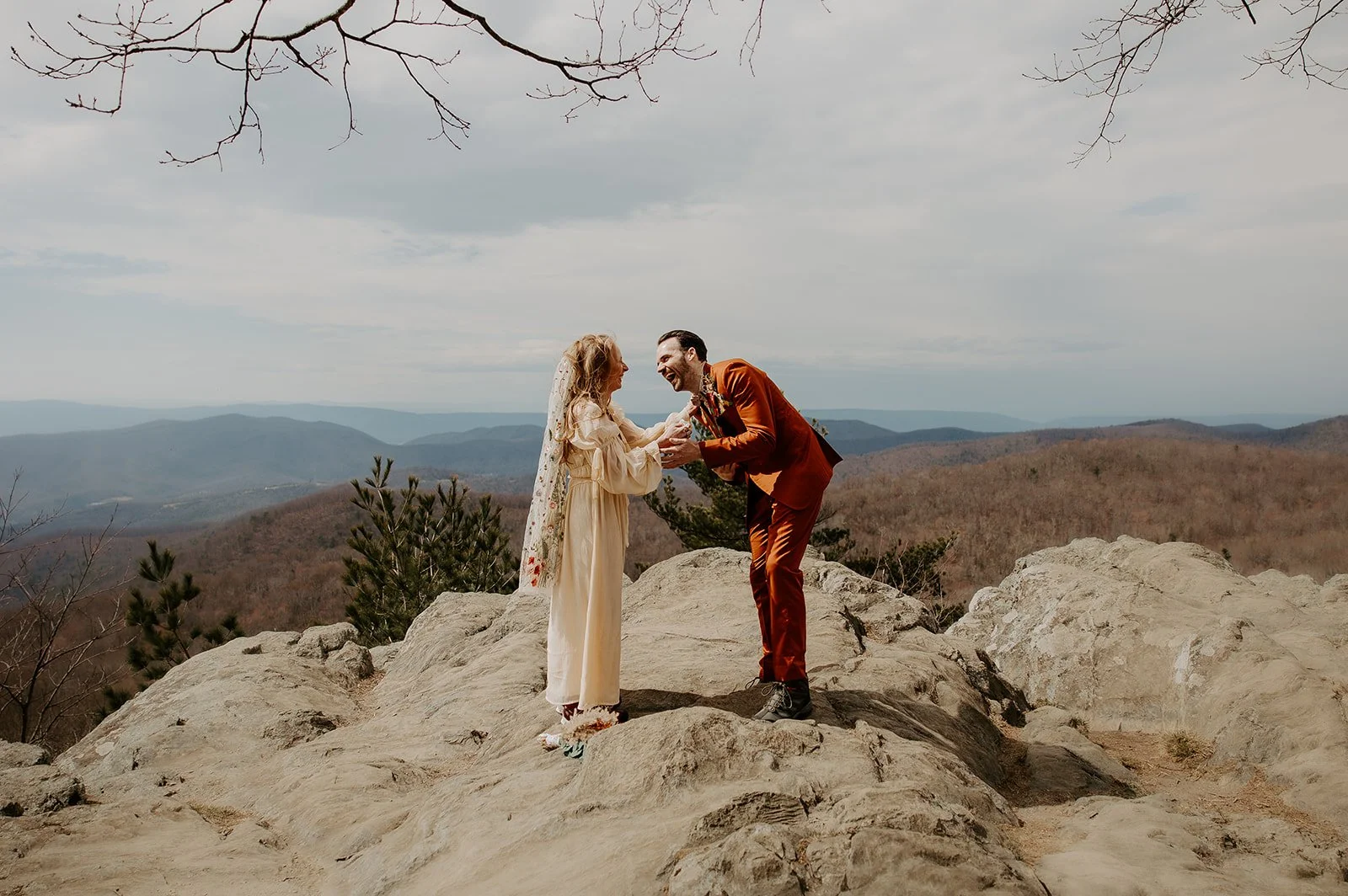
Areas like Monongahela National Forest, Dolly Sods Wilderness, and the Seneca Rocks region provide incredible mountain views with far fewer crowds than many well-known national parks.
These types of locations are ideal for couples who want their elopement day to feel peaceful and immersive—surrounded by open landscapes, fresh mountain air, and the quiet sounds of nature.
Many couples also choose these areas because they allow for a more flexible and adventurous timeline, including sunrise ceremonies, scenic hikes, or exploring multiple locations throughout the day.
If you’re looking for quieter ceremony spots, you can explore some of my favorite locations in this guide to hidden gem elopement locations in West Virginia.
Map of Scenic Elopement Locations in West Virginia
West Virginia may be a small state, but it offers an incredible variety of landscapes for couples planning an intimate elopement.
From quiet forest trails and mountain overlooks to powerful waterfalls tucked inside state parks, there are dozens of beautiful locations spread throughout the state. Some are well-known destinations like Blackwater Falls, while others remain peaceful hidden gems that many couples have never heard of.
The map below highlights a collection of scenic places to elope across West Virginia, including waterfall locations, state parks, and quieter mountain areas. Many of these locations are explored in more detail throughout this guide and in the resources linked below.
If you're still exploring options, these guides can help you narrow down the best locations for your elopement:
• Waterfall Elopement Locations in West Virginia
• Best State Parks for an Intimate Elopement in West Virginia
• Hidden Gem Elopement Locations in West Virginia
Each guide breaks down accessibility, scenery, and what to expect when planning a ceremony at these locations.
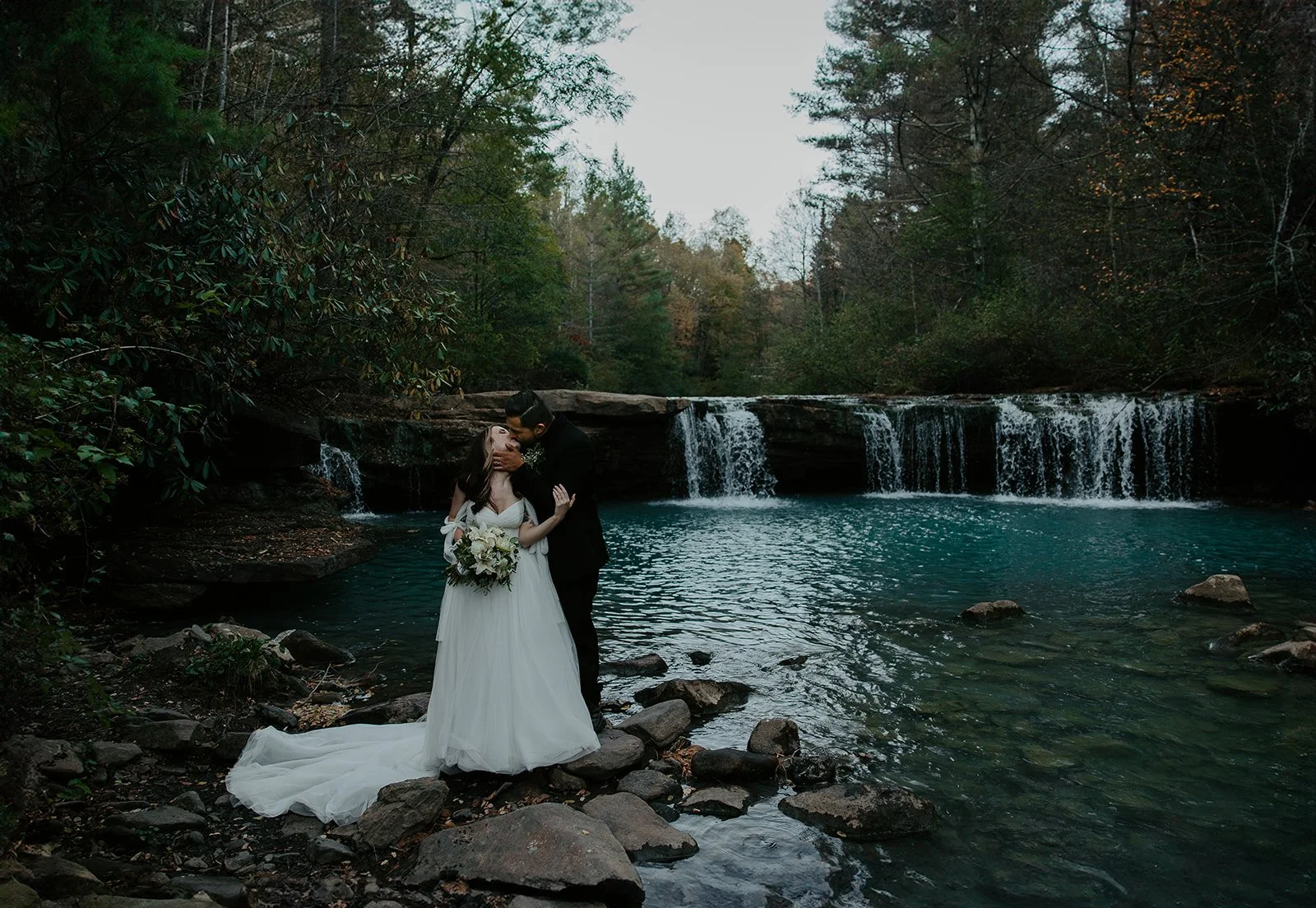
Step 2: Understand Permit Requirements
Permit requirements are one of the most common sources of confusion when couples start planning an outdoor elopement.
In West Virginia, the rules vary depending on where you choose to hold your ceremony. Some locations require a special use permit for weddings, while others allow small ceremonies without formal applications. The requirements often depend on factors like group size, location popularity, and whether the ceremony takes place in a designated park area.
For example, many West Virginia state parks require special use permits for ceremonies, even for small groups. Locations like Blackwater Falls State Park have specific policies and fees for weddings and elopements.
On the other hand, some areas within national forests and more remote public lands may allow small ceremonies without a formal permit, especially when the group size is very small and the event remains low-impact.
Because the rules vary so much by location, it’s always important to verify requirements before finalizing your plans.
If you want a detailed breakdown of where permits are required and how the process works, I’ve put together a complete guide on do you need a permit to elope in West Virginia, including information for state parks, national forests, and other public lands.
As a public-lands elopement photographer, I help couples navigate these requirements by researching location regulations, permit policies, and seasonal restrictions ahead of time so the planning process stays simple and stress-free.
Step 3: Choose the Best Time of Year to Elope in West Virginia
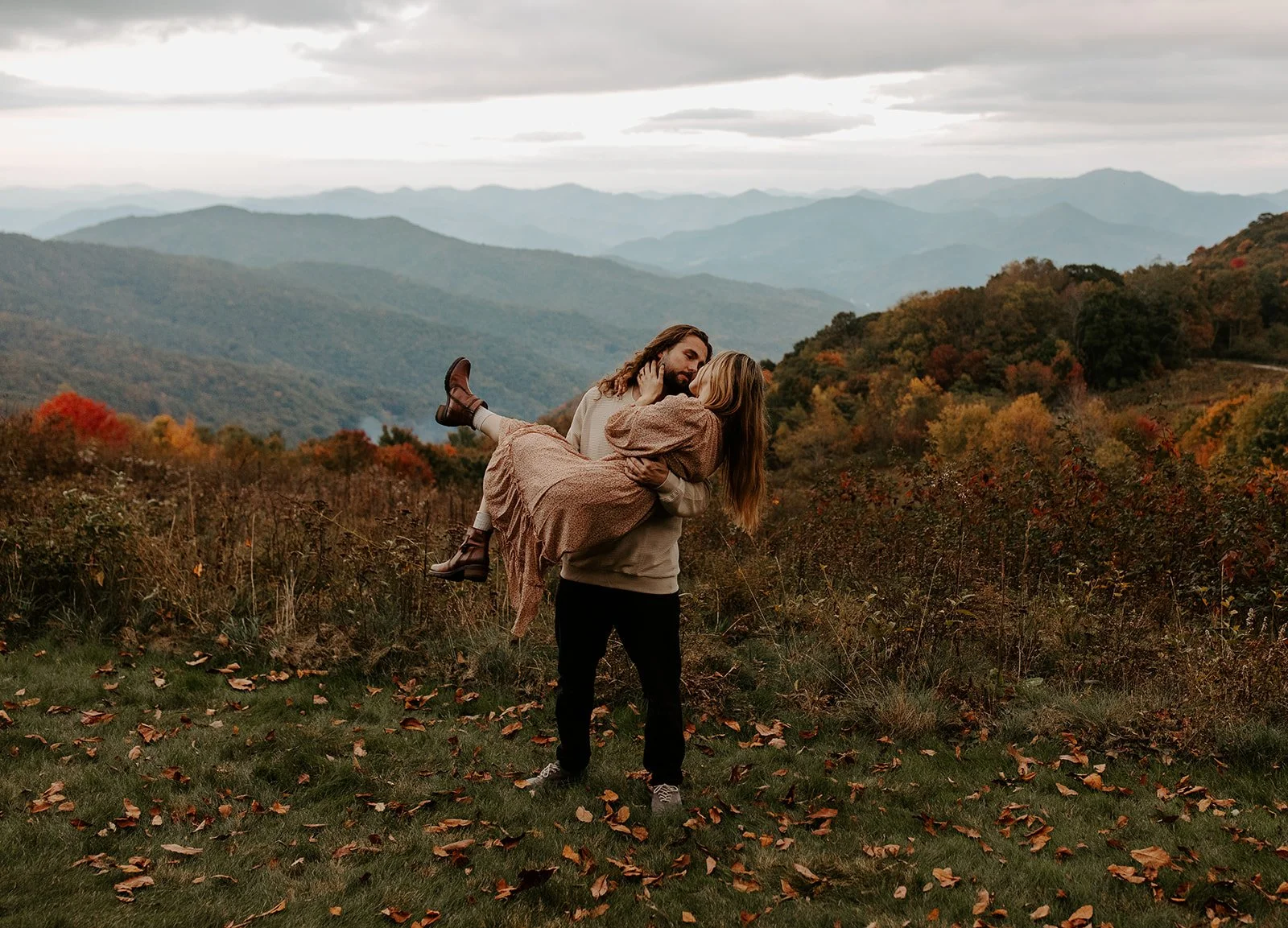
One of the things that makes West Virginia such a beautiful place to elope is how dramatically the landscape changes throughout the year. Each season offers a different experience, from vibrant fall foliage to powerful spring waterfalls and quiet winter landscapes.
The best time to elope ultimately depends on the type of scenery and atmosphere you want for your wedding day.
Spring (April–June)
Spring is one of the best seasons for waterfall elopements in West Virginia. Snowmelt and seasonal rainfall create strong water flow, making many of the state’s waterfalls especially dramatic during this time of year.
The forests begin turning green again, temperatures are generally mild, and popular locations are often quieter than during peak summer travel season.
This can be an ideal time for couples who love lush landscapes and the sound of rushing water surrounding their ceremony.
Summer (June–August)
Summer brings warm weather, long daylight hours, and vibrant green forests throughout the Appalachian Mountains.
Many of West Virginia’s scenic overlooks and high-elevation areas feel especially peaceful during early mornings and evenings. Sunrise and sunset ceremonies can be particularly beautiful during the summer months when soft golden light filters through the trees.
Summer is also a great time for couples who want to incorporate activities like hiking, exploring multiple locations, or celebrating with a small group of family and friends.
Fall (Late September–October)
Fall is one of the most popular times to elope in West Virginia—and for good reason.
During peak foliage season, the Appalachian Mountains transform into layers of gold, orange, and deep red. Scenic overlooks throughout places like Monongahela National Forest and the New River Gorge region offer incredible views of the colorful forests below.
Because fall is so popular, sunrise ceremonies or weekday elopements are often the best way to experience these locations with fewer crowds.
Winter (December–March)
Winter elopements in West Virginia offer a completely different kind of beauty. Snow-covered forests and quiet mountain landscapes can create a peaceful, intimate atmosphere for couples who want something truly unique.
While some higher-elevation roads may close during winter storms, many scenic areas remain accessible, and the lack of crowds can make the experience feel even more private.
If you’re deciding between seasons, I share more detailed guidance—including weather patterns and crowd expectations—in my guide to the best time of year to elope in West Virginia.
Step 4: Build a Relaxed Elopement Timeline
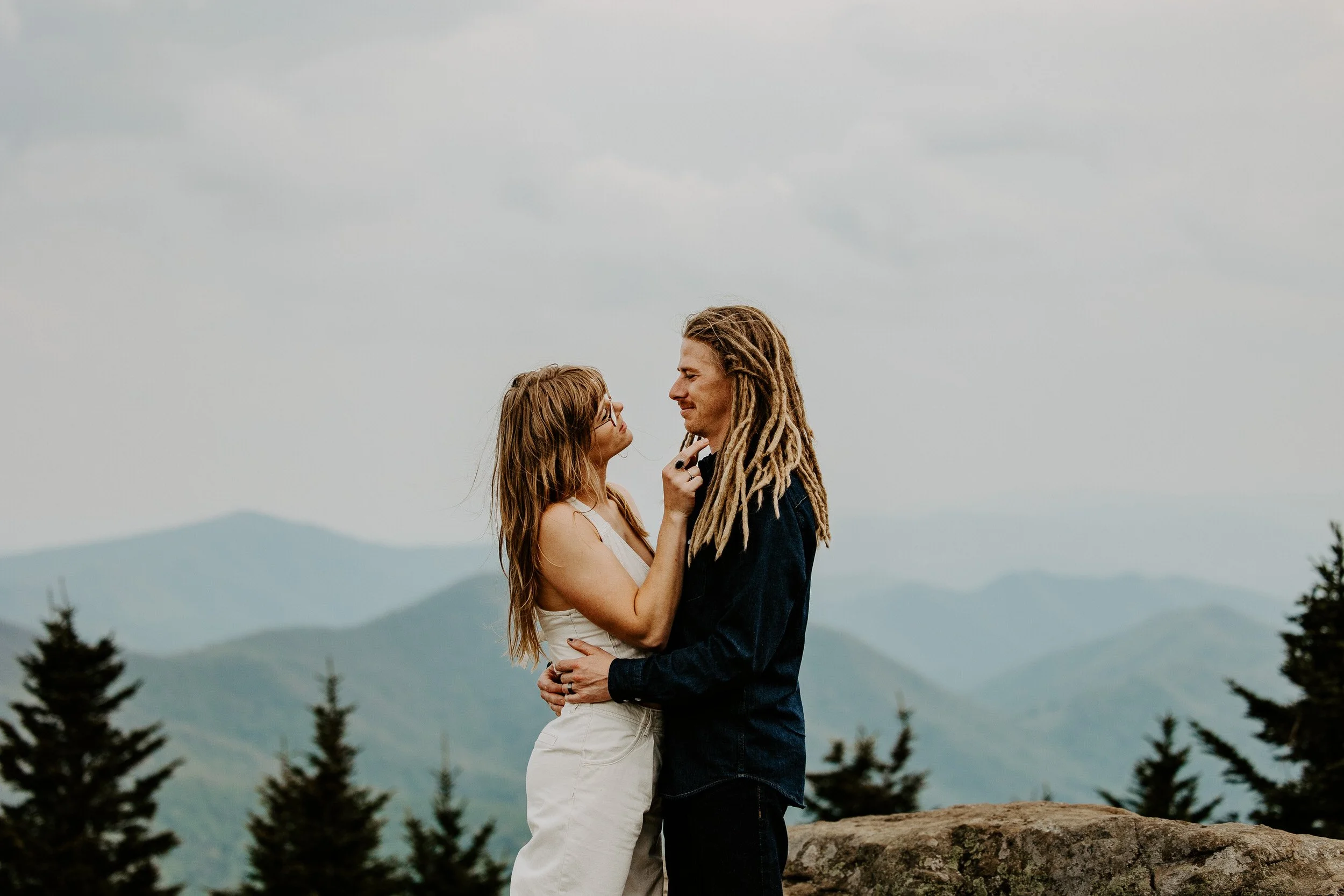
One of the biggest advantages of eloping is that your wedding day doesn’t have to follow the structure of a traditional timeline.
Instead of rushing between venues, coordinating dozens of guests, or trying to fit everything into a short ceremony window, an elopement allows you to slow down and build a day that feels intentional and meaningful.
Many couples choose to spread their experience across several hours—or even an entire day—so they can truly enjoy the landscape and the time they’re sharing together.
A relaxed West Virginia elopement timeline might include moments like:
• starting the morning slowly at a cozy cabin or Airbnb
• sharing a quiet first look in the forest
• hiking to a scenic overlook or waterfall ceremony location
• exchanging private vows surrounded by nature
• celebrating afterward with a picnic, campfire, or scenic drive
• ending the day with sunset portraits overlooking the mountains
Because West Virginia offers such a variety of landscapes within short driving distances, couples often explore more than one location during their elopement day. This allows the experience to feel like a meaningful adventure rather than a single short event.
If you're curious what a full day might actually look like, I’ve shared several examples in my guide to West Virginia elopement timeline ideas for couples who want a simple, meaningful day.
Designing a relaxed timeline is one of the most important ways to keep the experience stress-free and focused on what matters most: being present with each other.
Step 5: Plan Meaningful Activities for Your Elopement Day
One of the most beautiful parts of an elopement is the freedom to design a day that reflects your relationship rather than following a traditional wedding schedule.
Instead of rushing from event to event, many couples choose to build their elopement around meaningful experiences they can share together. West Virginia’s forests, mountains, and waterfalls create the perfect setting for a day that feels peaceful, adventurous, and personal.
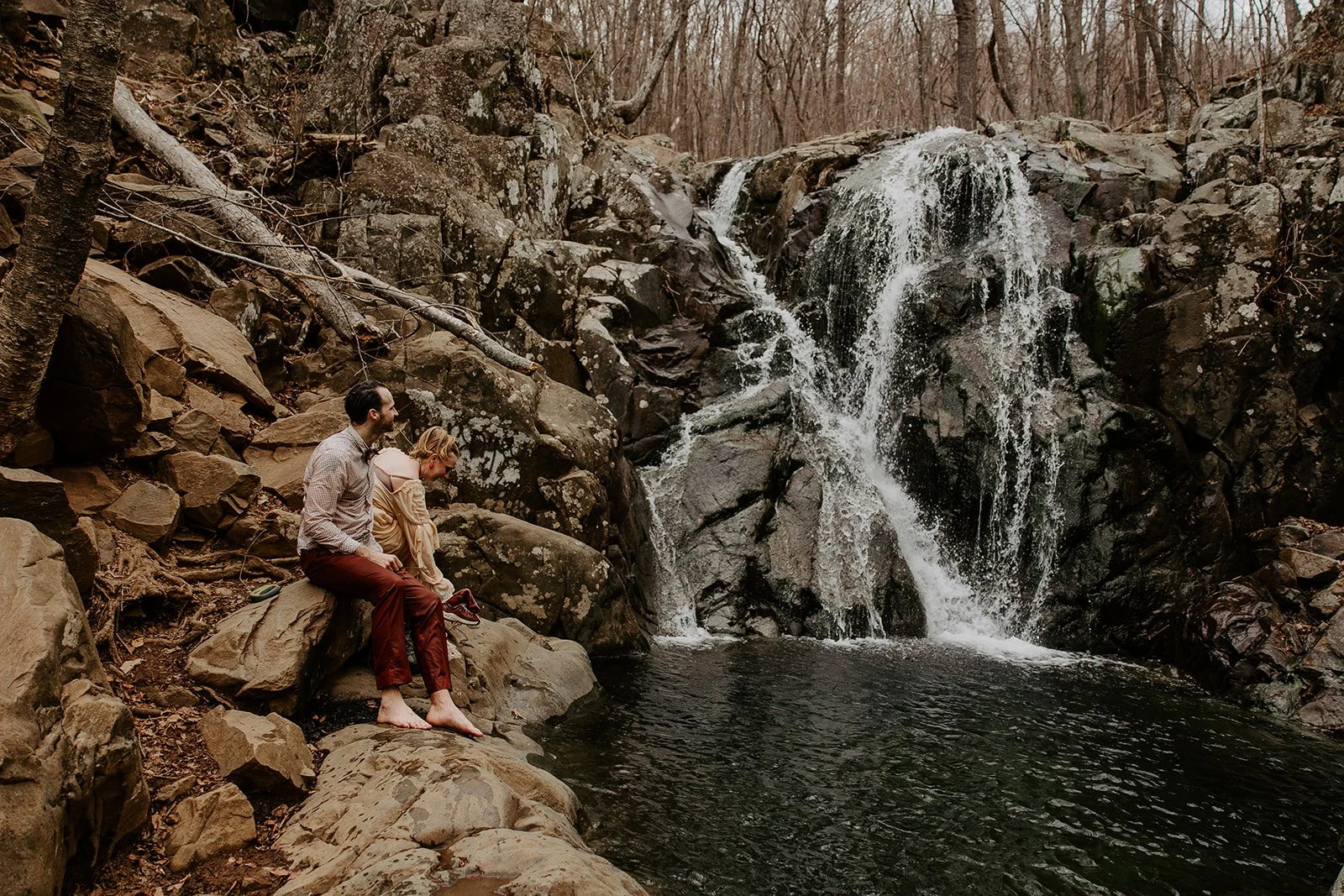
Some couples keep things simple with a quiet ceremony followed by a scenic hike or picnic, while others turn their elopement into a full-day adventure exploring several locations throughout the mountains.
Some ideas couples often include in their West Virginia elopement day are:
• hiking to a scenic overlook or waterfall together
• sharing a sunrise ceremony surrounded by mountain views
• exploring forest trails in Monongahela National Forest
• enjoying a picnic beside a waterfall or along a quiet river
• ending the day with sunset portraits overlooking the Appalachian Mountains
• celebrating afterward with a cozy cabin stay or campfire
These moments often become some of the most meaningful parts of the entire experience. Instead of feeling like a performance, the day naturally unfolds as time spent together in a place that feels meaningful to you.
West Virginia’s landscape makes it easy to slow down and stay present, allowing couples to focus on what truly matters: the commitment they’re making and the experience they’re sharing together.
What a Real West Virginia Elopement Can Look Like
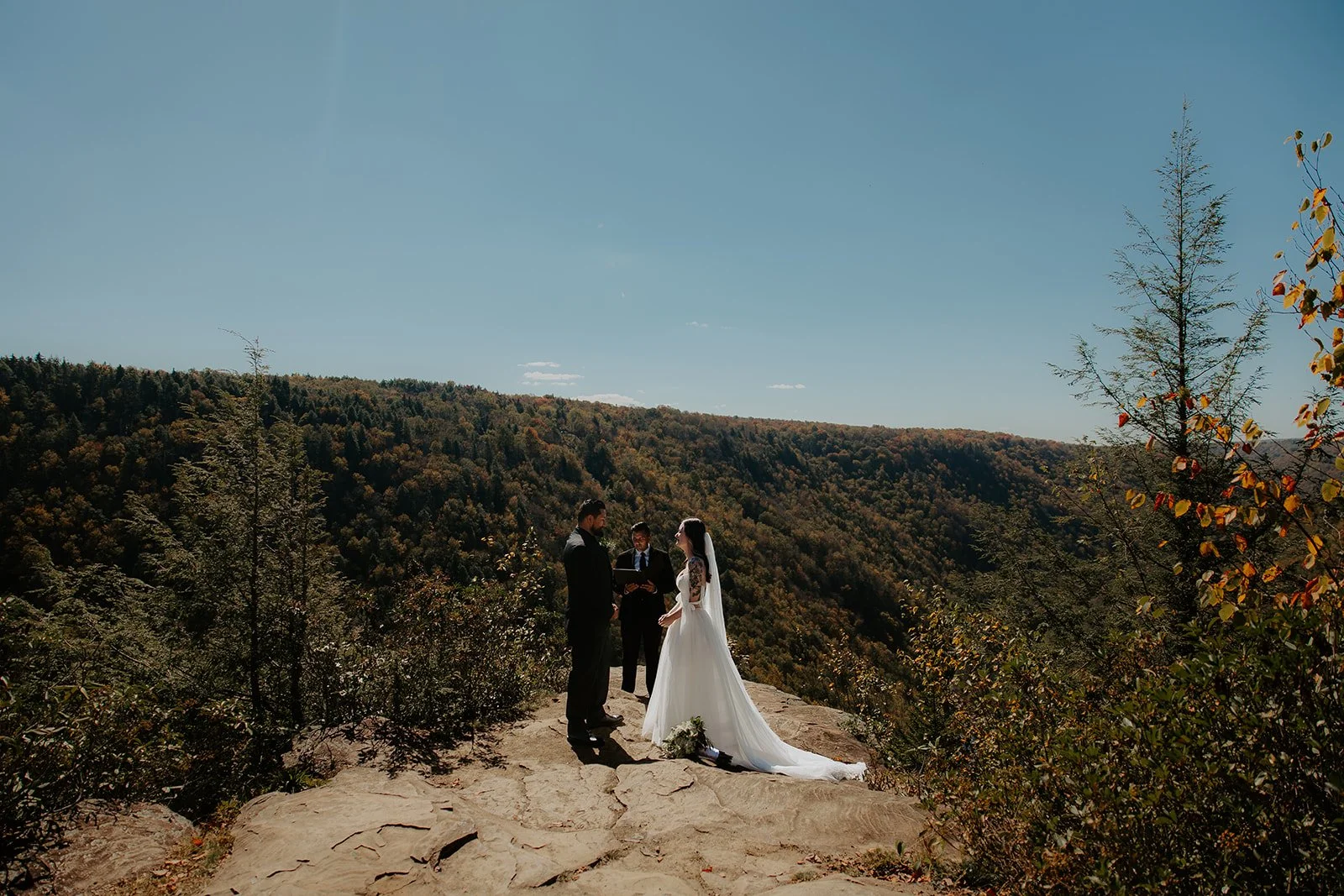
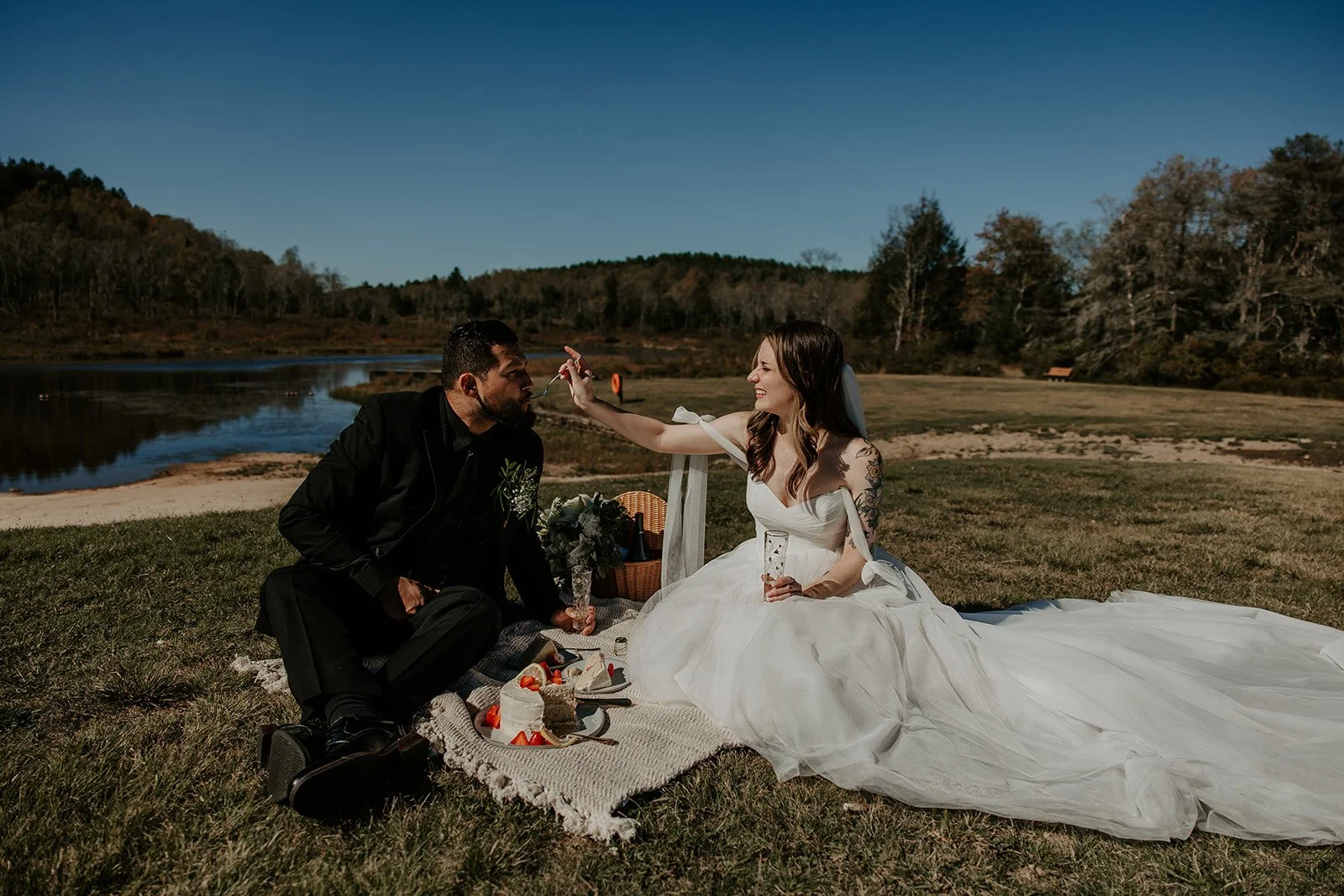
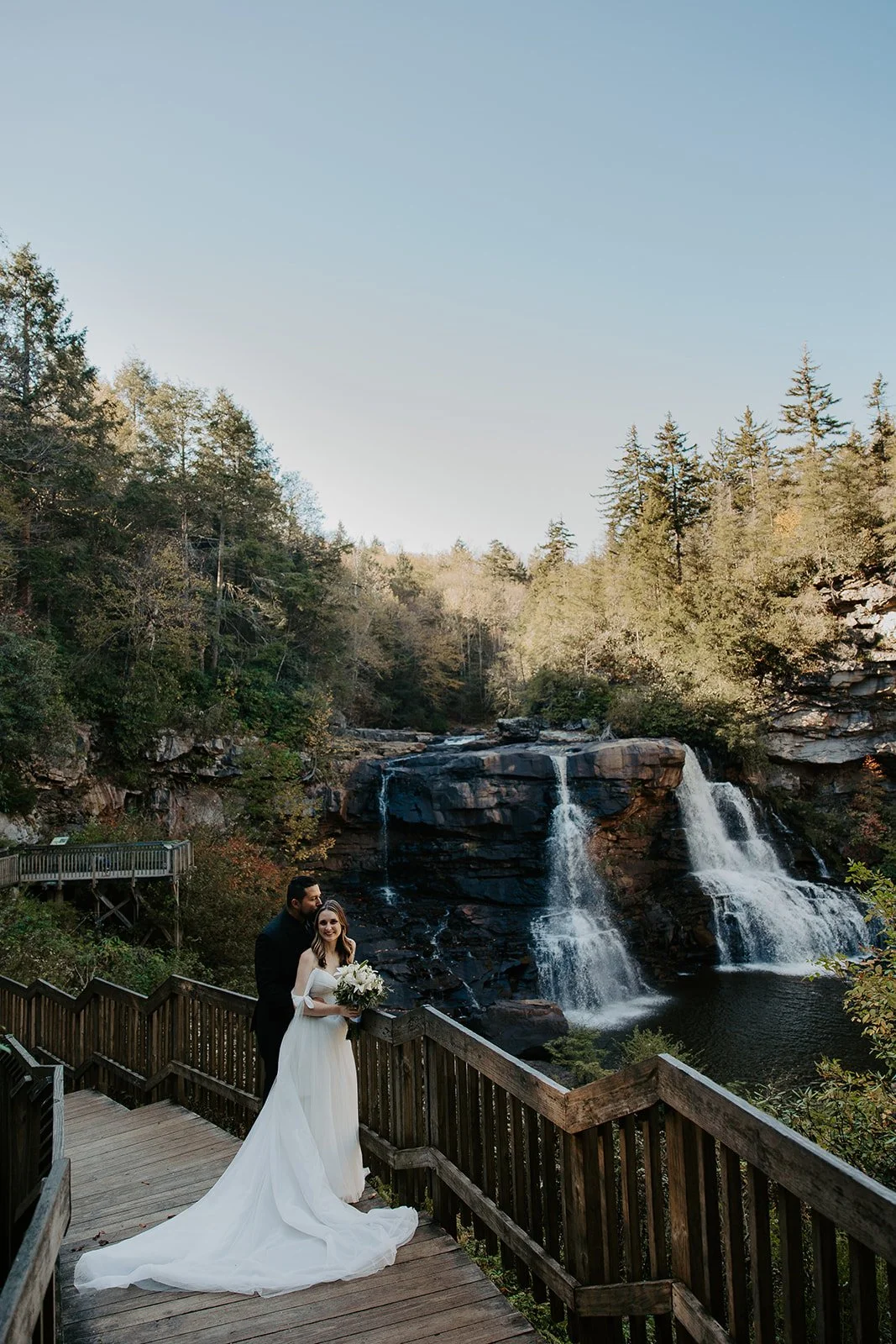
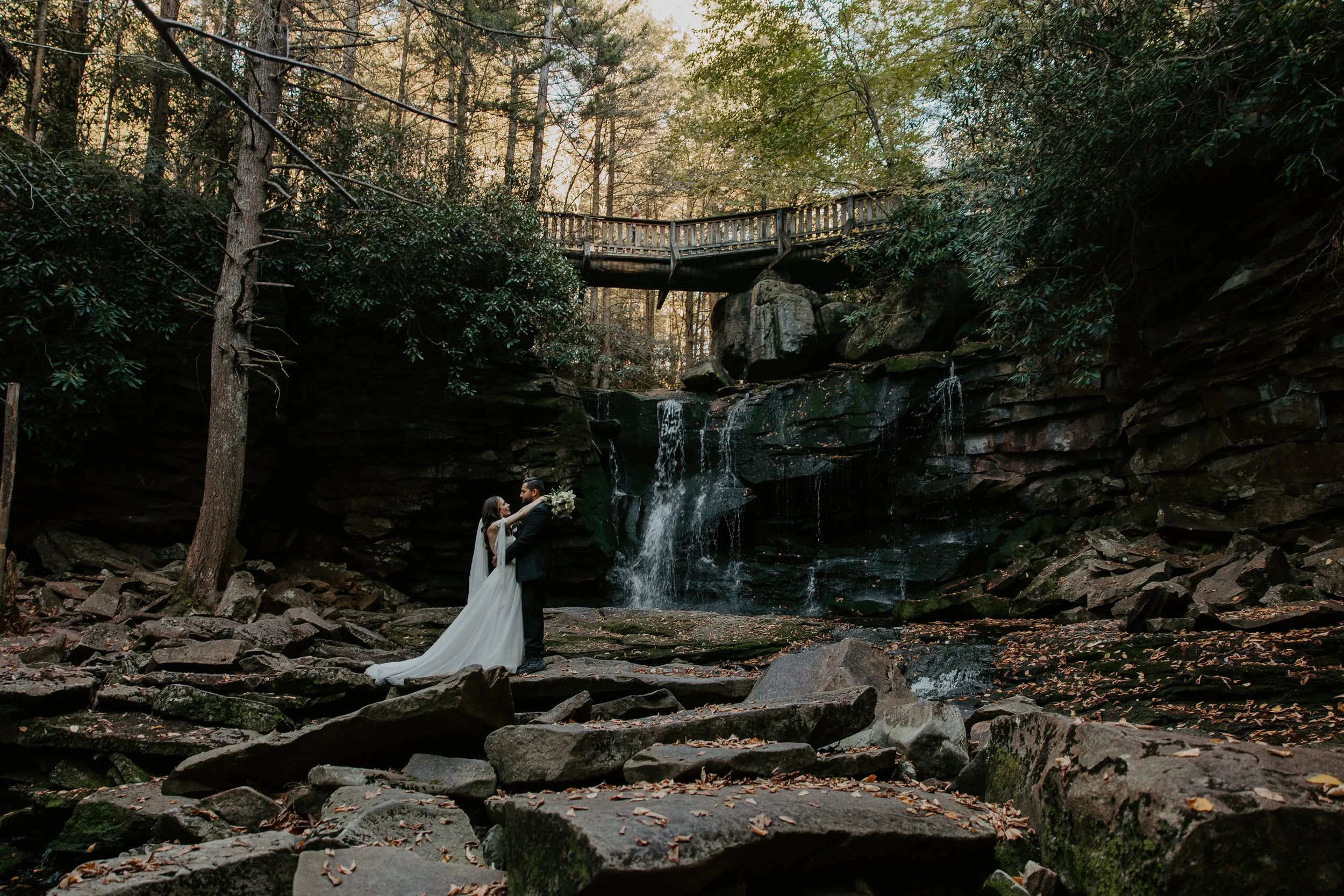
Every elopement day looks a little different, but most share the same intention: slowing down, being present, and celebrating somewhere that feels meaningful.
Alexa and Josh chose Blackwater Falls State Park for their West Virginia elopement because they loved the combination of mountain overlooks, waterfalls, and quiet forest landscapes.
They began their day with a ceremony at Pendleton Point Overlook, where sweeping views of the surrounding Appalachian Mountains created a peaceful and intimate setting for exchanging vows.
After the ceremony, they made their way to Pendleton Lake, where they celebrated with cake and champagne beside the water. Instead of rushing through the day, they took time to relax, talk, and enjoy the moment together.
From there, the afternoon turned into a waterfall adventure throughout the park. They explored several of the area’s most scenic waterfalls, stopping at Blackwater Falls, Elakala Falls, and Albert Falls along the way.
Because their day was intentionally unhurried, each location became part of the experience rather than simply a backdrop for photos. Walking the trails together, hearing the sound of rushing water, and watching the light shift through the forest created moments that felt quiet, meaningful, and completely their own.
Many couples planning a West Virginia elopement choose a similar approach—building a relaxed timeline that allows space to explore the landscape, visit multiple locations, and fully experience the place where they’re choosing to get married.
Common Mistakes Couples Make When Planning a West Virginia Elopement
West Virginia makes it relatively easy to plan a beautiful outdoor elopement, but there are a few common planning mistakes that can create unnecessary stress if couples aren’t aware of them ahead of time.
Understanding these details early can help ensure your elopement day stays calm, simple, and focused on the experience rather than unexpected complications.
Not Checking Permit Requirements
One of the most common misconceptions about eloping outdoors is assuming that a permit isn’t required for small ceremonies.
Many West Virginia state parks require special use permits for weddings, even when only a few people are present. These permits help parks manage visitor impact and ensure ceremonies take place in appropriate locations.
Because requirements vary depending on the park, it’s important to confirm the rules before finalizing your plans. If you want a full breakdown of how permits work across the state, you can read my guide on do you need a permit to elope in West Virginia.
Choosing a Popular Location at Peak Hours
Some of West Virginia’s most scenic locations—especially waterfalls and overlooks—can become busy during weekends and peak travel seasons.
Planning a sunrise ceremony, weekday elopement, or choosing a quieter location can make a huge difference in how private and relaxed the experience feels.
If privacy is a priority for your elopement, you may want to explore some of the locations in my guide to hidden gem elopement locations in West Virginia.
Trying to Fit Too Much Into the Day
One of the biggest advantages of eloping is the ability to slow down and design a day that feels intentional rather than rushed.
When couples try to pack too many locations or activities into a short timeline, the experience can start to feel stressful instead of meaningful.
Building a relaxed timeline—with time to explore, celebrate, and simply enjoy the landscape—helps create a much more memorable experience. I share several examples in this guide to West Virginia elopement timeline ideas.
Not Considering Seasonal Conditions
Mountain weather in the Appalachian region can change quickly depending on the season and elevation.
Spring can bring strong waterfalls and lush forests, while fall offers incredible foliage but also attracts more visitors. Understanding seasonal patterns can help you choose the best time of year for your priorities.
If you're deciding between seasons, my guide to the best time of year to elope in West Virginia breaks down what to expect throughout the year.
Planning Support Makes the Process Easier
Planning an elopement in a place you may have never visited can come with a lot of unknowns.
Questions about ceremony locations, permit requirements, weather conditions, and seasonal access can quickly become overwhelming—especially when you’re trying to coordinate travel and design a meaningful experience at the same time.
That’s why many couples choose to work with an elopement photographer who specializes in public-lands weddings. Instead of navigating those details on your own, you have someone guiding you through the process and helping you make decisions with confidence.
As a guided public-lands elopement photographer, I help couples plan intentional wedding days throughout West Virginia by assisting with things like:
finding beautiful ceremony locations that fit your vision
researching permit requirements and park regulations
building relaxed timelines that allow space to explore
suggesting meaningful activities to incorporate into the day
helping you prepare for weather and seasonal conditions
The goal is to remove the stress of planning so your elopement day feels calm, intentional, and fully focused on the experience you’re sharing together.
West Virginia Elopement FAQ
-
Some locations in West Virginia require special use permits for weddings and elopements, particularly within state parks. Permit requirements often depend on the park, ceremony location, and group size. Smaller ceremonies on public land may not always require formal permits, but it’s important to verify the rules for the specific location you choose.
For a full breakdown of permit requirements across the state, you can read my guide to West Virginia elopement permits.
-
Some of the most scenic elopement locations in West Virginia include Blackwater Falls State Park, Monongahela National Forest, Canaan Valley, and the New River Gorge region. Couples can choose from waterfall locations, mountain overlooks, quiet forest trails, and scenic state parks depending on the type of landscape they want for their ceremony.
-
Spring and fall are two of the most popular seasons for elopements in West Virginia. Spring offers lush forests and strong waterfall flow, while fall brings vibrant foliage across the Appalachian Mountains. Summer provides warm weather and long daylight hours, and winter can offer quiet landscapes and fewer visitors.
-
Yes. Many couples invite a small group of family or close friends to their elopement ceremony. Some state parks offer accessible ceremony locations that work well for small gatherings, though group size limits and permit requirements may apply depending on the location.
-
Every elopement is different, but many couples build their day around meaningful experiences rather than a traditional wedding schedule. This might include a scenic ceremony at a waterfall or overlook, time spent exploring nearby trails, celebrating with a picnic or champagne toast, and ending the day with sunset portraits in the mountains.
Start Planning Your West Virginia Elopement
West Virginia offers an incredible setting for couples who want a wedding day that feels peaceful, meaningful, and deeply connected to nature.
From quiet forest trails and mountain overlooks to powerful waterfalls tucked inside state parks, the landscape creates endless opportunities to design an elopement experience that reflects your relationship.
Whether you imagine exchanging vows beside a waterfall, celebrating with a small group of family at a scenic overlook, or spending the day exploring the Appalachian Mountains together, your elopement can be as simple or adventurous as you want it to be.
As a guided public-lands elopement photographer, I help couples plan intentional wedding days by helping them find meaningful locations, navigate permits and logistics, and create relaxed timelines that allow them to truly experience the place they’ve chosen to get married.
If you’re beginning to explore what your own West Virginia elopement could look like, you can learn more about my elopement packages and planning support here.
And if you’re ready to start planning, you can reach out below to begin designing a calm, meaningful elopement experience in West Virginia.


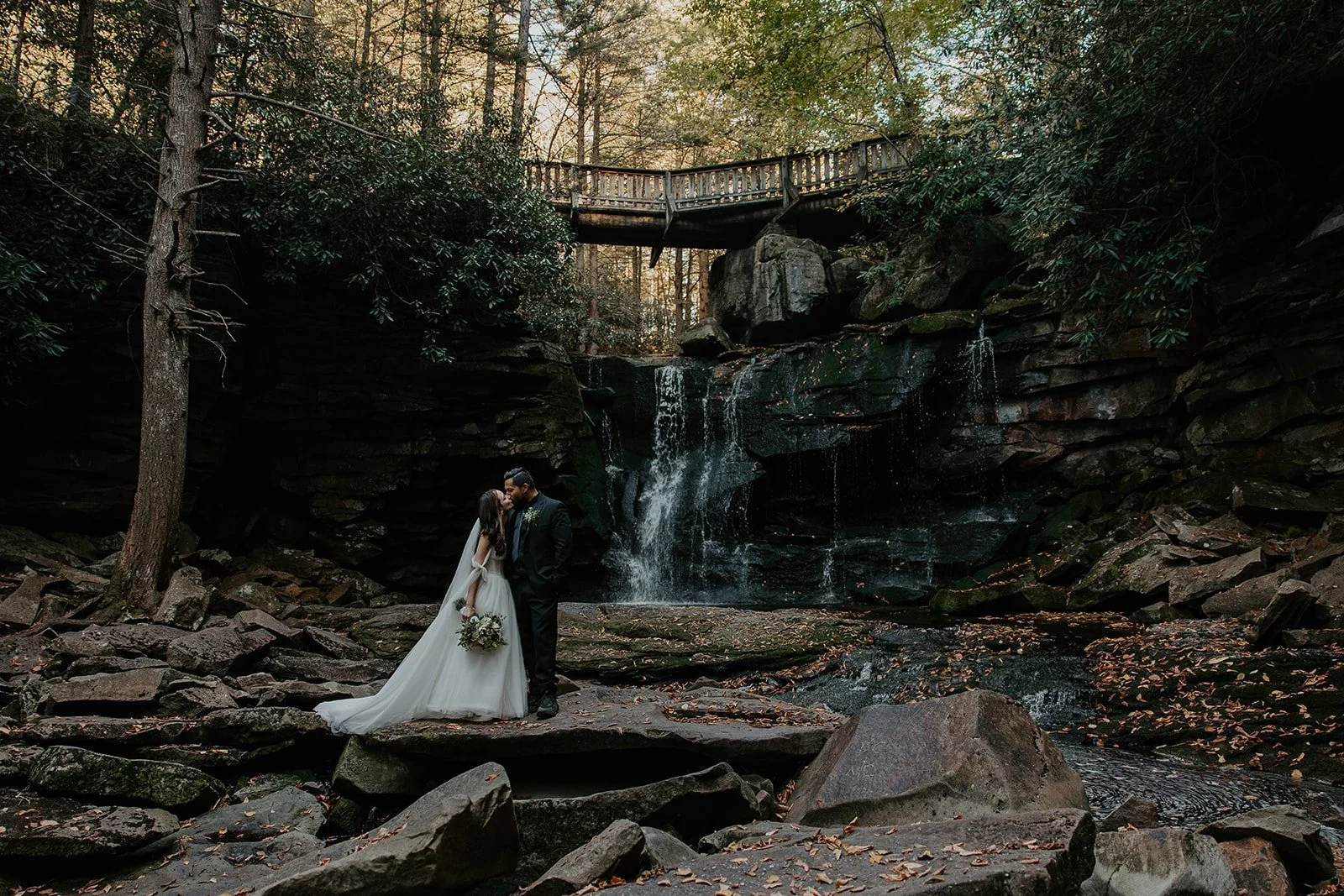
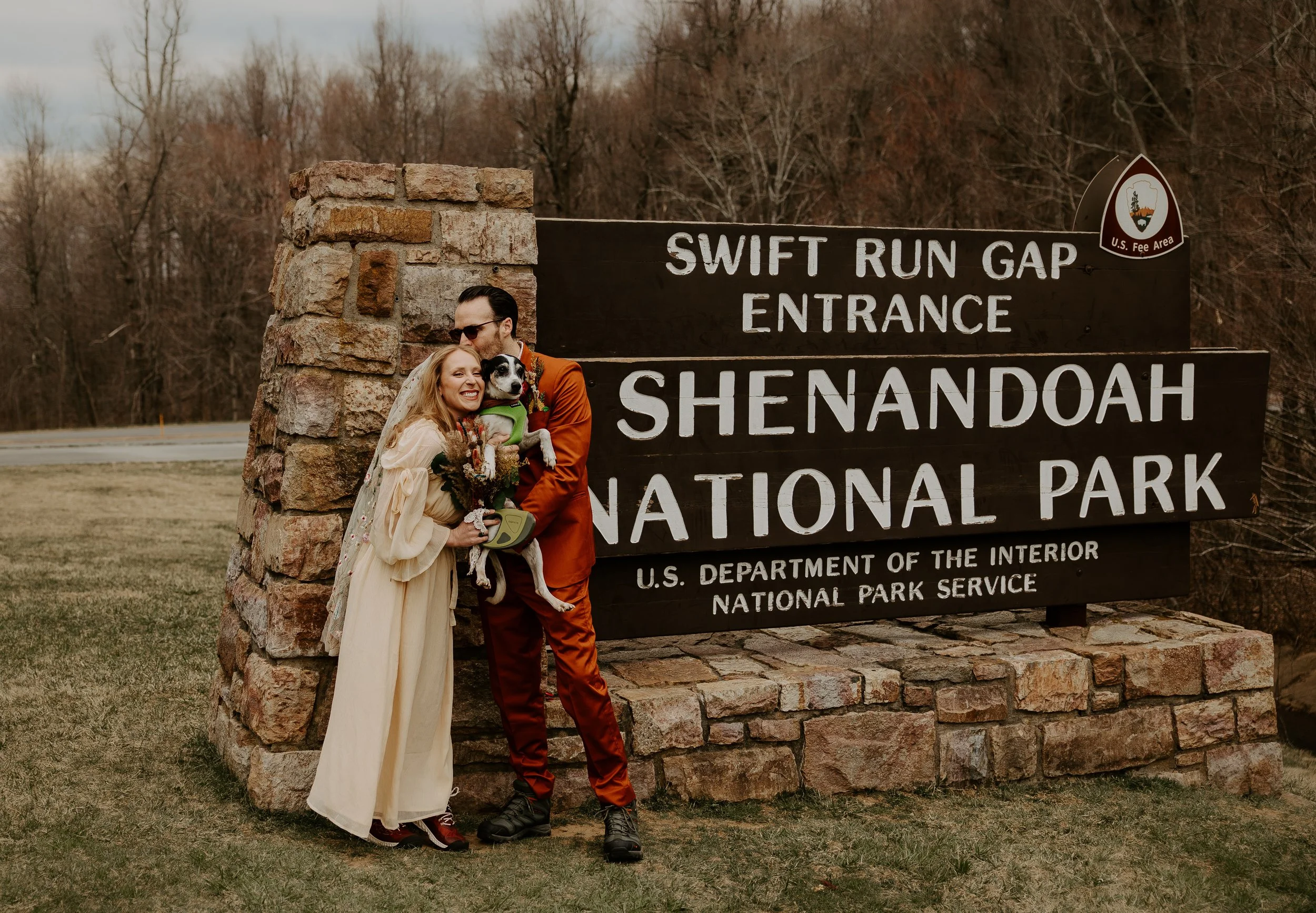

West Virginia has ancient forests, tannin-stained waterfalls, and some of the least crowded public land on the East Coast. Here's why it belongs at the top of your elopement list.