
Black Canyon of the Gunnison Elopement Guide (2026)| Permits, Locations & Planning
Eloping at Black Canyon of the Gunnison National Park is different than eloping in most other parts of Colorado.
The landscape is steeper. The light behaves differently. The ceremony locations are structured and specific. And because the park is managed by the National Park Service, permits and designated areas shape how your day unfolds.
That doesn’t make it complicated, but it does mean clarity matters.
This guide walks you through exactly what to expect if you’re considering a Black Canyon elopement: where ceremonies are allowed, how permits work, seasonal access considerations, guest limitations, and how to plan around wind, light direction, and canyon shadow movement. You’ll also find practical guidance on lodging, timeline flow, and what a grounded, intentional elopement day can actually look like here.
If you’re in the early stages of narrowing down Colorado locations, this guide will help you understand how Black Canyon compares and whether its structure and intensity align with the kind of experience you want to create.
From here, we’ll break everything down step by step so you can move forward with confidence instead of guesswork.
Planning a Black Canyon elopement in 2026?
Inquire early — designated ceremony sites are limited.
Is Black Canyon Right for Your Elopement?
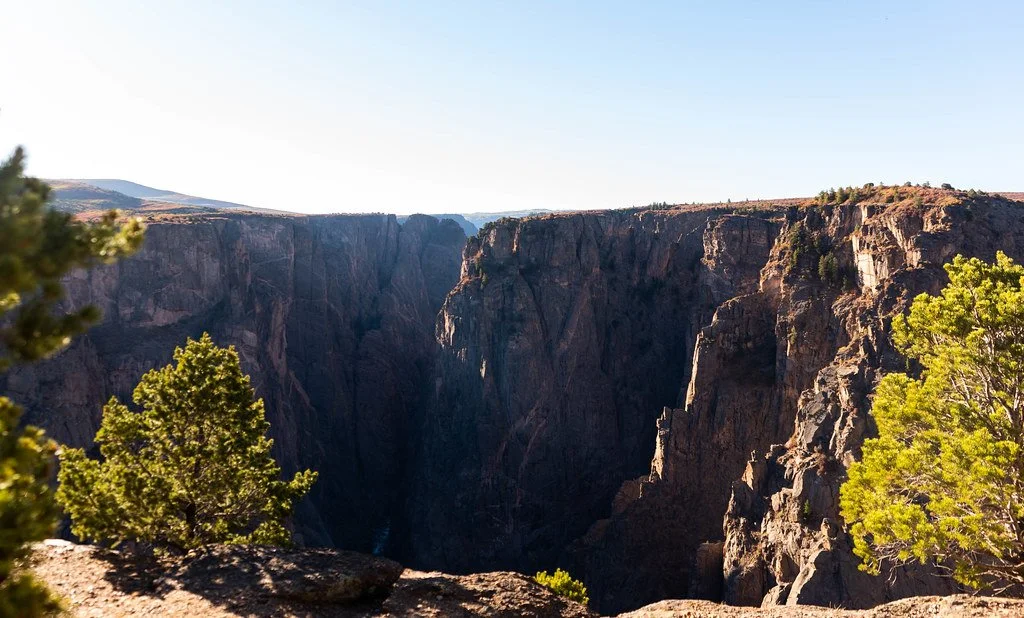
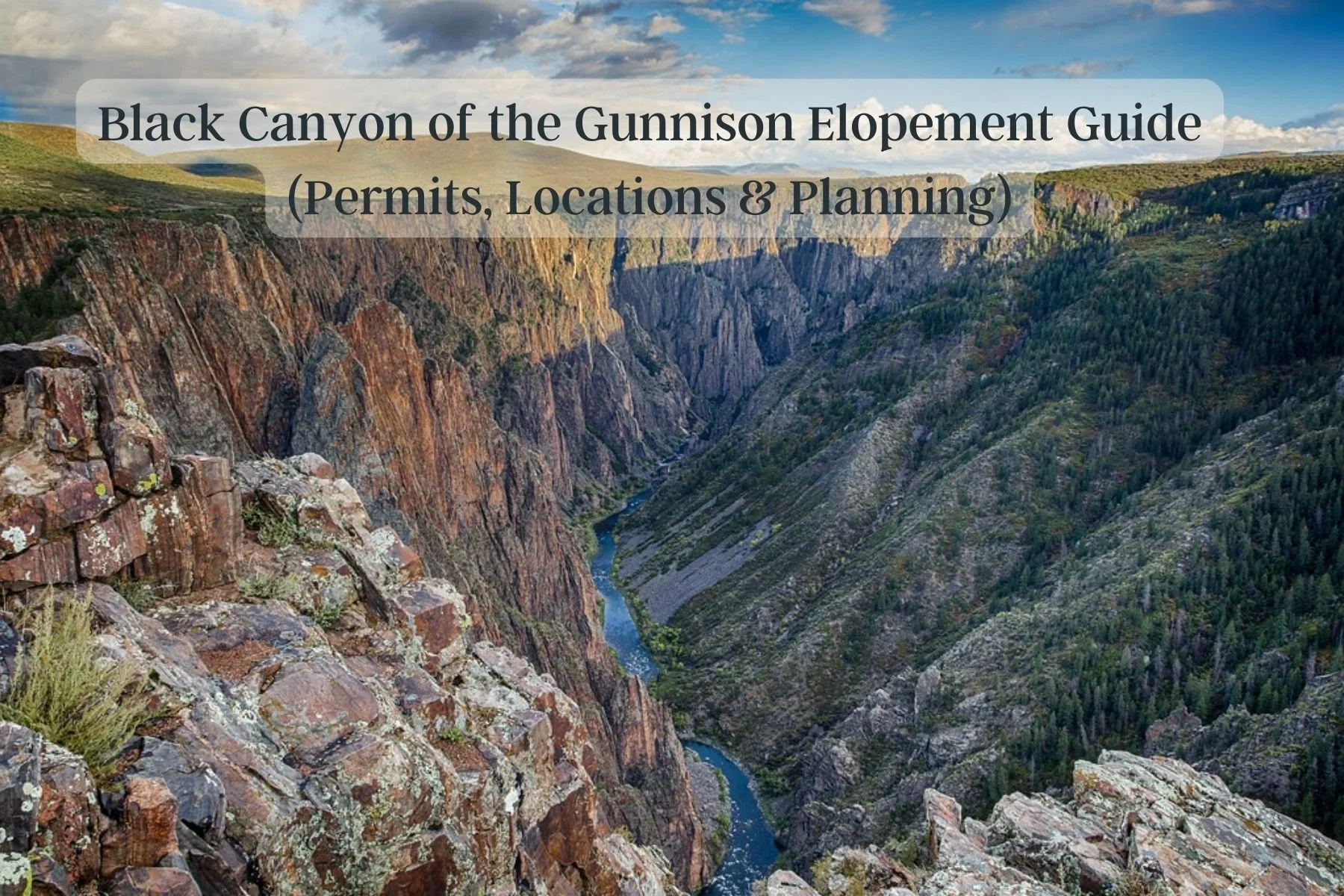
Eloping at Black Canyon of the Gunnison National Park isn’t about soft alpine backdrops or wide-open mountain meadows. The canyon is vertical, dramatic, and stark in a way that immediately shifts your perspective. The overlooks feel exposed. The cliffs drop almost straight down. The landscape doesn’t try to charm you — it commands your attention.
For some couples, that intensity feels grounding. The scale of the canyon quiets everything else. The ceremony spaces are intimate, but the backdrop is immense. If you’re drawn to bold terrain, deep shadow lines, dramatic light, and a setting that feels powerful rather than delicate, Black Canyon can feel incredibly aligned.
This location also comes with more structure than many Colorado public-lands options. Because it’s managed by the National Park Service, ceremonies are limited to designated areas and require a permit. If you’re still deciding what “rules” actually apply to different locations in Colorado, How to Elope in Colorado can help you understand the bigger picture before you commit. And if you want the quick, honest breakdown of what permits look like across the state (and why they vary so much), Colorado Elopement Permits Explained is a good place to start.
Black Canyon tends to work best forsmaller guest counts, often just the two of you, or for couples who are comfortable choosing from specific ceremony sites rather than expecting total freedom to wander anywhere. It may not be the right fit if you’re envisioning wildflowers, reflective lakes, lush forest trails, or a colorful aspen-focused fall moment. It also isn’t ideal for very large groups or highly customized ceremony setups.
The right landscape should support the kind of experience you want to have. Black Canyon isn’t for everyone — but for the couples it resonates with, it feels steady, dramatic, and unmistakably intentional.
If this landscape already feels aligned, but you’re unsure how to navigate permits, timing, or designated ceremony sites — you don’t have to figure that out alone.
What Makes Black Canyon Unique for Elopements?
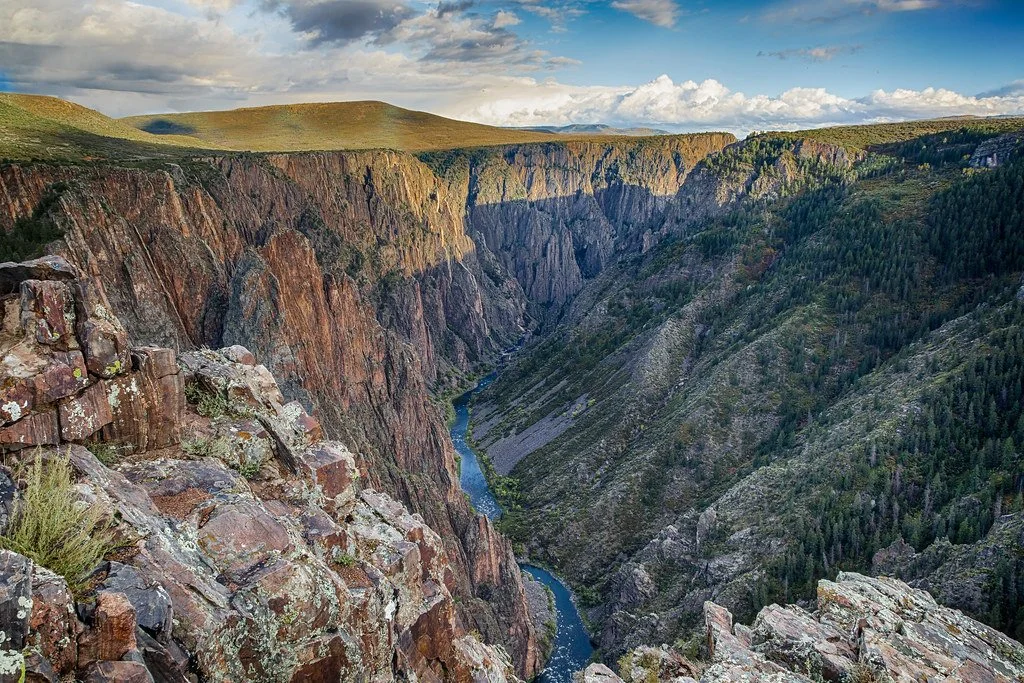
Black Canyon is not a sweeping, storybook mountain landscape. It’s vertical. Compressed. Powerful in a way that feels almost architectural. The canyon walls are some of the steepest in North America, dropping sharply toward the Gunnison River below and creating a sense of depth that you don’t experience in most other Colorado locations.
Where alpine parks stretch outward, this one pulls downward.
The result is an elopement setting that feels intimate, intense, and grounded — not whimsical.
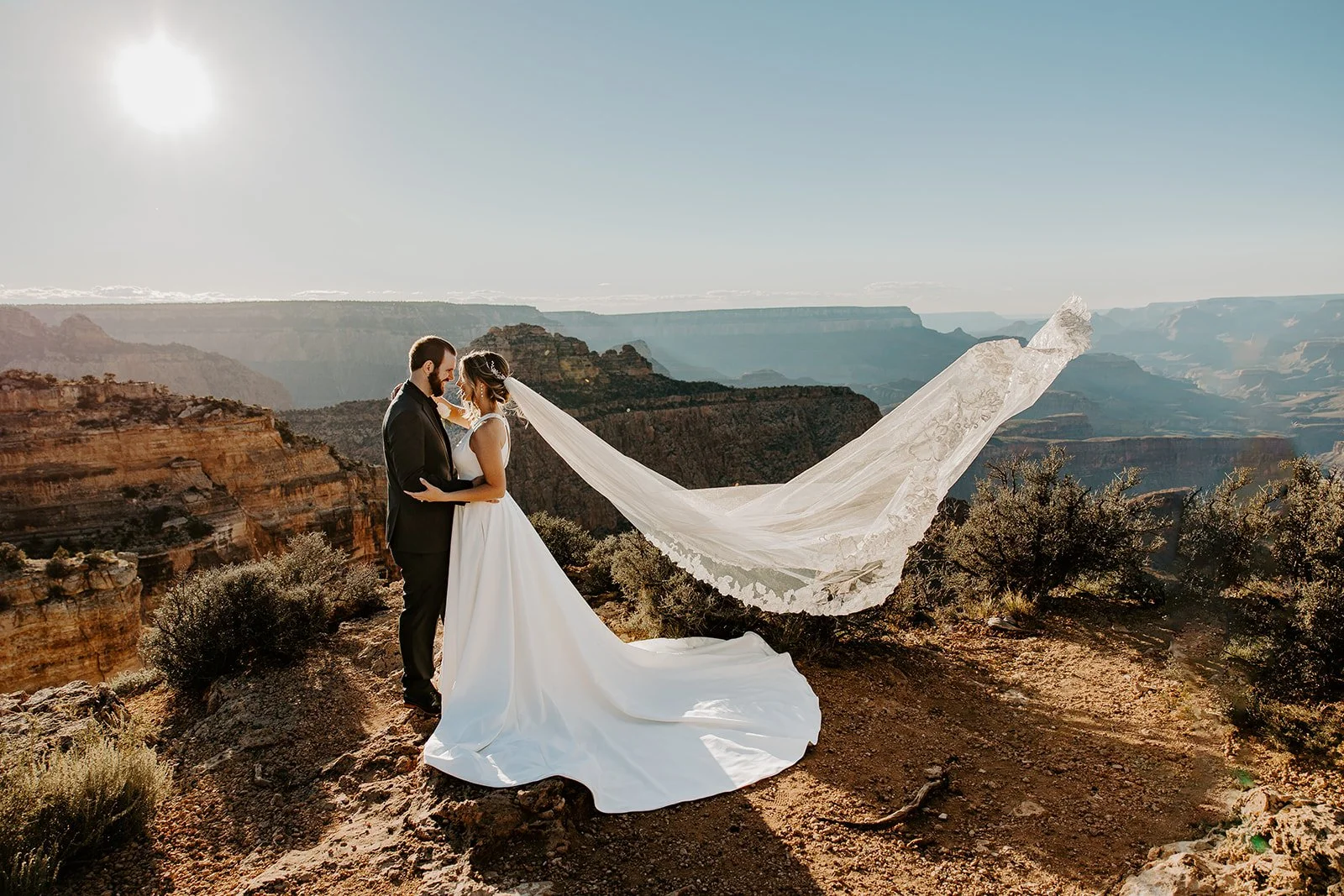
The aesthetic here is darker and moodier than places like Rocky Mountain National Park. Light moves differently across the canyon walls, creating dramatic shadow lines and bold contrast. Sunset doesn’t just glow, it slices across the cliffs. Midday light can be strong and directional. The overall feeling is less soft meadow, more sculpted stone.
It’s also typically less congested than Colorado’s most iconic alpine destinations. While you’ll still encounter visitors, especially along the South Rim, the overall pace tends to feel quieter and more spacious than higher-traffic national parks. There’s no timed-entry system, and the park’s layout naturally disperses people along overlooks and trails.
That said, Black Canyon comes with an important distinction: ceremony locations are limited and designated. You’re not choosing from endless meadows or lakeshores. You’re selecting from specific overlooks approved for ceremonies. For the right couple, that clarity feels grounding. For others, it may feel restrictive. Understanding that difference early is key.
If you’re envisioning something expansive, floral, or classically “mountain romantic,” this may not be your landscape. But if you’re drawn to bold terrain, dramatic depth, and a setting that feels steady rather than delicate, Black Canyon offers something uniquely powerful within Colorado’s elopement options.
Where Can You Have a Ceremony in Black Canyon?
Ceremonies inside Black Canyon of the Gunnison National Park are limited to designated locations. This isn’t a park where you can choose any scenic overlook and set up a ceremony. The National Park Service has approved specific sites to protect the landscape and manage visitor flow.
That structure isn’t a downside, it simply means your planning starts with understanding which rim, which overlook, and how guest logistics will work in that specific space. Below is a high-level overview of how the ceremony areas are generally divided.
South Rim Ceremony Locations
The South Rim is the more accessible and commonly used side of the park. It’s paved, easier to navigate, and located closer to Montrose, which makes lodging and vendor access more straightforward.
Ceremony sites along the South Rim are typically better suited for couples with guests. Parking is more predictable, restrooms are available nearby, and overall accessibility is higher. If you’re planning to include family, especially older relatives, this side of the park is often the most practical choice.
That said, these locations are still public overlooks. Privacy can never be guaranteed, and you’ll be working within a defined footprint rather than a wide-open ceremony field. Clear expectations make all the difference here.
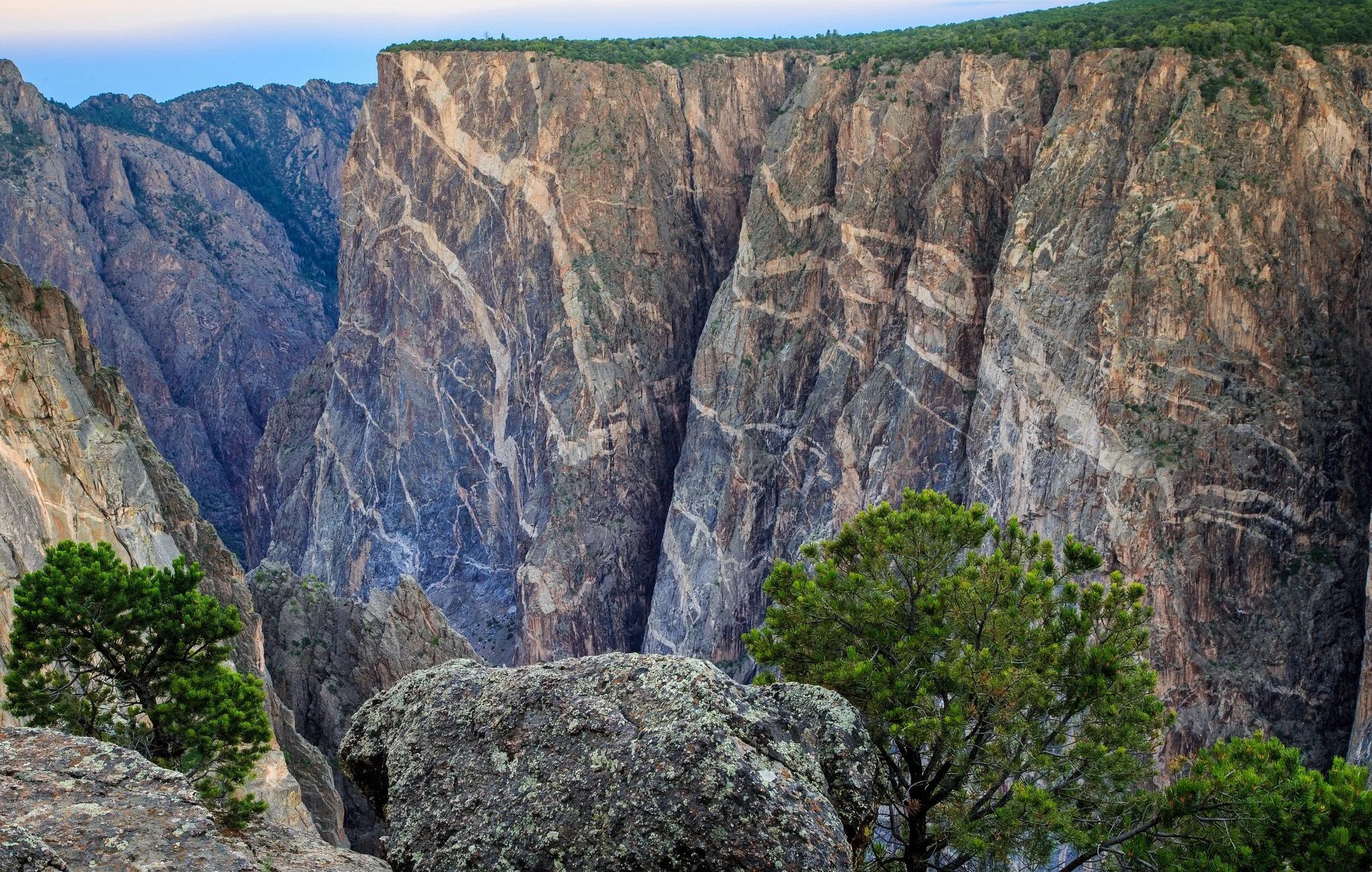
North Rim Ceremony Locations
The North Rim offers a more remote and rugged experience. Access requires driving a dirt road, and services are limited compared to the South Rim. There are fewer facilities, and the overall pace feels quieter and more secluded.
Because of that remoteness, North Rim ceremony locations are often a strong fit for just-us elopements or very small guest counts. The atmosphere feels more intimate, and you’ll typically encounter fewer visitors, though it is still a public national park.
If your priority is solitude over convenience, the North Rim may align more naturally. If ease of access and guest comfort are top priorities, the South Rim usually makes more sense.
If you’re still comparing Colorado landscapes and trying to understand how Black Canyon fits among them, you may want to explore Best Places to Elope in Colorado before narrowing your final decision.
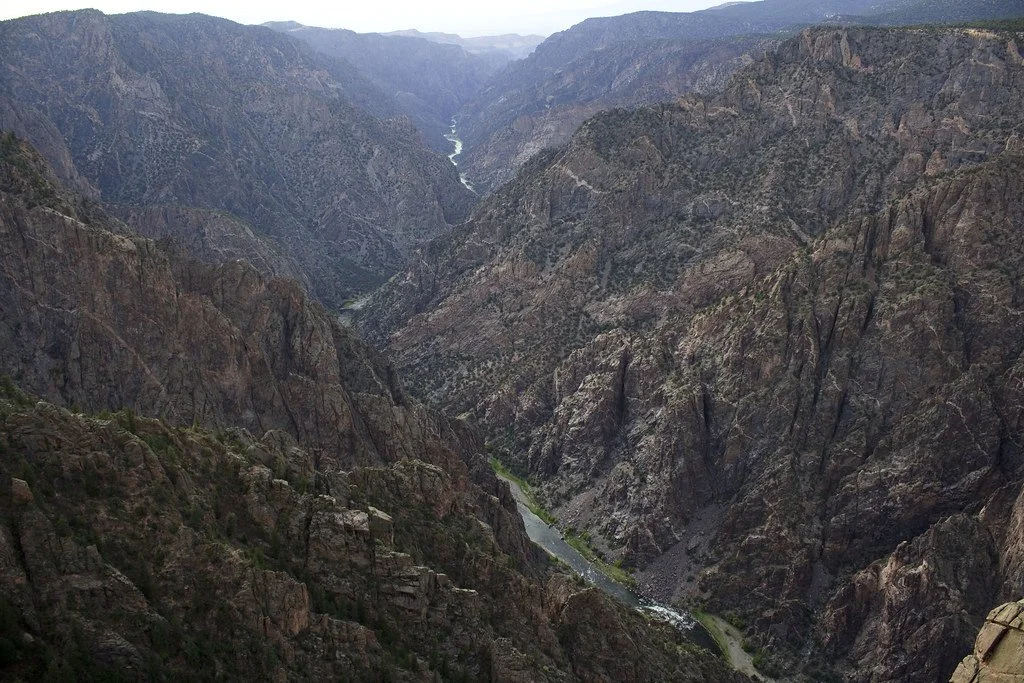
Sunset View, Black Canyon of the Gunnison
Designated Ceremony Locations at Black Canyon of the Gunnison
Ceremonies inside Black Canyon of the Gunnison National Park are limited to specific, approved overlooks. Availability and guest limits vary by site, and all require a Special Use Permit.
Below are the primary designated ceremony locations within the park:
Gunnison Point (South Rim)
Sunset View (South Rim)
Kneeling Camel Overlook (South Rim)
Pulpit Rock Overlook (South Rim)
Chasm View (North Rim)
Each of these overlooks offers a different perspective of the canyon’s depth and light movement. While the overall terrain is consistently dramatic, access, parking, and guest capacity differ slightly between sites.
Because ceremony locations are fixed, the planning process begins with choosing the site that best aligns with your guest count, season, and timeline flow — not just which overlook looks most dramatic online.
Do You Need a Permit to Elope Here?
Yes, a permit is required to hold a ceremony inside Black Canyon of the Gunnison National Park.
Because the park is managed by the National Park Service, all weddings and elopements fall under a Special Use Permit. Even if it’s just the two of you, even if you’re not setting anything up, a permit is still required.
The current ceremony permit fee is$100 (subject to change by the park). This fee covers administrative processing — it does not reserve the entire overlook exclusively, as ceremony sites remain public spaces.
Here’s what that typically involves:
Special Use Permit
You’ll submit an application directly to the park outlining:
Your selected ceremony location
Guest count
Date and time
Any planned setup
Approval is required before your ceremony date. Processing times can vary depending on the season, so applying early is important, especially for summer and fall.
Guest Limits
Each designated ceremony site has a maximum guest capacity. These limits are strict and non-negotiable. That includes:
Guests
Vendors
Photographer / officiant
Anyone present for the ceremony
Because the sites are specific overlooks rather than reservable private venues, the footprint is intentionally limited to protect the landscape and ensure public access.
Setup Restrictions
Black Canyon is not a “bring your own venue” kind of location.
Arches are typically not allowed without prior approval.
Chairs are restricted and often not permitted at overlook sites.
Large décor installations are not allowed.
Amplified sound is prohibited.
Most couples choose to keep their ceremony simple and minimally styled, which aligns beautifully with the landscape itself.
Insurance Requirements
In some cases, the park may require proof of liability insurance, particularly if vendors are involved. This is part of the National Park Service’s broader event regulations and is not unique to Black Canyon specifically.
The key takeaway: permits here are structured, but not complicated — when handled correctly.
If you want a broader breakdown of how Colorado permit rules differ across National Parks, State Parks, National Forest land, and BLM land, Colorado Elopement Permits Explained will give you clarity. And if you’re still in the early planning phase and want to understand the full process from marriage license to location logistics, How to Elope in Colorado walks through the bigger picture.
Permit planning isn’t about bureaucracy. It’s about protecting the land and making sure your day flows smoothly without last-minute surprises. Handling that structure early is what allows the experience itself to feel calm and grounded. I handle the permit process, site selection, and timeline coordination so your experience feels steady instead of procedural.
Best Time of Year to Elope at Black Canyon
Black Canyon doesn’t behave like high-alpine Colorado. Elevation is lower than many mountain parks, which means snowpack, wildflower timing, and fall color expectations look different here. The canyon’s vertical walls also create intense light contrast that shifts dramatically throughout the day.
Here’s what each season realistically looks like.
Spring
Spring at Black Canyon is transitional. Snow melt from higher elevations feeds the Gunnison River, and weather can shift quickly between warm sun and sudden wind or storms. The South Rim typically becomes accessible first, while the North Rim may remain closed or limited depending on road conditions.
Temperatures are moderate compared to alpine regions, but wind exposure at overlooks can make it feel cooler than expected. Early spring ceremonies require flexibility, but late spring can offer beautiful light with fewer crowds.
Summer
Summer is the most predictable season for access, with both rims typically open. Midday temperatures can be hot, especially in direct sun along exposed overlooks. Shade is limited, and light contrast inside the canyon is strong and dramatic.
The reward is sunset.
As the sun lowers, it washes the canyon walls in warm, golden light that feels sculpted and cinematic. Planning your ceremony earlier and reserving sunset for portraits often creates the most balanced flow. Summer is also the busiest season, though it remains generally less congested than parks like Rocky Mountain National Park.
Fall
Fall brings crisp air and a quieter pace compared to peak summer months. Temperatures are often ideal for ceremonies, and visitor numbers tend to taper off slightly.
However, it’s important not to oversell fall foliage here. Black Canyon is not an aspen-dense alpine basin. You may see subtle seasonal shifts, but the landscape remains primarily rock-forward and dramatic. If vibrant fall color is your priority, other Colorado locations may align more closely with that vision.
Winter
Winter changes access significantly. The North Rim closes seasonally, and South Rim access can be limited depending on snow and road conditions. Temperatures drop quickly, and wind exposure becomes a major factor in ceremony comfort.
That said, snow dusting the canyon wallscreates an incredibly dramatic backdrop. If you’re comfortable embracing cold conditions and planning carefully around road closures, winter can offer a striking and deeply quiet experience.
If you’re weighing Black Canyon against other regions in the state, especially higher elevation mountain parks, you may also want to read Best Time to Elope in Colorado for a broader seasonal comparison across landscapes.
The right season here isn’t just about weather. It’s about how much structure, contrast, and environmental intensity you want shaping your day.
Guest Count & Logistics Considerations
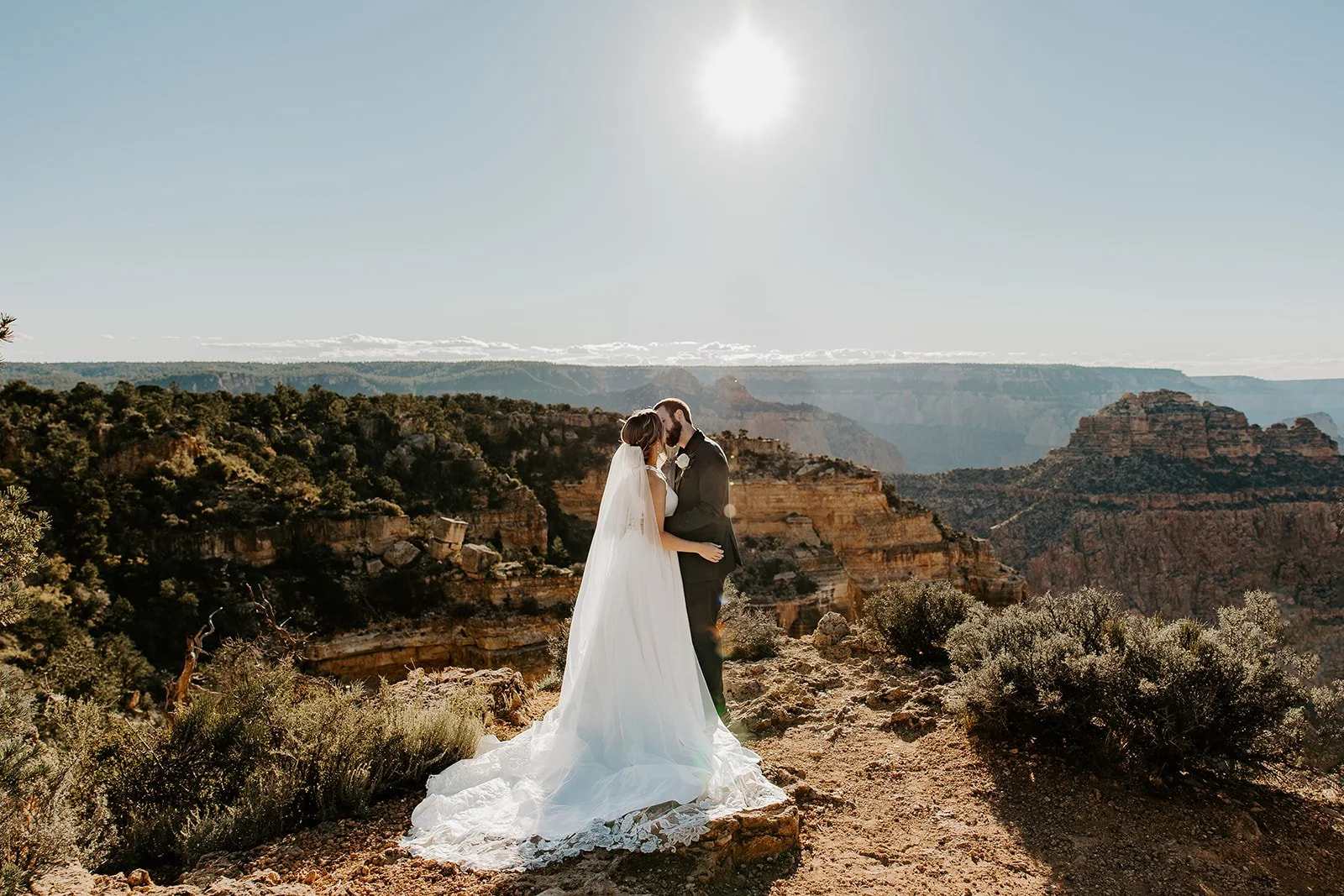
Planning an elopement at Black Canyon of the Gunnison National Park isn’t just about choosing a dramatic overlook. The park’s terrain, infrastructure, and ceremony regulations all directly impact how your day flows, especially if you’re bringing guests.
This is where thoughtful planning matters most.
Parking Limitations
Designated ceremony sites are located at public overlooks, which means parking is shared with regular park visitors. While guest limits are capped through the permit process, parking capacity itself is not reserved exclusively for your ceremony.
This doesn’t mean it won’t work, it simply means timelines should account for arrival coordination, especially during summer weekends. Clear instructions and intentional ceremony timing help avoid stress here.
Rim Safety Barriers
Most ceremony locations are positioned near safety railings or designated viewing areas. You won’t be standing at an unguarded cliff edge. While the views feel dramatic and expansive, there are defined boundaries for safety and preservation.
Understanding those physical constraints ahead of time allows us to design a ceremony setup that feels intentional rather than improvised.
Wind Conditions
Wind exposure at the rim can be significant. Even on otherwise calm days, gusts move unpredictably along the canyon edge. This affects:
Dress selection
Hair styling
Audio (if you’re using a small speaker or vow recording device)
Overall ceremony comfort
Wind isn’t a reason to avoid Black Canyon, but it’s something you plan for, not ignore.
Limited Shade
Overlooks are largely exposed. Midday ceremonies can feel intense in direct sun, especially during summer. Shade options are minimal, which makes ceremony timing one of the most important logistical decisions you’ll make.
Planning around light direction, not just sunset time, ensures the experience feels comfortable and visually balanced.
Accessibility
South Rim locations are generally more accessible and better suited for guests with mobility considerations. The North Rim, by contrast, involves dirt road access and fewer services.
If you’re including family members who need smoother paths, restrooms nearby, or easier walking surfaces, those details should shape which rim you choose from the start.
No Privacy Guarantees
Even with a permit, ceremony sites remain public overlooks. Visitors may pause, watch from a distance, or pass through the area. Rangers do not close overlooks for private events.
This is part of eloping on public lands and it’s completely manageable with the right expectations and positioning. The focus becomes the experience itself, not whether strangers are 30 feet away enjoying the same view.
Logistics at Black Canyon aren’t complicated, but they are specific.
My role in guiding couples here isn’t just about photography. It’s about anticipating wind, light, guest movement, access points, and timing so the day feels grounded instead of reactive. When those details are handled early, you’re free to stay present at the edge of something extraordinary.
What a Black Canyon Elopement Day Can Actually Look Like
A Black Canyon elopement day doesn’t need to feel extreme just because the landscape is.
The cliffs are steep. The drop is dramatic. But the experience itself can be steady and spacious. In May, temperatures are moderate, the South Rim is fully accessible, and the North Rim may or may not be open depending on the season’s snowpack. Light is strong but not yet peak-summer harsh, and sunset timing allows for a full day without rushing.
Below are two example flows, one full 12-hour day and one multi-day 16-hour experience, both assuming you’re staying near Montrose and holding your ceremony at a designated site within Black Canyon of the Gunnison National Park.
These aren’t rigid schedules. They’re frameworks designed to show what the day can feel like when paced intentionally.
Example 1: Full-Day Experience (12 Hours)
Assumptions
Late May
South Rim ceremony site
Lodging in Montrose (25–30 min drive to park entrance)
Guest count: Up to 10
-
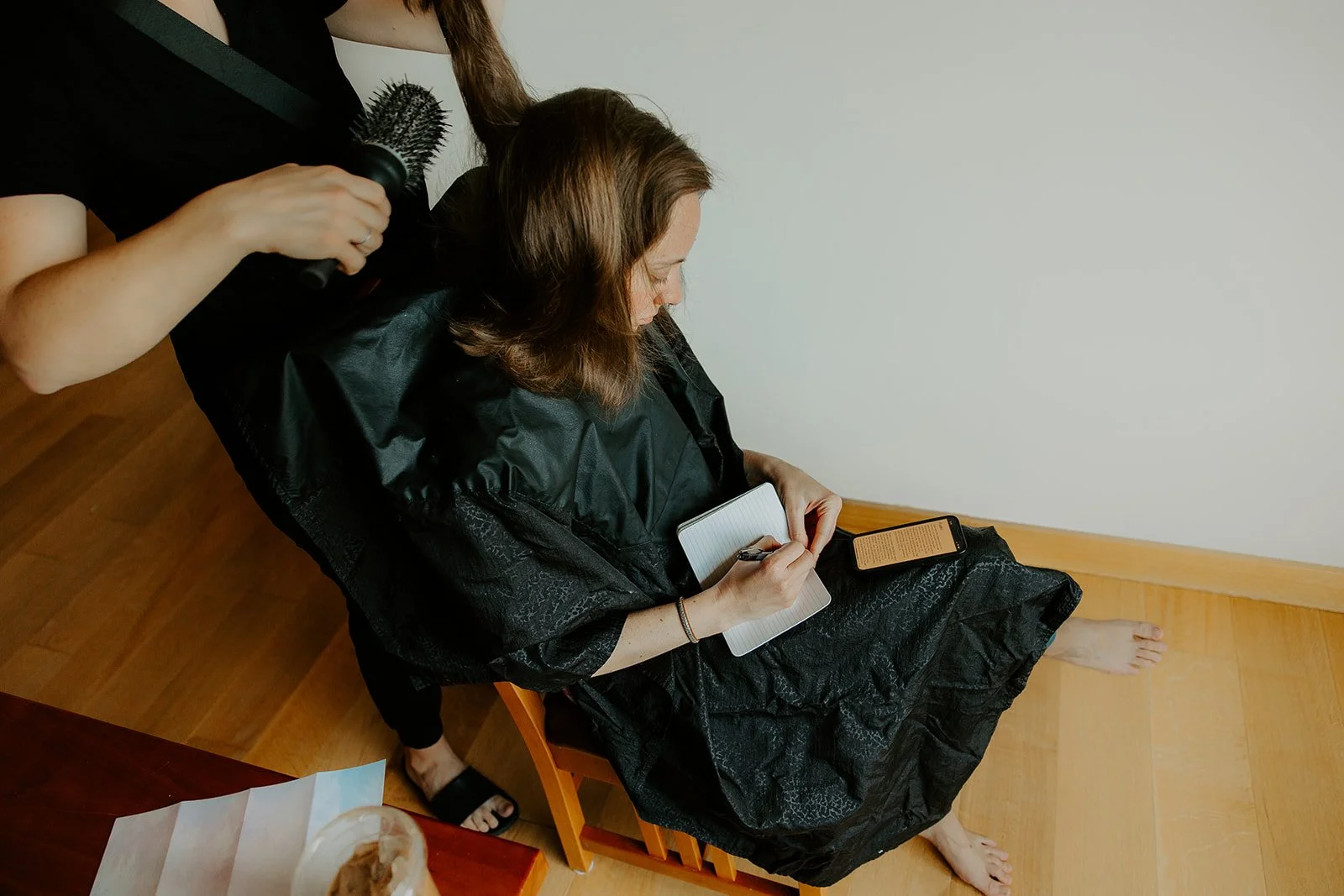
10:30 AM – Getting Ready in Montrose
Slow morning. Windows open. Natural light coming into the Airbnb. You’re not rushing, you’re settling in.
Hair and makeup wraps. Details are photographed casually. There’s time to write final vows or take a short walk nearby before heading into the park.
1:00 PM – Travel to Black Canyon (South Rim)
Drive time: ~30 minutes.
You enter through the South Rim entrance, stop briefly at the visitor center area for restroom access if needed, then move toward a quieter overlook for your first look.
1:45 PM – First Look
A designated overlook or adjacent trail area, not the ceremony site yet.
Midday light is strong, so positioning matters. The canyon backdrop is dramatic even in earlier light, and we work with angles that soften contrast.
This keeps the ceremony emotionally grounded later — you’ve already had a private moment together.
3:00 PM – Break / Reset
If you have guests arriving, this is when they enter the park. You stay tucked away nearby or return to your vehicle for water and rest.
Wind check. Light check. Timeline adjusts slightly if needed.
4:00 PM – Ceremony at Designated Overlook
Guest arrival is staggered slightly to ease parking.
Ceremony remains simple — no arches, minimal setup, just the two of you at the rim. May weather is typically mild, but wind layers are smart.
Because it’s late spring, the canyon light still has dimension without the deep summer heat.
4:30–6:30 PM – Rim Portraits
We move intentionally between 1–2 nearby overlooks.
May sunsets happen later in the evening, so we build slowly toward golden light. The canyon walls begin catching warmth rather than feeling stark.
7:00 PM – Sunset Glow
This is when Black Canyon shifts.
Golden light grazes the rock face. Shadows carve out depth. The mood becomes cinematic without feeling staged.
This is your quietest part of the day.
8:00 PM – Wrap + Return to Montrose
If you want a dinner reservation in Montrose, this allows you to return comfortably.
If you prefer a private meal at your Airbnb, you’re back before full dark.Optional: Stay later for twilight portraits depending on energy.
Example 2: Multi-Day Experience (16 Hours Across 2 Days)
This option allows the canyon to breathe. You’re not compressing everything into one arc.
Assumptions
Late May
South Rim ceremony site
Lodging in Montrose (25–30 min drive to park entrance)
Just-us
-
Day One (8 Hours) – Exploration & Sunset
2:00 PM – Meet at Airbnb in Montrose
Relaxed start. No ceremony today. Just presence.
You change into a secondary outfit or hiking layers for exploring.
3:00 PM – Drive to Park
South Rim access.
This day is about scouting light and experiencing the canyon without ceremony pressure.
3:45–6:30 PM – Canyon Exploration
We move along the rim, stopping at quieter overlooks.
You take portraits without the weight of “this is the ceremony moment.” It’s exploratory and free. Wind becomes part of the story. Movement feels natural.
7:00 PM – Sunset Portraits
This is where we lean into the golden canyon light fully. No timeline constraints. Just staying until the light fades.
8:30 PM – Stargazing
Because Black Canyon of the Gunnison National Park is an International Dark Sky Park, staying after dusk in May can be incredible.
We photograph a few intentional night images — simple, steady, expansive.
Return to Montrose by ~10 PM.
Day Two (8 Hours) – Ceremony Day
9:30 AM – Slow Morning
Coffee. Final vow writing. Intentional getting ready.
Because portraits were handled the day prior, there’s no pressure to rush light windows.
12:30 PM – Travel to Ceremony Site
Short drive to South Rim.
Guests (if any) arrive separately.
1:30 PM – First Look (If Desired)
Private overlook before moving to ceremony location.
2:30 PM – Ceremony
Calm. Unrushed. Focused entirely on the moment.
Without needing to chase sunset portraits, you can fully settle into this space.
3:00–4:30 PM – Light Portraits & Celebration
Champagne toast. Slow walking portraits. Nothing rushed.
You exit the park earlier than sunset today because you’ve already experienced golden light the evening before.
Why Multi-Day Works Especially Well Here
Black Canyon’s vertical intensity can feel powerful in short bursts. A multi-day approach allows you to experience both its drama and its stillness.
Day one absorbs the landscape.
Day two centers the ceremony.
No compression. No racing light. No forcing a single emotional arc to carry everything.
If a slow morning in Montrose, a ceremony at the rim, and sunset light carving across canyon walls feels like the kind of day you want to remember…
Where to Stay Near Black Canyon
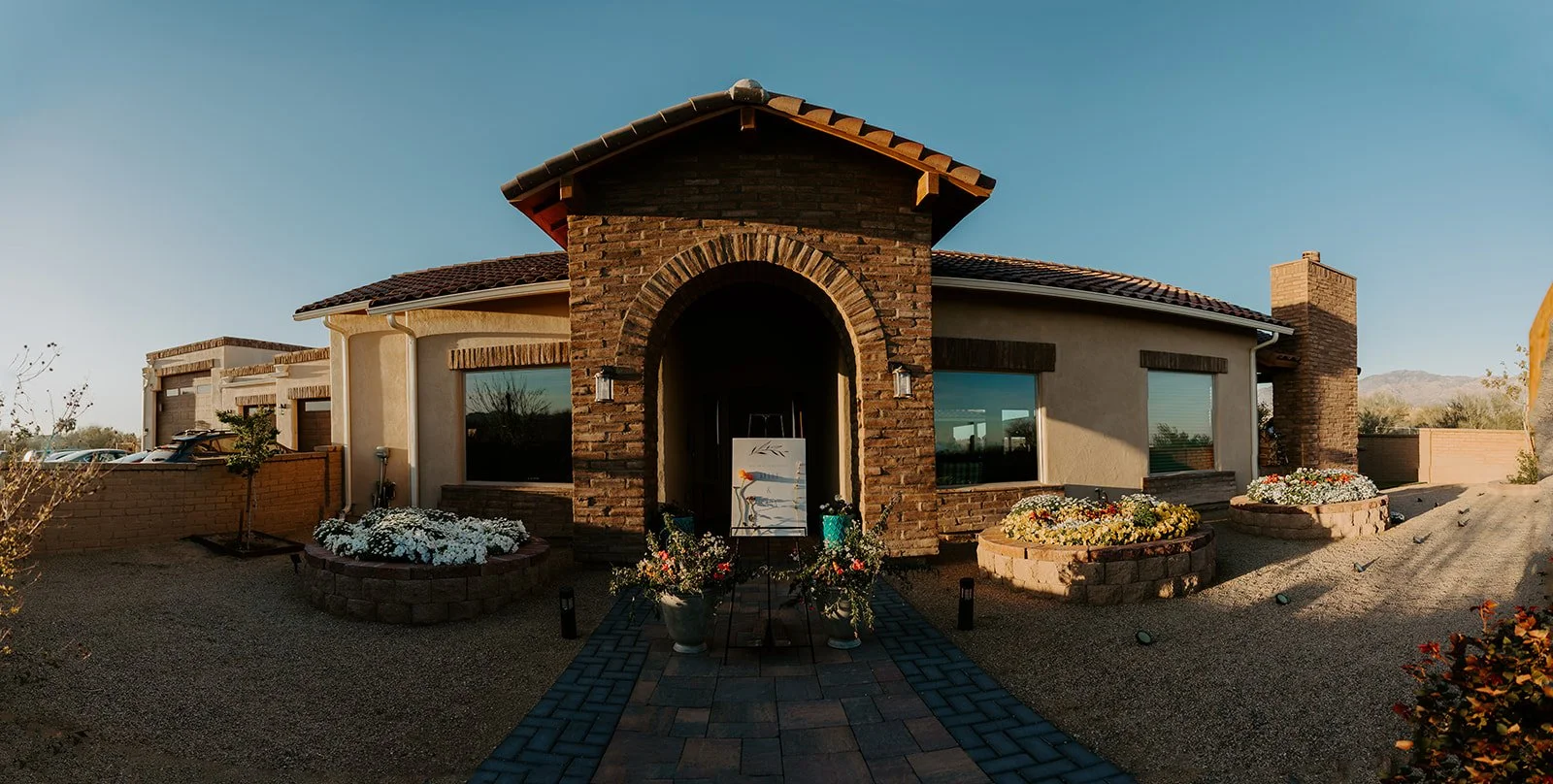
Most couples eloping at Black Canyon of the Gunnison National Park choose to stay near Montrose. It’s the most practical base for South Rim ceremonies and offers the best combination of accessibility, dining, and comfortable lodging.
The park itself is quiet and relatively remote, so where you stay directly shapes how calm and grounded your day feels.
Here are the most common options:
Airbnb Near the South Rim
For couples prioritizing privacy and atmosphere, a well-chosen Airbnb outside Montrose can create a beautiful starting point for the day. Many properties sit on open land with mountain views, giving you space for a relaxed morning before driving into the park.
This option works especially well for:
Slow getting-ready moments
First looks before entering the park
Private chef dinners post-ceremony
Small guest gatherings
Drive time to the South Rim entrance is typically 20–35 minutes depending on location.
Lodging in Montrose
Staying directly in town offers convenience. Restaurants, grocery stores, coffee shops, and vendor access are all centralized here.
If you’re including guests, this is often the simplest option. Family members can stay nearby, coordinate transportation easily, and return comfortably after the ceremony without navigating rural roads in the dark.
Montrose to the South Rim entrance averages about 25–30 minutes by car.
Camping Inside the Park (Limited)
Black Canyon offers limited camping at the South Rim campground. This can be a meaningful option for couples who want a fully immersive outdoor experience.
However, campsites are simple and exposed, and amenities are minimal. Wind exposure and temperature shifts, especially in late spring, should be considered carefully.
Camping works best for couples who are intentionally choosing a rugged, low-frills experience rather than expecting luxury comfort.
Where you stay should support the pace you want. A quiet Airbnb allows for spacious, unhurried moments. A hotel in town simplifies guest logistics. Camping brings you closer to the land itself.
The right choice isn’t about aesthetics alone — it’s about how you want the day to feel before and after you stand at the rim.
Pros & Cons of Eloping at Black Canyon
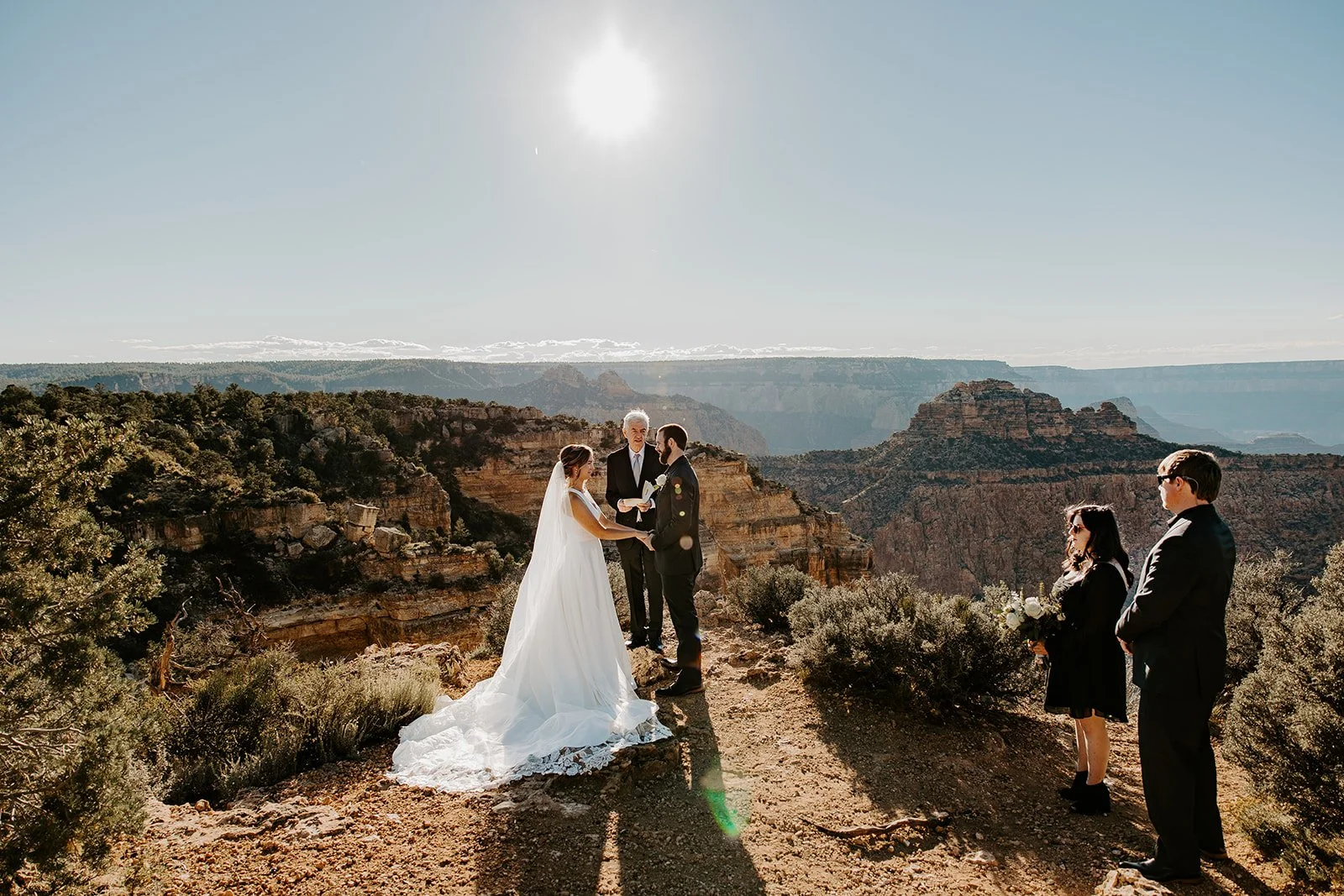
Eloping at Black Canyon of the Gunnison National Park offers something distinctly different from Colorado’s alpine landscapes. That difference is exactly why some couples choose it — and why it’s not the right fit for others.
Here’s an honest breakdown.
The Pros
Dramatic and Unique
The canyon’s vertical cliffs and deep shadow lines create a setting that feels powerful and architectural. It doesn’t resemble the typical Colorado mountain meadow — which is precisely what makes it stand out.
Less Crowded Than Rocky Mountain National Park
Compared to Rocky Mountain National Park, Black Canyon generally sees fewer visitors and does not require a timed-entry system. While you’ll still encounter other park guests, the overall pace tends to feel quieter and more spacious.
No Timed Entry System
You can enter the park freely during operating hours without needing advance vehicle reservations, which simplifies logistics and guest coordination.
International Dark Sky Designation
Black Canyon is recognized for its exceptionally dark night skies. If staying after sunset is part of your vision, stargazing here can add a meaningful, expansive ending to your day.
The Cons
Fewer Ceremony Site Options
Ceremonies are limited to designated overlooks. You won’t have endless landscape variety or the freedom to choose any scenic spot within the park.
Very Exposed Overlooks
Most ceremony sites are positioned along open rim viewpoints. Shade is minimal, and you’re working within defined spaces rather than wide-open terrain.
Extreme Light Contrast
The canyon’s depth creates strong shadow lines and dramatic contrast, especially midday. Careful timeline design is essential to avoid harsh lighting.
Wind
Wind exposure along the rim can be significant and unpredictable. It’s manageable — but it’s real.
Limited Services Nearby
Outside of Montrose, services are sparse. There are no large resort areas, and the park itself remains intentionally undeveloped.
Black Canyon rewards couples who value bold terrain, structure, and emotional depth over softness and flexibility. If those elements feel aligned, the pros far outweigh the limitations. If you’re envisioning something more meadow-like or decorative, another Colorado location may serve you better.
Understanding both sides upfront is what allows your final choice to feel intentional rather than reactive.
Black Canyon of the Gunnison vs Other Colorado Elopement Locations
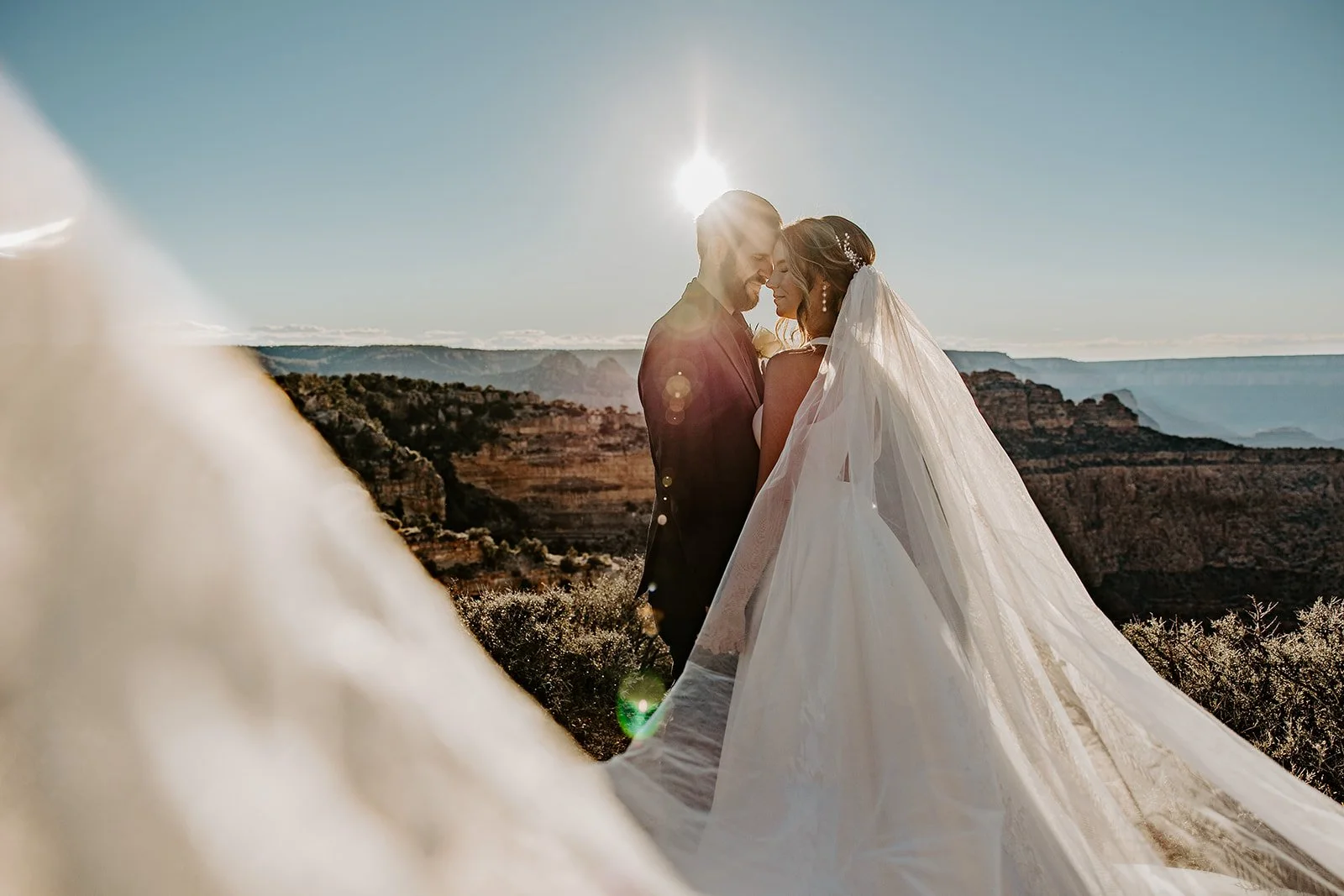
Every Colorado landscape carries a different energy. Choosing the right one isn’t about popularity, it’s about alignment.
Compared to Rocky Mountain National Park, Black Canyon is typically less crowded and does not require a timed-entry reservation system. However, it offers fewer ceremony site options and a more vertically dramatic backdrop rather than sweeping alpine vistas.
Unlike wildflower-heavy regions near Crested Butte or alpine lake settings throughout the San Juan Mountains, Black Canyon is not floral or meadow-based. You won’t find reflective mountain lakes or expansive aspen groves here. The aesthetic is darker, rock-forward, and architectural.
Compared to eloping on National Forest or BLM land,Black Canyon is more structured. You’re working within designated ceremony locations and permit guidelines rather than having open-ended location flexibility. For couples who value clarity and defined parameters, that structure feels grounding. For couples wanting full creative freedom in location choice, National Forest land may offer more range.
If you’re still deciding which Colorado terrain best supports your vision — alpine, desert, canyon, forest, or dunes — exploring Best Places to Elope in Colorado can help you narrow down the landscape that feels most aligned.
Black Canyon stands apart not because it’s louder, but because it’s deeper. Vertical instead of expansive. Intense instead of whimsical. And for the right couple, that difference is exactly the point.
If you’re weighing landscapes and want guidance narrowing Colorado down to 2–3 aligned options based on privacy, guest count, and season…
Is Black Canyon Right for You?
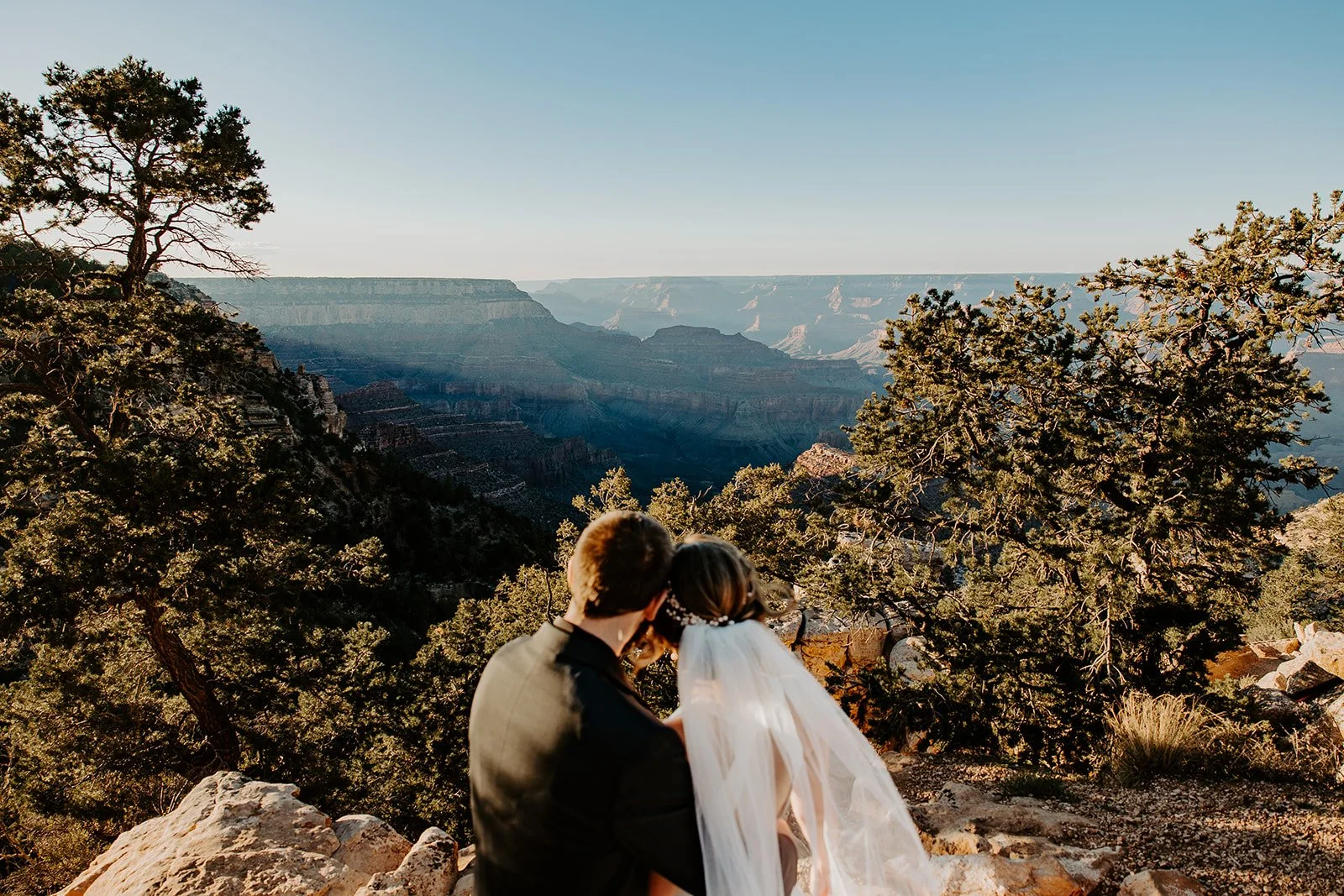
Black Canyon tends to resonate most deeply with couples who don’t need spectacle to feel significance.
If you’re introverted, or simply value privacy and emotional depth over performance, the canyon’s scale can feel grounding rather than overwhelming. The overlooks are public, yes, but the energy here is quieter than Colorado’s more iconic alpine destinations. It’s easier to focus inward. Easier to let the moment breathe.
This location works especially well for minimal guest lists. Often just the two of you, or a very small circle. The designated ceremony sites naturally support simplicity. There’s no sprawling meadow to decorate, no elaborate setup to coordinate. The landscape does the work. You stand at the rim, exchange vows, and let the vertical cliffs carry the weight of the backdrop.
Black Canyon also aligns beautifully with couples drawn to dramatic terrain. Not soft. Not floral. Not whimsical. Dramatic. Layered. Intense in a steady, architectural way. If you feel more at home near bold rock formations and deep shadow lines than in wildflower fields, that instinct matters.
At the same time, this park requires comfort with structure. There are permits. There are designated ceremony areas. There are guest limits and physical boundaries. For couples who appreciate clarity and defined parameters, that structure creates calm. For couples wanting complete location freedom or extensive décor, it can feel restrictive.
If your vision includes alpine lakes reflecting mountain peaks, dense wildflower basins, or wide-open mountain meadows with vibrant fall aspens, another Colorado landscape may be a better match. You can explore a broader comparison of environments in Best Places to Elope in Colorado to see which terrain aligns most naturally with your vision.
The right location should feel like an extension of who you are. For some couples, Black Canyon feels intense but grounding — quiet but powerful. If that balance resonates, you’ll likely know.
Black Canyon of the Gunnison Elopement FAQ
-
Yes. All ceremonies inside Black Canyon of the Gunnison National Park require a Special Use Permit issued by the National Park Service. The current ceremony permit fee is $100 (subject to change), and applications should be submitted several weeks in advance.
-
No. Ceremonies are limited to designated ceremony sites only. You cannot choose a random scenic overlook for your vows. Each approved site has specific guest limits and restrictions.
-
Guest limits vary by designated ceremony site and include everyone present — guests, photographer, officiant, and any other vendors. The park enforces these limits strictly.
-
Late spring through early fall offers the most reliable access. May and June typically provide moderate temperatures and full South Rim access. Winter ceremonies are possible on the South Rim but come with road closures and cold conditions.
-
Compared to parks like Rocky Mountain National Park, Black Canyon generally sees fewer visitors and does not require a timed-entry system. However, ceremony sites remain public overlooks, so full privacy is never guaranteed.
-
Not typically. The park’s designated ceremony locations and guest caps make it best suited for small elopements or very intimate gatherings. Larger guest counts are better accommodated in other Colorado venues or landscapes.
-
Yes — Colorado allows couples to self-solemnize their marriage without an officiant. That means you can legally marry yourselves during your ceremony at Black Canyon of the Gunnison National Park.
However, even if you choose to self-solemnize, you still need a Special Use Permit from the National Park Service to hold a ceremony inside the park.
-
In most cases, no.
Because ceremonies are limited to designated overlooks, setup is heavily restricted. Chairs, arches, and decorative structures are typically not permitted unless explicitly approved through your Special Use Permit application — and approval is not guaranteed.
Most couples choose to keep their ceremony simple and unobtrusive, which aligns naturally with the park’s preservation standards.
Guided Black Canyon Elopements
Eloping at Black Canyon of the Gunnison National Park isn’t complicated, but it is specific.
The cliffs are vertical. The light shifts quickly. Wind moves differently along the rim than it does in alpine terrain. Ceremony locations are designated. Guest counts are capped. And because the park is managed by the National Park Service, permits and regulations aren’t optional — they’re part of the process.
This is where guidance matters.
I handle the permit process directly, ensuring applications are submitted correctly and timelines align with park requirements. I design your day around how light actually moves across the canyon walls, not just around “sunset time.” That means planning for contrast, shadow depth, and positioning that flatters both you and the landscape.
Wind contingency is built into the plan. So is guest coordination. So is parking flow. So is intentional timeline spacing around canyon shadow movement. I scout beyond the most obvious overlooks, always within park regulations, to create depth and variation without compromising environmental ethics. Leave No Trace principles are foundational here, not performative.
Black Canyon rewards preparation. When the logistics are handled thoughtfully, the experience itself becomes steady and deeply present.
Black Canyon elopement experiences begin at $4,650 for an intimate local experience (up to 4 hours), with full-day and multi-day options available for couples wanting a more expansive timeline.
If this landscape feels aligned with the kind of day you want to create, the next step is simple.
Start Planning Your Black Canyon Elopement
You’ll find a short contact form below, just enough to begin the conversation without overwhelm.


Get Inspired By Real Elopements
Learn More About Eloping In Colorado

Bethany Wolf
Guided Public-Lands Elopement Photographer
✔ permits & logistics handled
✔ timeline design
✔ location guidance
✔ travel included nationwide
Josh and Alexa’s intimate elopement at Blackwater Falls State Park shows what a calm, intentional West Virginia elopement day can look like — from a private waterfall ceremony to a lakeside picnic with champagne and homemade cake.