
Rocky Mountain National Park Elopement Guide (2026) | Permits, Ceremony Locations, Guest Limits & Planning Tips
Rocky Mountain National Park is one of the most searched elopement locations in Colorado, and one of the most misunderstood. Couples are drawn to the alpine lakes, mountain backdrops, and accessibility from Estes Park, but what many don’t realize is that eloping here comes with very specific rules. Ceremony locations are limited to designated sites, guest and vehicle caps are strictly enforced, and seasonal access can shape what’s realistically possible. This guide walks through exactly how elopements work inside Rocky Mountain National Park — including permits, ceremony locations, guest limits, and what couples often overlook — so you can decide whether it aligns with the kind of day you’re hoping to create.
Is Rocky Mountain National Park a Good Place to Elope?
Rocky Mountain National Park is iconic for a reason. Alpine lakes sit beneath jagged peaks, open meadows stretch wide beneath shifting skies, and wildlife moves through the landscape in a way that makes the park feel alive rather than staged. For couples who want dramatic mountain scenery without committing to a strenuous hike, it offers some of the most recognizable views in Colorado.
It’s also one of the most regulated places in the state to get married.
Ceremonies are limited to designated sites. Guest and vehicle caps are strict. Timed entry reservations can affect when your guests are able to enter the park. Seasonal road closures, wildlife protections, and weather patterns all influence what’s realistically possible. None of this makes it a bad place to elope, but it does mean it requires thoughtful planning.
Rocky Mountain National Park is best suited for couples who want classic alpine scenery, are comfortable working within structured guidelines, and are planning a smaller guest count. If privacy, flexibility in choosing your ceremony location, or hosting a larger group is more important than the name of the park itself, there may be better fits elsewhere in Colorado.
If you’re still exploring how elopements work on public lands overall, my guide on How to Elope in Colorado breaks down permits, self-solemnization, and what planning across different types of land actually looks like. And if you’re weighing multiple mountain options, you can also explore Best Places to Elope in Colorado to see how Rocky Mountain National Park compares to other regions in terms of flexibility, scenery, and guest allowances.
If you’re unsure whether Rocky Mountain National Park is the right fit for your guest count or season, you don’t have to decide alone. I help couples narrow down aligned locations before permits are ever submitted.
Start planning your Colorado elopement here →
Do You Need a Permit to Elope in Rocky Mountain National Park?
Yes. A Special Use Permit is required for any wedding or elopement ceremony inside Rocky Mountain National Park, even if it’s just the two of you exchanging vows.
Rocky Mountain National Park does not allow informal or “pop-up” ceremonies. If you plan to hold a structured ceremony with an officiant, photographer, or guests, you must apply through the park’s Special Use Permit system and select one of the 13 designated ceremony sites.
How the Application Process Works
Couples submit a Special Use Permit application directly to the park. Applications are reviewed by park staff, and availability depends on the specific ceremony site, date, and season. Because certain locations book quickly, particularly for summer and fall weekends, it’s wise to apply as early as possible once your date is set.
After submission, park staff will confirm:
Site availability
Guest count compliance
Vehicle limits
Time window approval
Once approved, you’ll receive a formal permit outlining your assigned ceremony location and all associated regulations.
Permit Fee
Rocky Mountain National Park charges a non-refundable administrative fee for wedding permits. This covers processing and authorization to use one of the designated ceremony sites. It does not provide exclusivity or allow additional setup beyond park guidelines.
Do You Also Need a Timed Entry Reservation?
Wedding permit holders are not required to obtain a separate Timed Entry Reservation. Your approved Special Use Permit functions as your reservation ticket for park entry during your permitted time window.
However, this is where couples still need to plan carefully:
Only the vehicles listed on your permit are covered.
Guests must enter within the approved timeframe.
Standard park entrance fees still apply unless covered by an annual pass.
Understanding how the permit and vehicle limits interact is just as important as securing the date itself.
If you’d like a broader breakdown of how National Park permits differ from National Forest or State Park regulations across Colorado, I explain that in more detail in my guide Colorado Elopement Permits Explained.
Rocky Mountain National Park Wedding & Elopement Ceremony Locations
Rocky Mountain National Park does not allow ceremonies just anywhere within the park. Couples must choose from 13 designated ceremony sites, each with strict guest and vehicle caps. These limitations are not flexible, and they are enforced. Some locations accommodate up to 30 guests, while others are limited to 10 or 15. Vehicle counts matter just as much as headcount, and in some cases they become the true limiting factor.
It’s also important to understand that not all ceremony sites book at the same pace. A handful of locations consistently fill first for summer and fall weekends because they offer the most iconic alpine views with easy access. If you’re planning during peak season, knowing which sites move quickly — and which make better backups — can make the difference between securing your first choice and starting over.
Below are the ceremony locations that typically book the fastest.
Rocky Mountain National Park Ceremony Site Comparison (All 13 Locations)
Below is a side-by-side comparison of all 13 officially designated wedding and elopement ceremony locations inside Rocky Mountain National Park, including guest limits, vehicle caps, accessibility notes, and seasonal restrictions. Each site is broken down in more detail further below.
| Ceremony Site | Max Guests | Vehicle Cap | Dogs Allowed? | Limited Mobility Accessible? | Bathrooms Nearby? | Typical Seasonal Availability | Driving / Location Reference (NPS) |
|---|---|---|---|---|---|---|---|
| 3M Curve | 15 | 3 | No | No | No (closest: Hidden Valley or Beaver Meadows Visitor Center) | Year-round | Approximately 3.6 miles from Beaver Meadows Visitor Center |
| Alluvial Fan | 20 | 5 | No | Yes | Yes (two vault toilets at West Alluvial parking lot) | Year-round | Drive 2 miles west from Fall River Entrance Station on Hwy 34, then Endovalley Road |
| Bear Lake (winter-only) | 20 | 5 | No | Seasonal limitations (winter traction often needed) | Yes (vault toilets at trailhead) | Winter-only; no weekends | About 11 miles from Beaver Meadows Visitor Center |
| Copeland Lake | 30 | 10 | No | No | Yes (vault toilets at Sandbeach Lake Trailhead) | Year-round | Approximately 13.6 miles from Beaver Meadows Visitor Center (via Wild Basin Road off Hwy 7) |
| Harbison Meadows | 30 | 10 | Yes (on leash; within 100 ft of picnic area) | Yes (narrow gravel path; other tables on grass/dirt) | Yes (two vault toilets in parking lot) | Year-round | Located 0.7 miles from Grand Lake Entrance Station on Highway 34 |
| Hidden Valley | 30 | 10 | No | Yes | Yes (accessible restrooms with running water) | Year-round | Located 6 miles from Beaver Meadows Visitor Center along Trail Ridge Road |
| Lily Lake Dock | 10 | 3 | No | Yes | Yes (two vault toilets in parking lot) | Year-round | Off Highway 7, approximately 6.4 miles from Beaver Meadows Visitor Center |
| Lily Lake Trail | 20 | 5 | No | Yes | Yes (two vault toilets in parking lot) | Year-round | Off Highway 7, approximately 6.4 miles from Beaver Meadows Visitor Center |
| Lily Lake Southside Picnic Area | 30 | 10 | No | No (final approach is a small dirt path with rocks/roots) | Yes (two vault toilets in parking lot) | Year-round | Off Highway 7, approximately 6.4 miles from Beaver Meadows Visitor Center |
| Moraine Park Discovery Center Amphitheater | 30 | 10 | Yes (on leash) | No (uneven stone steps are main access) | Yes (only when Discovery Center is open; winter: Beaver Meadows Visitor Center) | Year-round (restrooms seasonal) | Located 2.7 miles from Beaver Meadows Visitor Center (Bear Lake Road corridor) |
| Sprague Lake | 15 (summer) / 30 (winter) | 3 (summer) / 10 (winter) | No | Yes | Yes (vault toilets; summer also has restrooms with running water) | Year-round (summer/winter caps differ) | About 6 miles from the intersection of Bear Lake Road and Highway 36 |
| Timber Creek Campground Amphitheater | 20 | 5 | Yes (on leash) | Yes | Yes | Closed in winter | Located 8.5 miles north of Kawuneeche Visitor Center (west side) |
| Upper Beaver Meadows | 30 | 10 | No | Yes (dirt road; uneven in places) | Yes (summer vault toilets; winter: Beaver Meadows Visitor Center) | Road typically closes mid-Oct to mid-May. Sep–Oct: annual meadow closures 5pm–10am for elk rut. | Located 1.5 miles from Beaver Meadows Visitor Center |
Most Popular & Book Fast
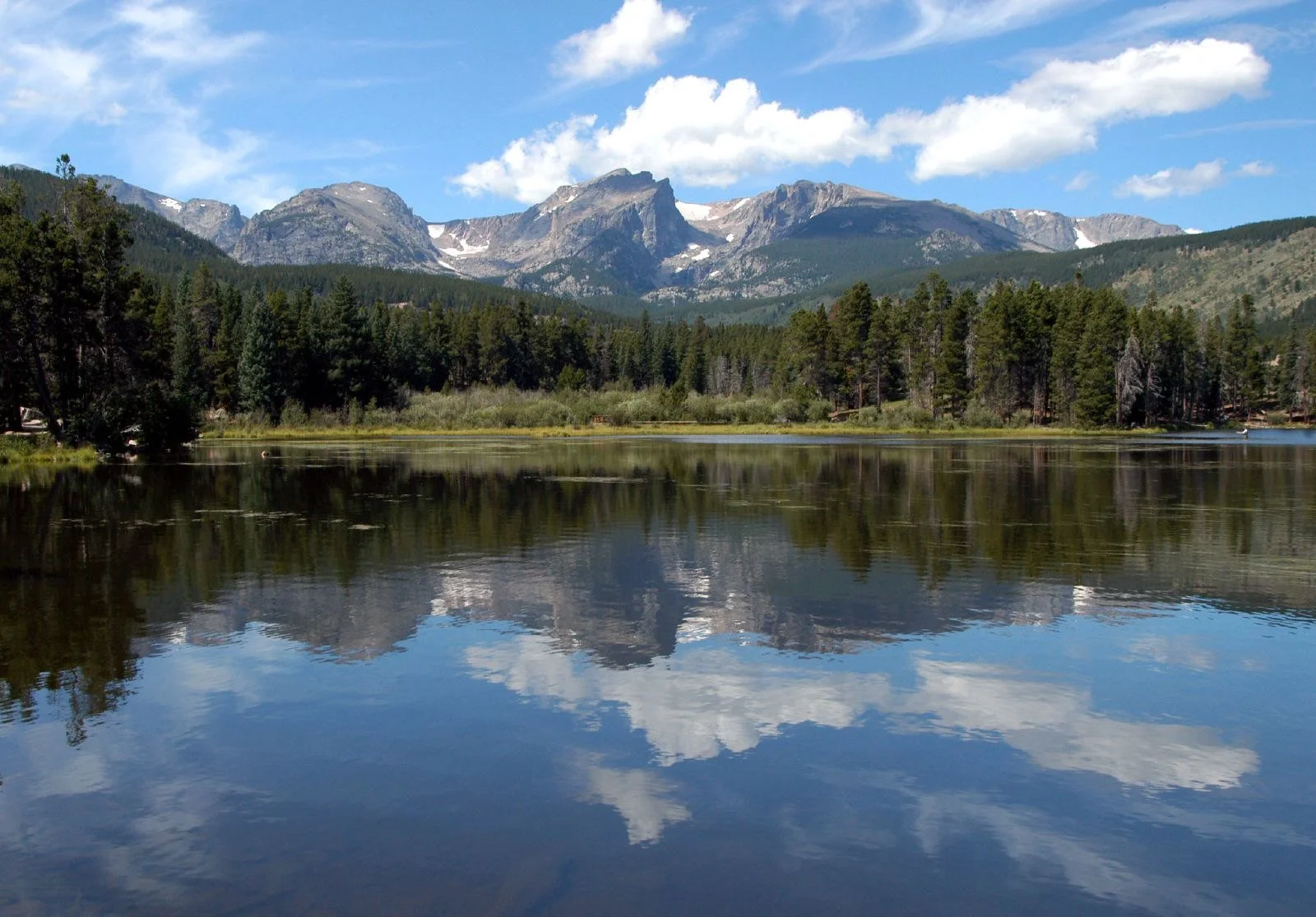
Sprague Lake
Guest & Vehicle Caps
Sprague Lake allows up to 15 guests and 3 vehicles during peak season. In winter months, the guest cap increases to 30 while vehicle limits remain in place.
Why It Books Fast
Sprague Lake is one of the most recognizable ceremony sites in the park. It offers a flat, accessible path around the lake with expansive mountain reflections and minimal hiking required. For couples wanting classic alpine scenery without a strenuous approach, it feels like the obvious choice — which is exactly why it fills early.
Accessibility
The path is mostly level and suitable for guests of varying mobility levels. This makes it especially appealing for couples including immediate family.
Crowd Reality
Sprague Lake is popular with both visitors and photographers. Even with a permit, you will not have exclusivity. Hikers and tourists will still be present around the lake, particularly in summer.
Best Season
Summer and early fall are the most requested. Winter offers a quieter feel and a higher guest cap, though snow conditions can affect accessibility.
Best For
Couples who want iconic alpine lake scenery, have a small guest count, and are comfortable sharing space with the public.
3M Curve
Guest & Vehicle Caps
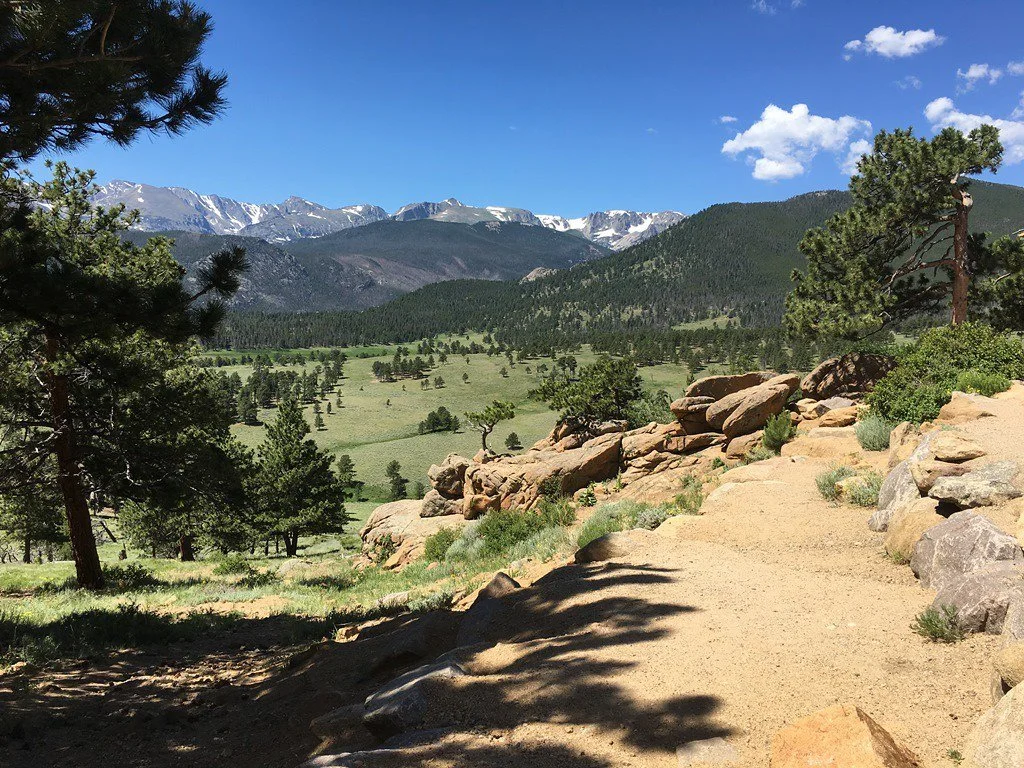
3M Curve allows up to 15 guests and 3 vehicles.
Sunset Glow Factor
This overlook is known for its dramatic mountain backdrop and warm evening light. It’s one of the strongest sunset ceremony options inside the park.
Wind Exposure
Because it sits along an open roadside overlook, wind can be significant. This is something couples often don’t anticipate until they’re standing there.
Parking Limitations
The 3-vehicle cap is strict, and the parking area is small. Coordinating arrival times is important.
Public Traffic
3M Curve is not a secluded location. It’s a scenic pull-off along a popular drive, and visitors frequently stop for photos.
Best For
Couples who want dramatic mountain views at sunset, have a small guest list, and prioritize scenery over privacy.
Bear Lake
Seasonal Restrictions
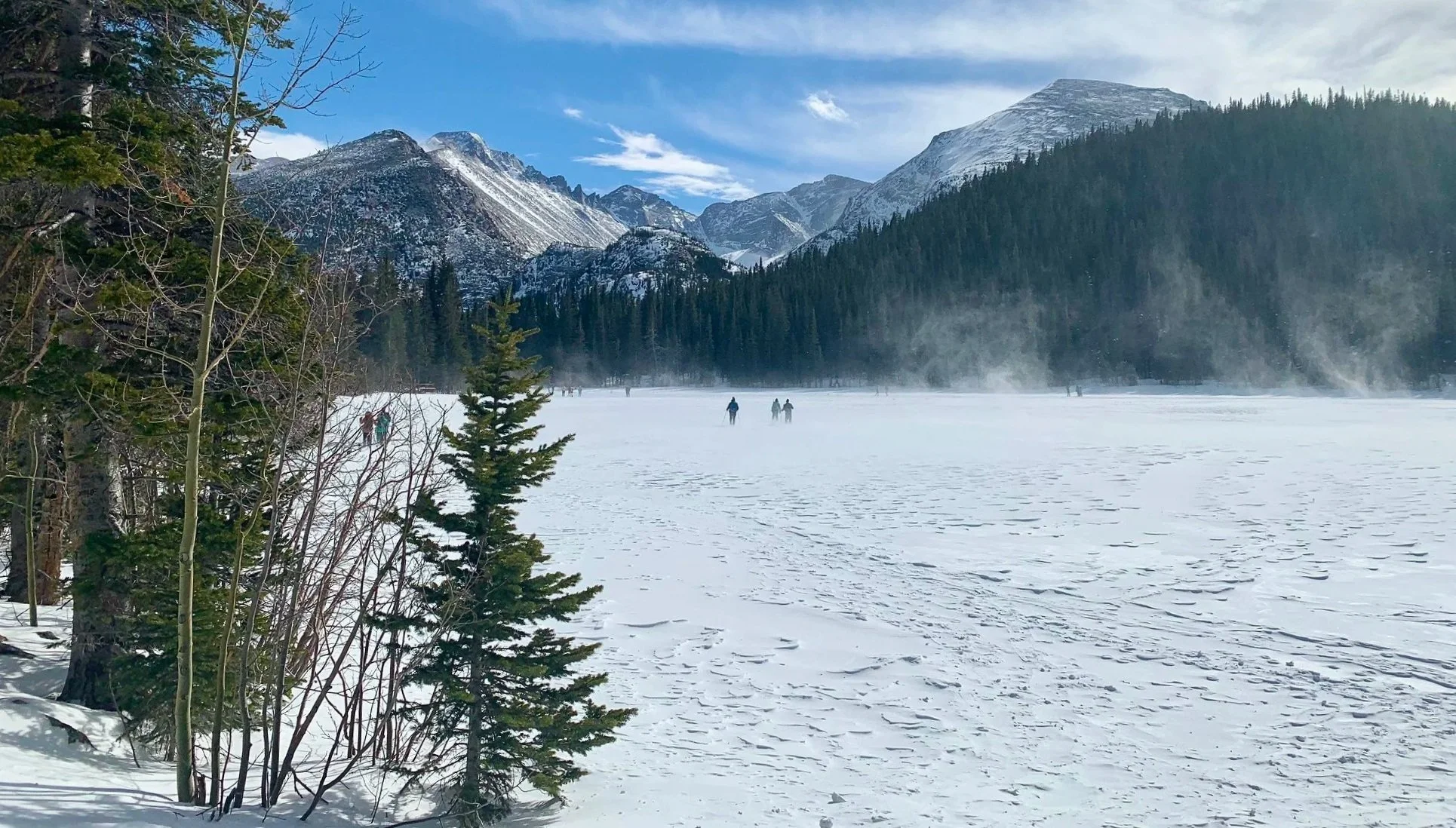
Bear Lake is available for ceremonies in winter only and is not permitted on weekends.
High-Traffic Trailhead
This is one of the busiest trailheads in Rocky Mountain National Park. Even in winter, it remains a heavily visited area because it provides access to multiple popular hikes.
Timed Entry & Access Coordination
While your wedding permit serves as your timed entry reservation during your ceremony window, Bear Lake sits inside one of the most regulated access corridors in the park. Arrival timing, parking logistics, and winter road conditions all require careful coordination.
What Couples Often Miss About Bear Lake
Bear Lake is frequently assumed to be a flexible, year-round alpine lake ceremony site — but it is not. The winter-only restriction, no-weekend policy, and heavy visitor traffic mean this location works best for weekday winter elopements with a small, flexible group. It’s beautiful, but it is not private, and it is not a summer option.
Best For
Couples planning a weekday winter ceremony who want a snow-covered alpine setting and are comfortable navigating logistical structure.
Popular ceremony sites inside RMNP book quickly, especially for summer and fall weekends. If you already have a date in mind, it’s worth confirming availability before building plans around one location.
Check availability and start the planning process →
Larger Guest Count Options (Up to 30 Guests)
Several ceremony sites inside Rocky Mountain National Park allow up to 30 guests. These locations are often overlooked in favor of lake or overlook settings, but they can be excellent choices for couples including immediate family.
Even at 30-guest sites, vehicle limits still apply. Coordinating carpools and arrival timing is essential, especially during peak summer months.
Below are the designated locations best suited for larger small-wedding groups.
Moraine Park Discovery Center Amphitheater
Guest & Vehicle Caps
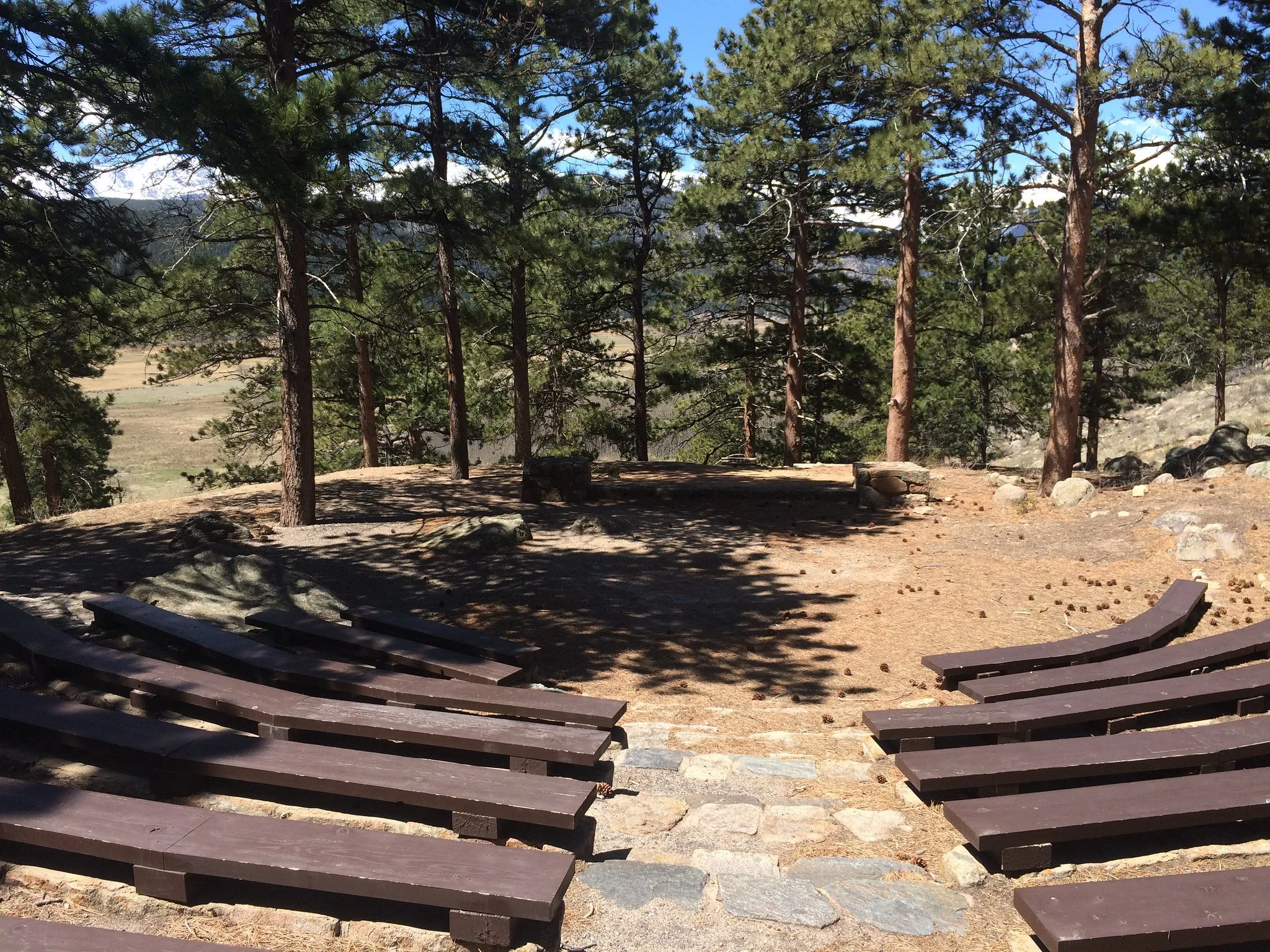
Up to 30 guests and 10 vehicles.
Setting & Feel
This is the most structured ceremony site inside the park. The amphitheater includes built-in seating and defined space, which can feel more “event-like” than wild.
Accessibility
Very accessible for guests with mobility considerations. Minimal walking is required.
What to Consider
Because it’s structured, it doesn’t offer the same intimate alpine-lake atmosphere as Sprague Lake or 3M Curve. It’s better suited for couples prioritizing guest comfort over dramatic scenery.
Best For
Couples inviting immediate family who want seating, ease of access, and space to gather without navigating narrow parking lots.
Copeland Lake
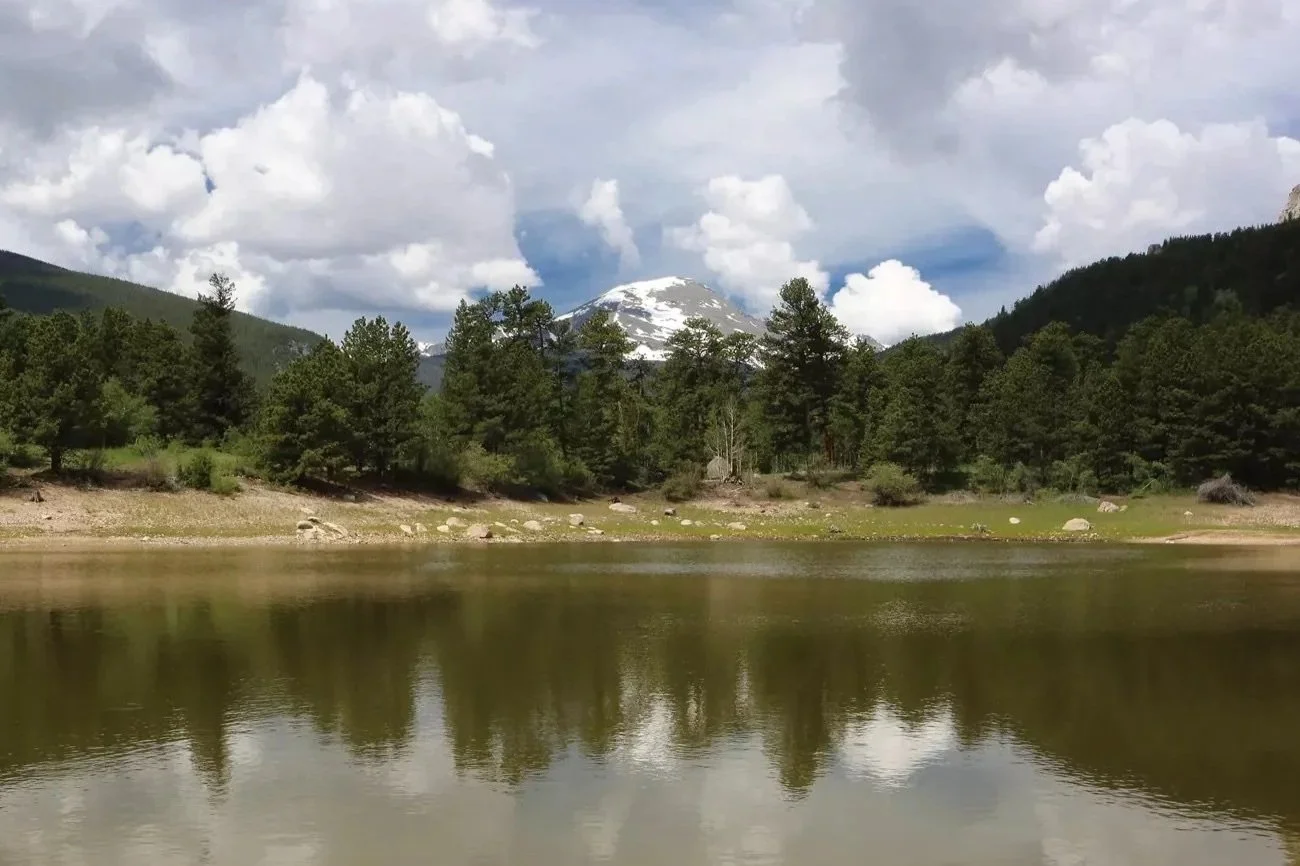
Guest & Vehicle Caps
Up to 30 guests and 10 vehicles.
Setting & Feel
Located on the quieter side of the park, Copeland Lake offers mountain views with a calmer overall atmosphere than the Bear Lake corridor.
Crowd Reality
Still public, but generally less congested than Sprague Lake or Bear Lake.
Why It’s Often Overlooked
It doesn’t carry the same immediate name recognition as the most searched sites, which makes it a strong backup when popular locations are unavailable.
Best For
Couples who want space for family but prefer a setting that feels slightly less trafficked.
Harbison Meadows Wedding & Elopement Site
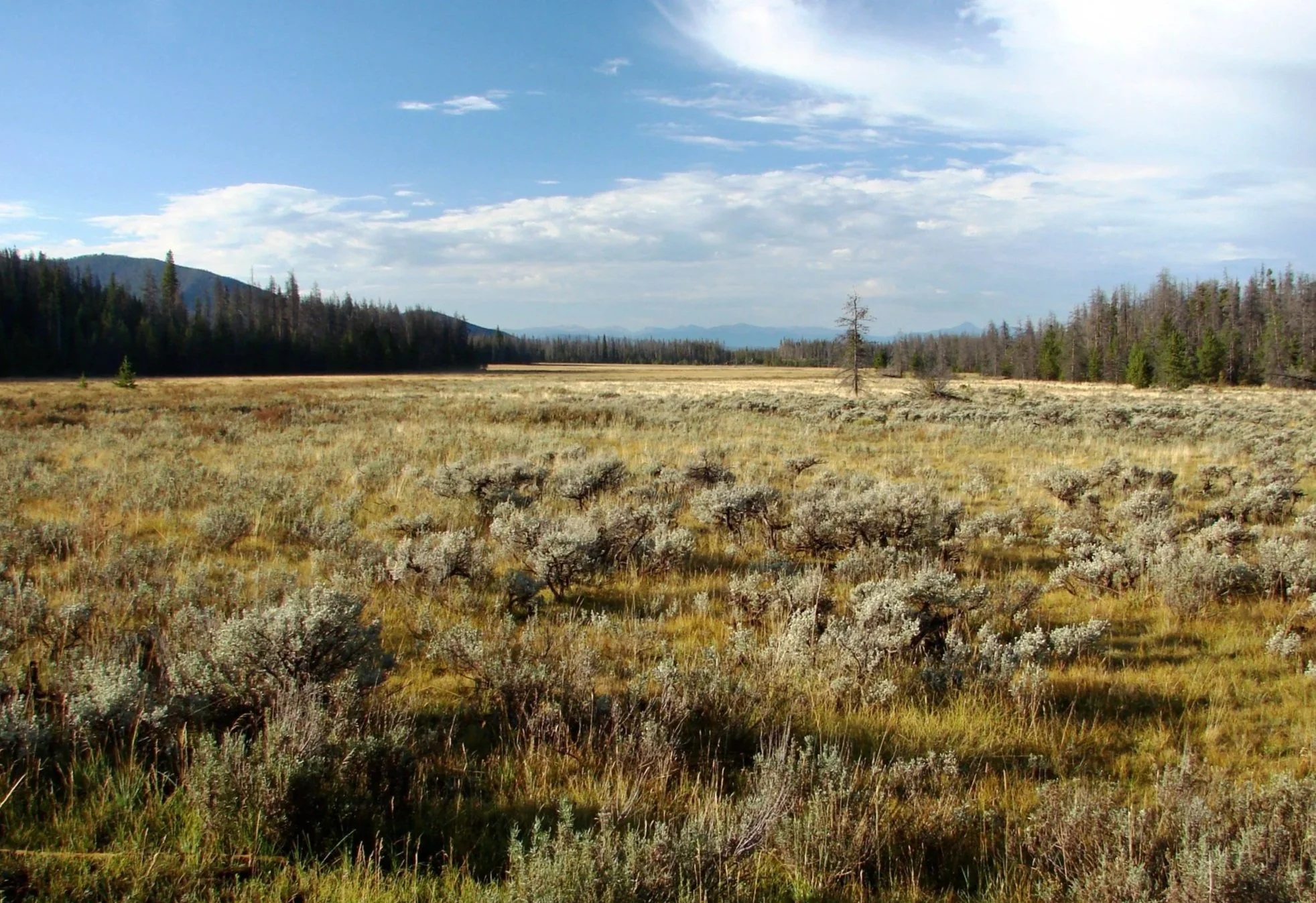
Guest & Vehicle Caps
Up to 30 guests and 10 vehicles.
Setting & Atmosphere
Harbison Meadows offers wide-open meadow views with mountain ridgelines in the distance. The setting feels expansive rather than concentrated around a single lake or overlook.
Crowd & Booking Pattern
This site does not typically book as quickly as Sprague Lake or 3M Curve, even in peak season. That makes it a practical alternative when higher-profile sites are unavailable.
What to Consider
Because it’s meadow-based, it lacks immediate alpine lake reflections. The beauty here is subtle — open sky, seasonal grasses, and wildlife movement.
Best For
Couples hosting immediate family who want space to gather comfortably and value ease of access over dramatic lake scenery.
Hidden Valley Wedding & Elopement Site
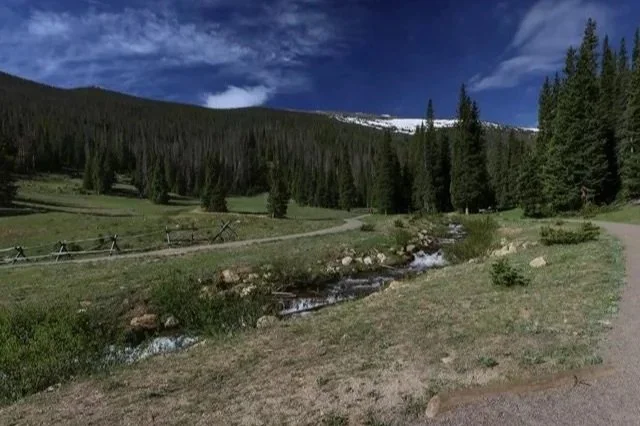
Guest & Vehicle Caps
Up to 30 guests and 10 vehicles.
Setting & Atmosphere
Hidden Valley sits in a former ski area basin, offering open meadow terrain framed by surrounding mountains. The backdrop feels elevated and expansive.
Accessibility
Generally accessible with minimal walking from parking areas, making it workable for mixed-age guest groups.
Crowd & Visibility
While still public, Hidden Valley often feels less congested than the Bear Lake corridor. It does not attract the same volume of sightseeing foot traffic as lake sites.
Best For
Couples wanting mountain presence without the tight parking lots and constant pass-through traffic of the more famous overlooks.
Upper Beaver Meadows Wedding & Elopement Site
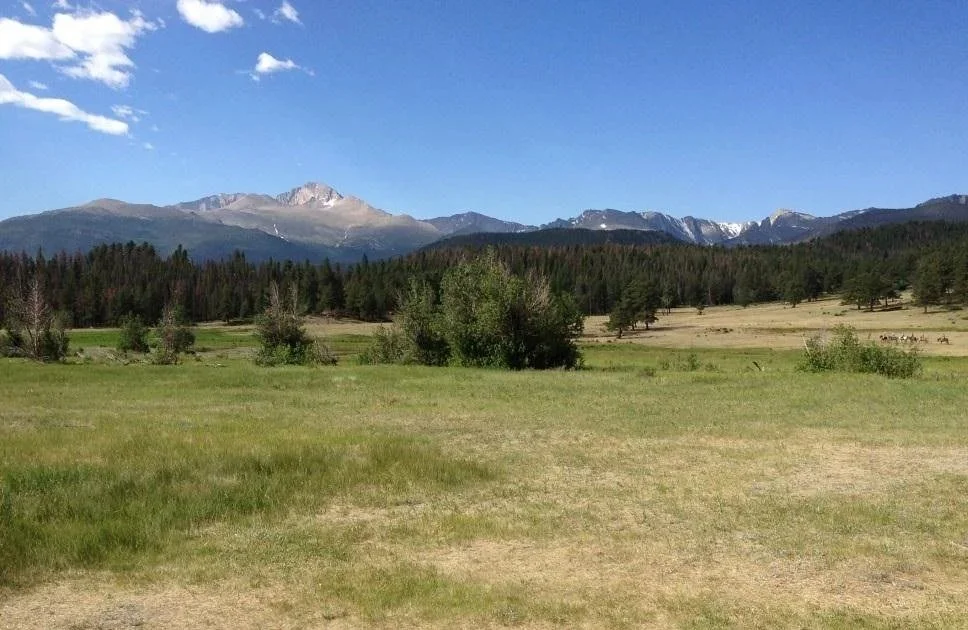
Guest & Vehicle Caps
Up to 30 guests and 10 vehicles.
Setting & Atmosphere
Upper Beaver Meadows is known for its broad valley views and frequent wildlife sightings. Elk are commonly seen here during certain seasons, adding to the natural feel of the setting.
Scenery Style
Rather than alpine lake views, this location offers sweeping meadow landscapes with layered mountain backdrops.
Booking Pattern
Like the other meadow sites, it does not tend to book as early as Sprague Lake or 3M Curve, particularly for summer weekends.
Best For
Couples who want space, mountain scale, and room for family without competing for one of the most searched ceremony sites.
Beautiful But Less Talked About Ceremony Locations
Not every ceremony site inside Rocky Mountain National Park carries the same search volume as Sprague Lake or 3M Curve. In fact, some of the most practical and visually strong locations are often overlooked simply because they’re less photographed online.
These sites can be excellent choices when:
Popular locations are already booked
You want slightly less concentrated foot traffic
You’re comfortable with scenery that feels more rugged or subtle
They still operate under strict park guidelines, but they often provide more flexibility in booking availability.
Alluvial Fan Wedding & Elopement Site
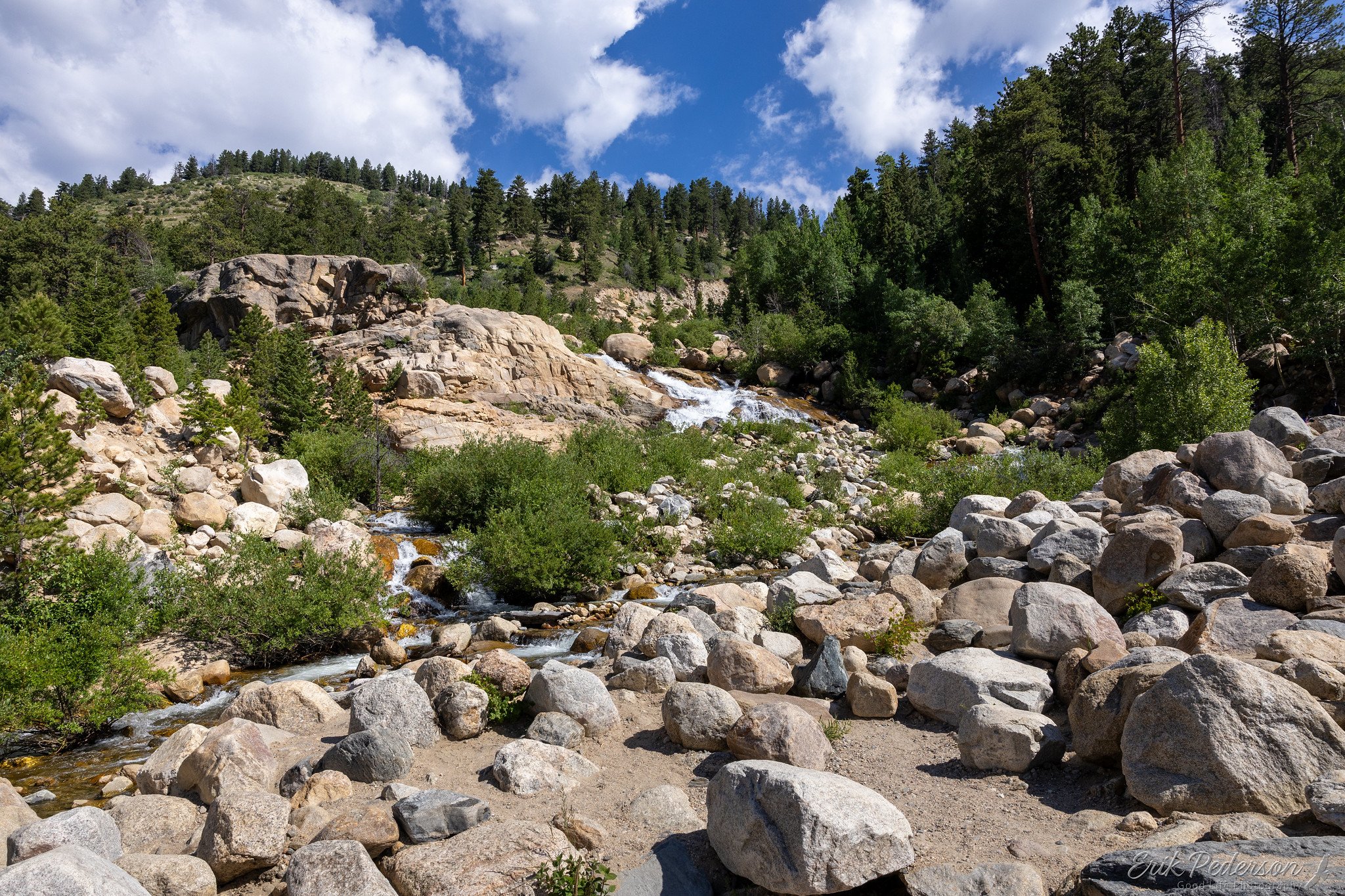
Guest & Vehicle Caps
Up to 20 guests and 5 vehicles.
Setting & Atmosphere
Alluvial Fan features a cascading waterfall and rocky landscape formed by a historic flood event. It feels more rugged than meadow or lake ceremony sites.
Accessibility
Short walking distance from parking, but the terrain is uneven and rocky. This site is less ideal for guests with mobility concerns.
Crowd Reality
This is a popular sightseeing stop, especially in summer. While beautiful, it is not secluded.
Best For
Couples who want moving water in the background and don’t mind a more textured, rocky ceremony environment.
Lily Lake Trail Wedding & Elopement Site
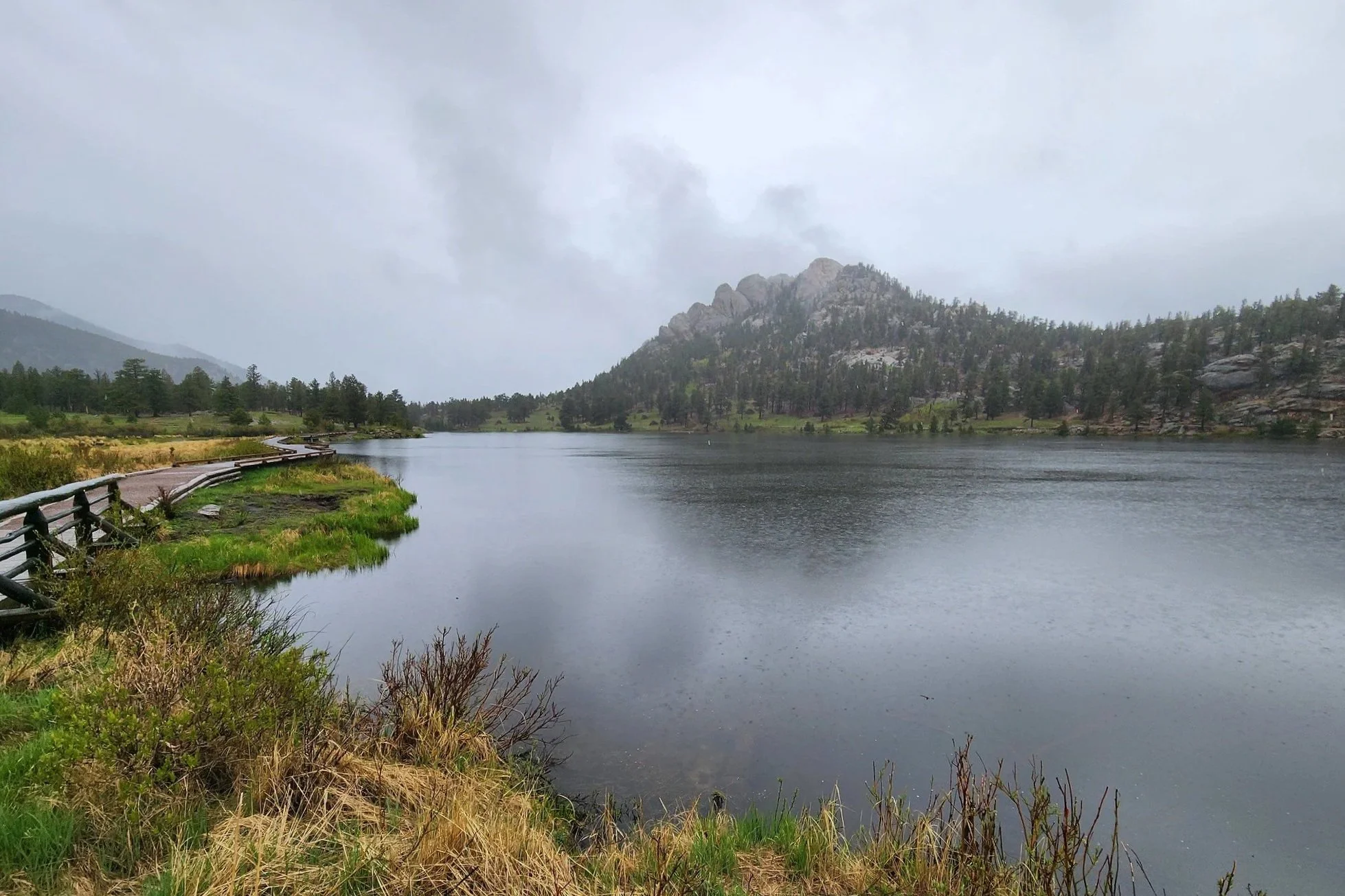
Guest & Vehicle Caps
Up to 20 guests and 5 vehicles.
Setting & Atmosphere
Lily Lake Trail offers mountain reflections similar to Sprague Lake but typically with slightly less concentrated traffic. The setting feels balanced — lake views with accessible terrain.
Accessibility
Mostly flat and manageable for guests of varying mobility levels.
Booking Pattern
It does not usually book as quickly as Sprague Lake, making it a strong alternative for couples wanting a lake backdrop without competing for the highest-demand site.
Best For
Couples wanting alpine lake scenery with moderate guest count and slightly more flexibility in booking.
Timber Creek Campground Amphitheater Wedding & Elopement Site
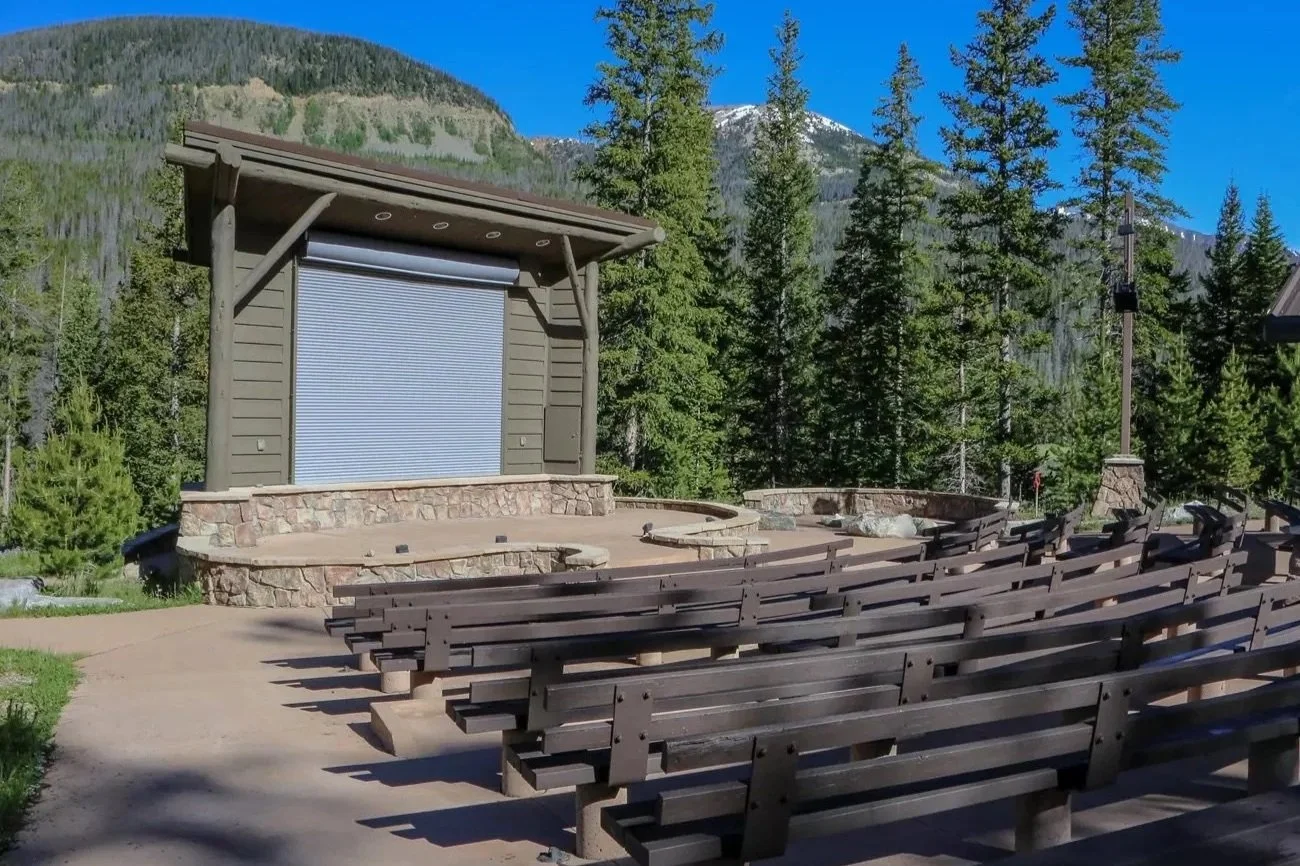
Guest & Vehicle Caps
Up to 20 guests and 5 vehicles.
Location & Access
Situated on the west side of the park near Grand Lake, Timber Creek provides a quieter alternative to the Bear Lake corridor.
Seasonal Restrictions
Closed in winter due to campground closure.
Setting & Feel
More structured than lake or meadow sites, with defined amphitheater seating and forest surroundings.
Best For
Couples staying on the west side of the park who want easier logistics and a more contained ceremony space.
These lesser-discussed locations are often where thoughtful planning makes the biggest difference. They may not appear first in search results, but they can provide strong backups when high-profile sites are unavailable — and in some cases, they offer a calmer overall experience.
Micro Ceremony Only Sites
A few ceremony locations inside Rocky Mountain National Park are designed for truly small elopements — not small weddings. These sites have significantly lower guest and vehicle caps, and they work best for couples keeping their day intentionally intimate.
If you’re inviting more than immediate family or hoping for space to gather afterward, these locations will likely feel restrictive. But for a focused, quiet ceremony with a handful of people, they can be beautiful.
Lily Lake Dock Wedding & Elopement Site
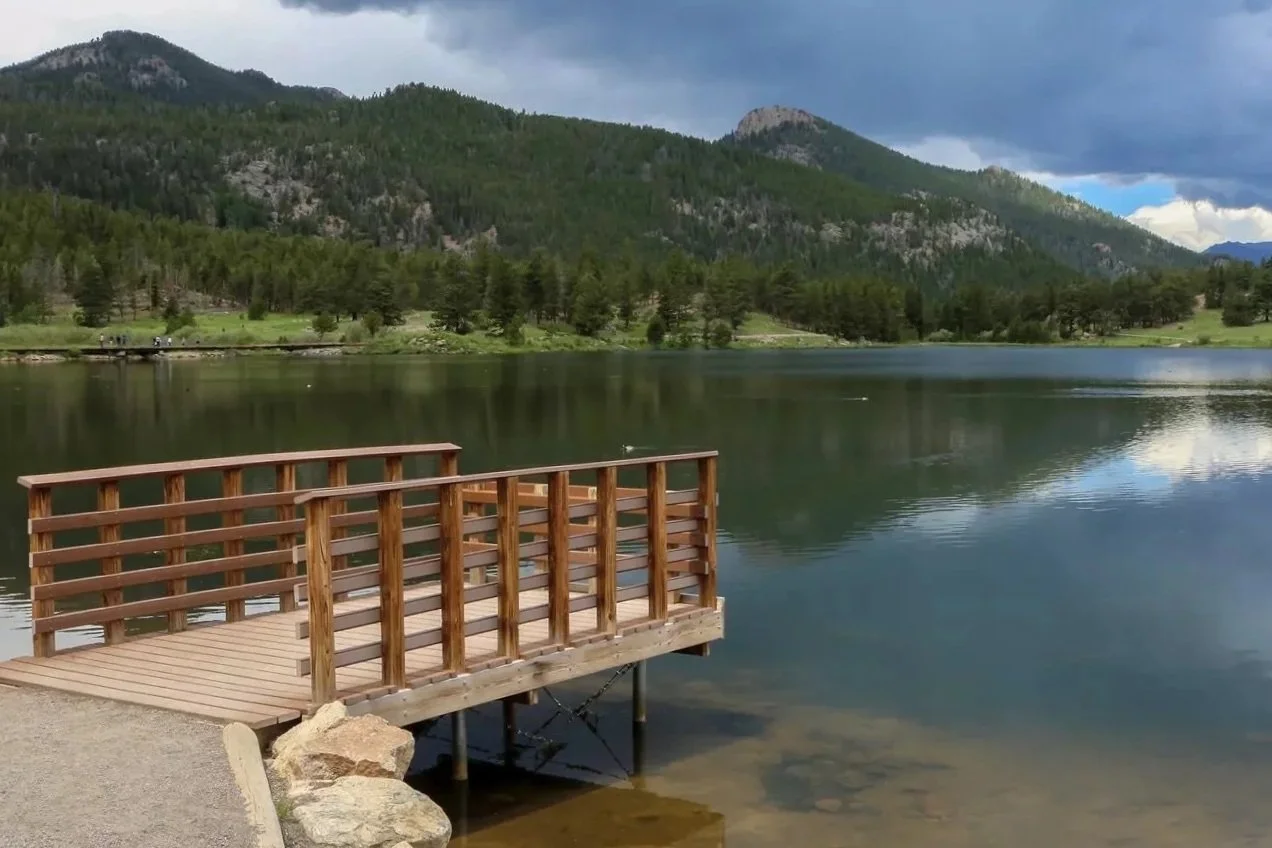
Guest & Vehicle Caps
Up to 10 guests and 3 vehicles.
Setting & Atmosphere
The dock extends slightly into Lily Lake, offering mountain reflections and a centered ceremony space. It’s visually clean and simple, with water and peaks framing the backdrop.
Space Considerations
The dock itself is compact. With 10 guests plus couple and vendors, the space fills quickly. There is no room for chairs, arches, or additional setup.
Public Visibility
Lily Lake remains open to visitors. While the dock provides a defined ceremony area, you should expect onlookers along the shoreline.
What This Site Is — and Isn’t
This is not a flexible small-wedding location. It is best suited for couples keeping their ceremony extremely intimate and simple. The structure of the dock means logistics are straightforward, but space is limited.
Best For
Couples planning a true elopement with only a few guests who want lake reflections and are comfortable with a contained ceremony footprint.
Micro ceremony sites inside Rocky Mountain National Park can feel meaningful and focused — but only when expectations align with the scale of the space. Understanding the difference between a 10-guest dock and a 30-guest meadow site is part of choosing a location that actually supports the experience you’re hoping to create.
Seasonal & Restriction-Specific Clarifications
Before choosing a ceremony site inside Rocky Mountain National Park, it’s important to understand that not all 13 locations operate the same year-round. Some of the most searched sites come with seasonal shifts or access limitations that significantly affect planning.
Sprague Lake Seasonal Capacity Changes
Sprague Lake allows up to 15 guests during peak season, but increases to 30 guests in winter months. While that expanded capacity can sound appealing, winter access and snow conditions may change how usable the space feels for guests.
Bear Lake Is Winter-Only
Bear Lake is only available for ceremonies during winter and is not permitted on weekends. It is not a summer lake ceremony option, despite how often it appears in general park imagery. This restriction alone reshapes what’s realistically possible for many couples.
Timber Creek Winter Closure
Timber Creek Campground Amphitheater is closed during winter months due to campground closure. Couples planning late fall through early spring should verify seasonal availability carefully.
Weekend Restrictions
Certain locations — particularly Bear Lake — prohibit weekend ceremonies. If your date is fixed on a Saturday, your site options may narrow significantly.
Vehicle Caps Often Limit the Guest Count More Than the Official Maximum
Even when a site allows 20 or 30 guests, the vehicle limit may require carpooling. For example, a 30-guest site with a 10-vehicle cap assumes that guests will share transportation. In practice, parking logistics often become the real planning constraint.
These details are easy to overlook when browsing ceremony site lists quickly. But understanding how seasonal rules and vehicle limits interact is part of choosing a location that actually supports the experience you want, not just one that looks good in photos.
If the seasonal rules and vehicle limits are starting to feel overwhelming, that’s completely normal. Part of my role is translating park regulations into a clear, workable plan.
Inquire about a guided RMNP elopement experience →
What Couples Miss About RMNP Ceremony Sites
On paper, Rocky Mountain National Park ceremony sites can look straightforward: choose one of the 13 designated locations, apply for a permit, show up, and exchange vows.
In practice, there are a few details that shape the experience more than couples initially expect.
You Do Not Have Exclusivity
A wedding permit allows you to use a designated site during your approved time window — it does not close the area to the public. Hikers, photographers, and tourists will still be present. At high-traffic sites like Sprague Lake or 3M Curve, that can mean steady foot traffic nearby.
Vehicle Caps Often Matter More Than Guest Caps
Each ceremony site has a maximum number of vehicles allowed. Even if a site permits 30 guests, parking limitations may require carpooling. Arrival timing and coordination become part of the plan — especially during peak summer months.
You Cannot Bring Décor or Large Setup Elements
Arches, chairs, amplified sound, elaborate floral installations, and aisle décor are not permitted. Ceremonies are expected to be low-impact and temporary. The park’s priority is preserving the landscape, not hosting events.
Your Ceremony Window Is Limited
Permits authorize a specific time frame. That includes arrival, ceremony, and departure. There is no extended reception period at the ceremony site.
Weather and Wildlife Can Override Plans
Rocky Mountain National Park is a protected ecosystem. Road closures, wildlife activity, and seasonal conditions can affect accessibility. Flexibility and backup planning are part of eloping responsibly in a National Park.
The “Most Famous” Sites Aren’t Always the Best Fit
High-search-volume locations are popular for a reason, but they’re also the most trafficked and the most competitive to book. Sometimes a lesser-known site offers a calmer, more aligned experience — even if it’s not the one that first appears in Google results.
Understanding these nuances doesn’t make Rocky Mountain National Park less beautiful. It simply means choosing a ceremony site should be based on how you want the day to feel — not just how it photographs.
Next, we’ll look at how guest limits, vehicle counts, and vendor roles are calculated — and what actually counts toward your total.
Timed Entry Reservations (What This Means for Your Guests)
Rocky Mountain National Park operates on a timed entry reservation system during peak season, typically late spring through mid-fall. This system is designed to manage traffic volume inside the park — especially in high-traffic corridors like Bear Lake Road.
If you’re eloping here, your Special Use Permit serves as your timed entry reservation for the vehicles listed on your permit during your approved ceremony window. That part is straightforward.
Where it becomes more nuanced is with guest coordination.
How Timed Entry Affects Ceremony Timing
Timed entry windows regulate when vehicles may enter certain areas of the park. Even with a wedding permit, arrival timing matters. If guests arrive too early or too late relative to your permit window, they may encounter delays or congestion at entrance stations.
This is especially relevant for:
Summer ceremonies
Midday time slots
Sites located along Bear Lake Road
Because traffic flow can impact how smoothly everyone arrives.
Ceremony Permit ≠ Unlimited Access
Your wedding permit allows access during your approved time window — it does not remove all park entry requirements.
Standard entrance fees still apply unless guests have a valid annual pass. And if guests choose to explore the park outside your ceremony window, they may need their own timed entry reservation depending on the date and corridor.
This is one of the most common misunderstandings couples have when planning inside RMNP.
Coordination Logistics to Plan For
When planning an elopement inside Rocky Mountain National Park, I typically account for:
Coordinated arrival windows
Clear instructions for guests about entrance fees
Carpool recommendations to stay within vehicle caps
Buffer time for potential entrance station delays
Contingency planning if traffic builds unexpectedly
Timed entry doesn’t make eloping in the park difficult — it simply requires thoughtful coordination so the experience feels calm instead of rushed.
Coordinating permits, timed entry, guest arrival windows, and light direction is where most couples feel the planning weight. You don’t have to manage those logistics alone.
Begin planning your Rocky Mountain National Park elopement →
If you’re still deciding what season makes the most sense for your ceremony, my guide on Best Time to Elope in Colorado breaks down how tourism patterns, road access, and seasonal demand can shape your overall experience, especially inside National Parks.

Guest Limits & What Counts Toward Your Total
Guest limits inside Rocky Mountain National Park are one of the most misunderstood parts of planning an elopement here. The number listed next to a ceremony site — 10, 15, 20, or 30 — is not flexible, and it includes more people than couples sometimes expect.
Understanding what counts toward your total helps prevent last-minute surprises.
Does the Couple Count?
Yes. The two of you are included in the total guest cap.
If a site allows 15 people, that number includes:
The couple
Guests
Vendors
Does the Officiant Count?
Yes. If you are bringing an officiant, they count toward your total.
Colorado allows self-solemnization, which means you are not legally required to have an officiant. Some couples choose this route to keep their headcount lower and their ceremony more private. But if someone is present to officiate, they count.
Does the Photographer Count?
Yes. Your photographer counts toward the total.
This applies whether you’re bringing one photographer or a photography team. Any additional videographer or content creator would also count.
Do Other Vendors Count?
Yes.
Florists, musicians, planners, hair and makeup artists, or anyone present during the ceremony window count toward the approved number of people at the site. Because Rocky Mountain National Park emphasizes low-impact use, there are no vendor exceptions.
Do Dogs Count?
Pets are allowed at designated ceremony sites as long as they follow park pet regulations. Dogs do not count toward the human guest limit — but they must remain leashed and under control at all times. It’s important to confirm current pet policies when applying, as certain areas of the park have restrictions beyond ceremony sites.
Vehicle Caps vs. Headcount
In many cases, vehicle limits become the more significant constraint.
For example:
A site may allow 30 people
But only 10 vehicles
If guests arrive individually instead of carpooling, you may exceed the vehicle cap before reaching the headcount limit. The park enforces both.
This is why coordination matters just as much as choosing the right ceremony location. It’s not only about how many people are present — it’s about how they arrive and move through the space.
When guest counts, vendor presence, and vehicle logistics are aligned early in the planning process, the day feels steady and uncomplicated. When they aren’t, even a small ceremony can feel unexpectedly tight.
Next, we’ll look at the best time of year to elope in Rocky Mountain National Park — because season plays a significant role in how these limits and logistics actually feel on the ground.
Frequently Asked Questions About Eloping in Rocky Mountain National Park
Below are answers to the most common questions about permits, guest limits, self-solemnization, and planning a wedding or elopement inside Rocky Mountain National Park.
-
Yes. Rocky Mountain National Park requires a Special Use Permit for any wedding or elopement ceremony, even if it’s just the two of you. You must also choose from the park’s 13 designated ceremony sites.
-
No. Ceremonies are only allowed at designated ceremony sites. A permit does not allow you to choose any random overlook, trail, or meadow.
-
It depends on the ceremony site. Rocky Mountain National Park ceremony locations allow 10, 15, 20, or up to 30 guests, depending on the site and (in some cases) the season. Vehicle limits also apply and can be the true limiting factor.
-
Yes. The couple, photographer, officiant (if you have one), and any vendors present during the ceremony all count toward the maximum number of people allowed at your ceremony site
-
Yes. Colorado allows self-solemnization, meaning you can legally marry yourselves without an officiant or witnesses. RMNP does not require an officiant if you’re legally self-solemnizing.
-
No. Your approved wedding permit functions as your reservation for park entry during your permitted time window. You still need to plan guest arrival timing and vehicle counts carefully.
-
Yes, dogs are allowed at designated ceremony sites inside Rocky Mountain National Park as long as they follow park pet regulations. Dogs must remain leashed at all times and are only permitted in areas where pets are allowed. They do not count toward the human guest limit, but they must be controlled and cleaned up after. Certain trails and backcountry areas prohibit pets, so it’s important to confirm your specific ceremony site’s rules before finalizing plans.
-
Summer and early fall have the most access and classic alpine scenery but also the most crowds. Fall color is beautiful but brief. Winter can be quieter and snowy, but road closures and conditions may limit access.
Best Time of Year to Elope in Rocky Mountain National Park
Choosing a ceremony site inside Rocky Mountain National Park is only part of the equation. The season you choose will significantly shape accessibility, crowd levels, scenery, and how your day feels overall.
Below is a realistic overview of what each season brings inside RMNP.
Spring (Snowpack & Transition Season)
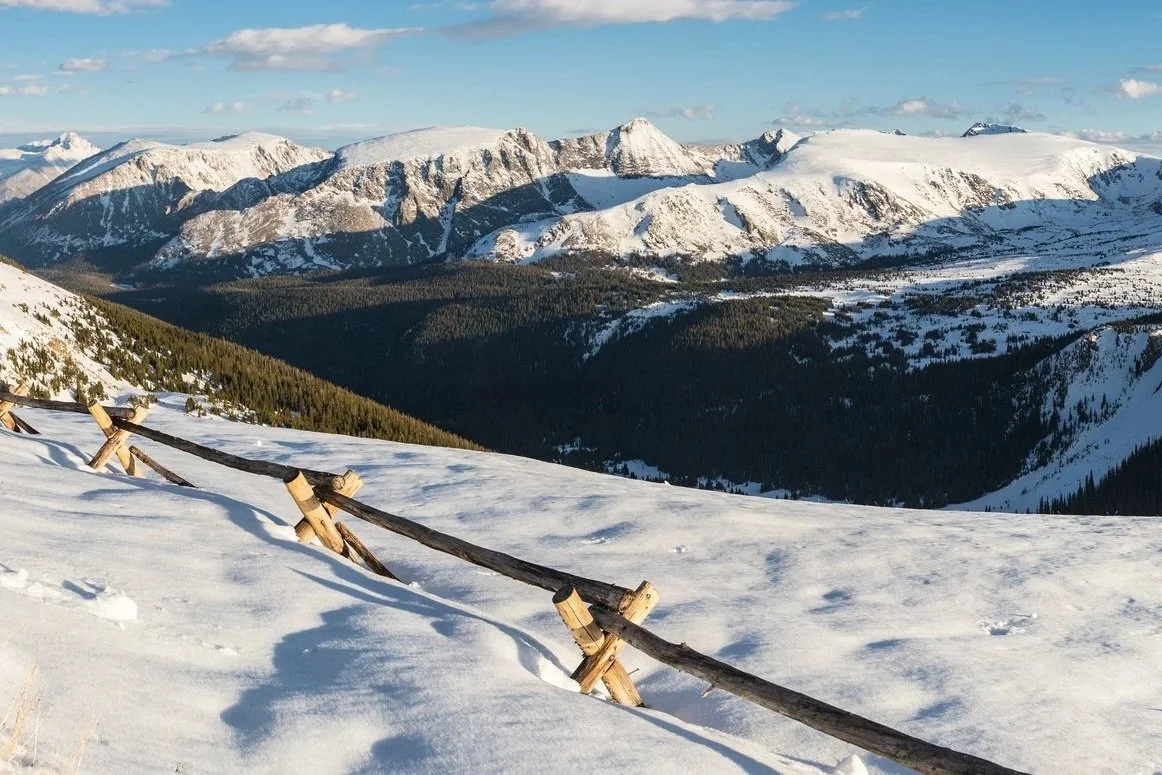
Spring in Rocky Mountain National Park is less predictable than many couples expect. While lower elevations begin to thaw, higher elevation areas — including sections of Trail Ridge Road — often remain snow-covered well into late May or even early June.
Lake sites may still have snow along the shoreline, and muddy trail conditions can affect access. Wildlife activity increases during this time, which can occasionally impact site availability or traffic patterns.
Best For:
Couples comfortable with transitional landscapes, cooler temperatures, and flexible expectations around snow and road access.
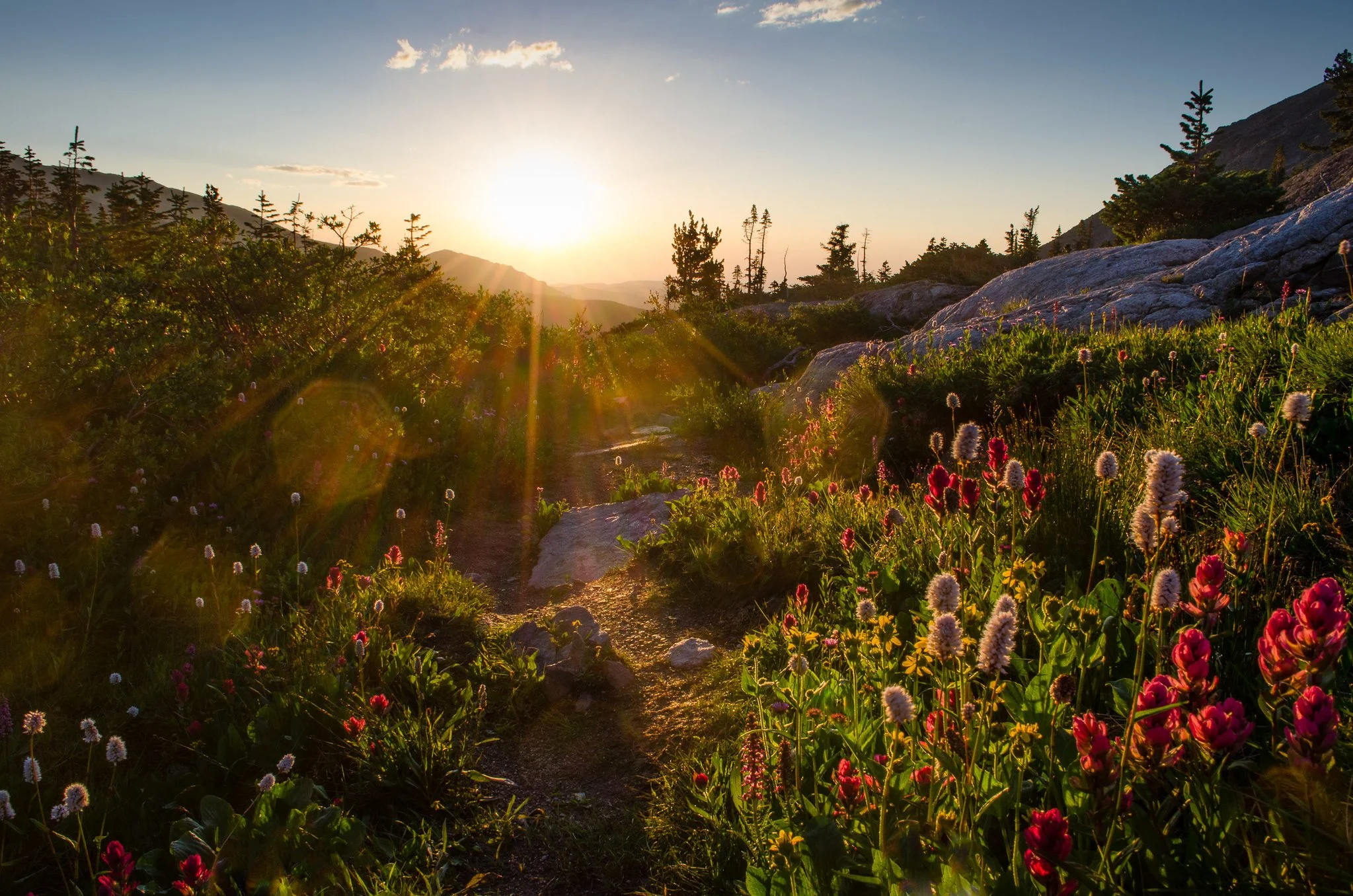
Summer (Tourism & Timed Entry Season)
Summer is the most popular time to elope in Rocky Mountain National Park — and the busiest. Alpine wildflowers bloom, high-elevation roads fully open, and weather tends to be more stable.
It’s also when the timed entry reservation system is fully active, and visitor volume peaks. High-profile ceremony sites like Sprague Lake and 3M Curve often book earliest during this season.
Afternoon thunderstorms are common, especially in July and August. Planning for early morning or earlier-in-the-day ceremonies can help reduce both weather risk and congestion.
Best For:
Couples wanting full alpine access, open roads, and classic green mountain scenery — and who are comfortable navigating higher visitor traffic.
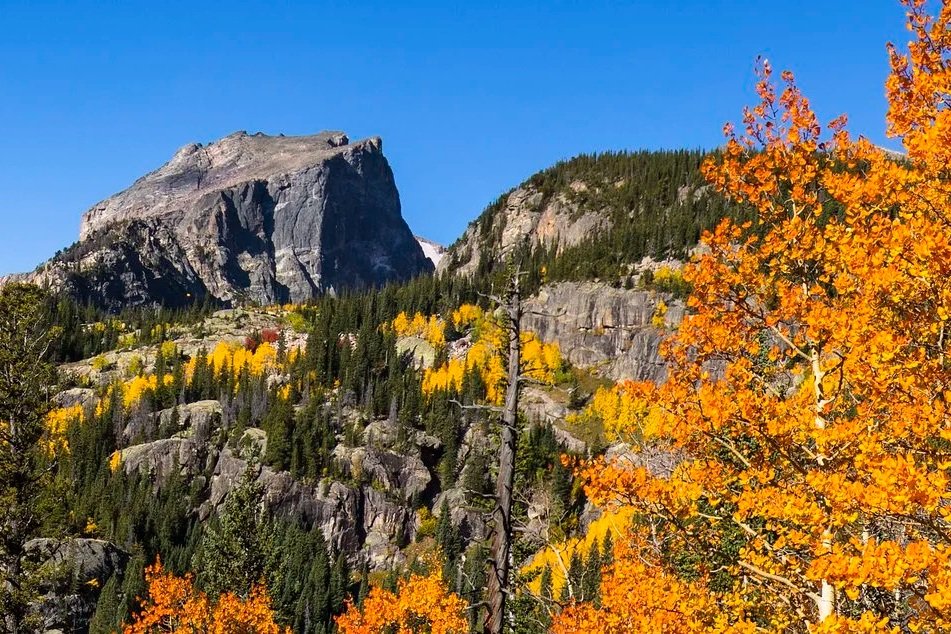
Fall (The Short Aspen Window)
Fall in RMNP is brief but striking. Aspen trees turn golden, elk bugle across the meadows, and daytime temperatures cool significantly.
The peak color window is short — often late September into early October — and varies year to year. Because it’s limited, fall weekends at popular ceremony sites fill quickly.
After peak color, the landscape transitions rapidly. By mid-to-late October, weather can shift toward early winter conditions, especially at higher elevations.
Best For:
Couples who prioritize golden aspen backdrops and are willing to plan carefully around a narrow seasonal window.
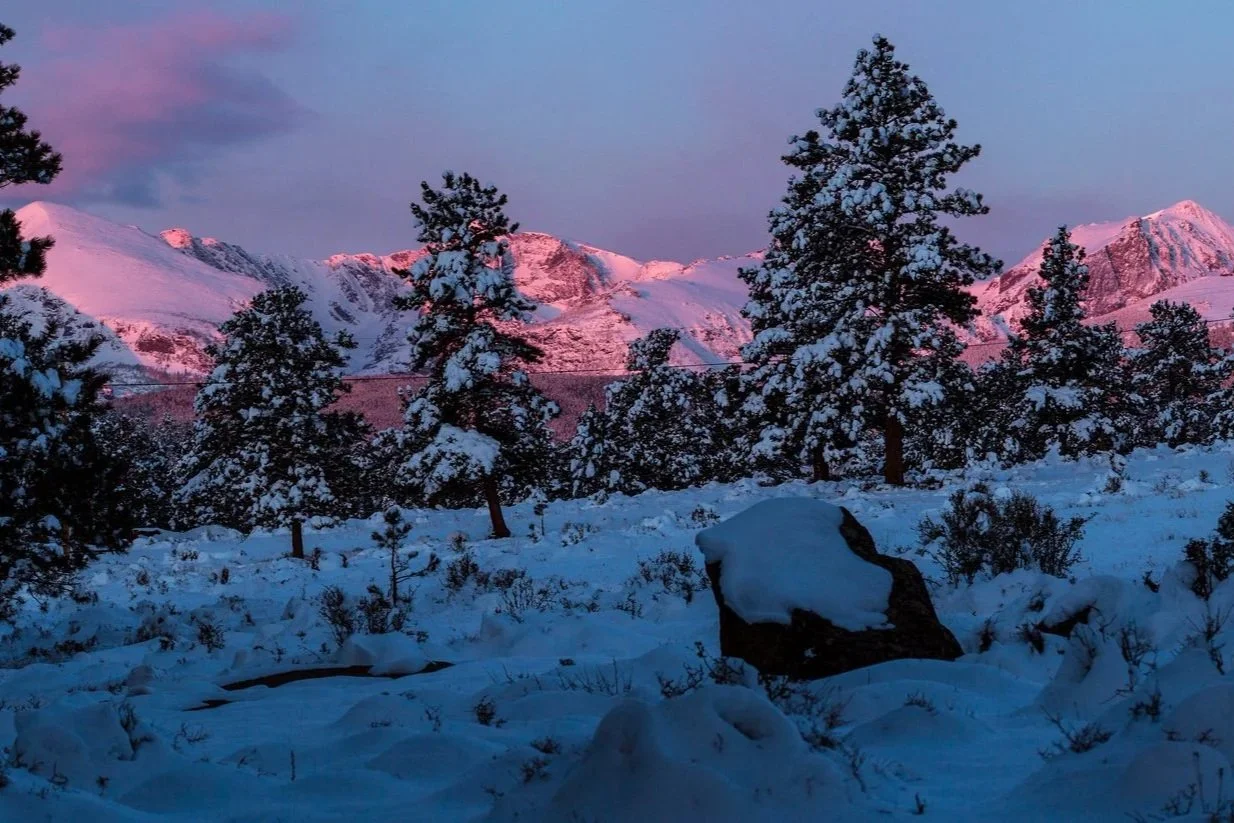
Winter (Snow, Road Closures & Quiet)
Winter transforms Rocky Mountain National Park into a quieter, snow-covered landscape. Visitor traffic drops significantly, and certain ceremony sites — like Bear Lake — are only available during winter months.
However, road closures are common. Trail Ridge Road closes seasonally, limiting cross-park access. Snow and ice affect parking lots, walkways, and mobility.
Winter ceremonies often require flexibility, proper attire, and comfort with colder conditions. The reward is a calmer, more subdued atmosphere.
Best For:
Couples who value privacy, snowy alpine backdrops, and fewer crowds — and who are comfortable with winter logistics.
If you’re deciding between seasons across Colorado — not just inside Rocky Mountain National Park — I break down snowpack realities, tourism patterns, and regional differences in more depth in my guide on Best Time to Elope in Colorado.
What a Rocky Mountain National Park Elopement Day Could Actually Look Like
Rocky Mountain National Park elopements aren’t just about picking a lake and showing up. Between timed entry corridors, summer traffic, ceremony site restrictions, and mountain light windows, your day needs intentional pacing. Below are two example timelines built around a July–August elopement inside the park — one full-day experience and one multi-day celebration. These example timelines intentionally include drive buffers and realistic pacing.
There isn’t one “perfect” timeline inside Rocky Mountain National Park, there’s only the version that fits your guest count, ceremony site, and how you actually want the day to feel.
And that’s where thoughtful planning makes all the difference.
Example 1: Full-Day Coverage (Up to 12 Hours)
Assumptions:
• Ceremony at Sprague Lake (summer guest + vehicle caps apply)
• Lodging in Estes Park
• July/August sunset around 8:30–8:45 PM
• Bear Lake corridor traffic considered
-
10:00 AM — Photographer Arrives at Estes Park Lodging
Detail photos, getting ready, slow morning energy.12:00 PM — First Look Near Lodging
Private vows if desired. This removes pressure from the ceremony site.1:30 PM — Depart for Rocky Mountain National Park
Build in 30 minutes for gate entry + corridor traffic.2:15 PM — Enter Park & Scenic Pull-Off Portrait Stop
Short portrait window while light is still high.3:15 PM — Depart Toward Sprague Lake
Bear Lake corridor traffic can slow significantly in summer.3:45 PM — Arrive Early at Ceremony Site
Buffer built in for parking turnover and guest coordination.5:30 PM — Guests Arrive (Carpool Required)
3 vehicle cap in summer means arrivals must be staggered.6:00 PM — Ceremony at Sprague Lake
Short and intentional (10–15 minutes).6:30 PM — Family Portraits
Complete efficiently before peak golden hour crowd surge.7:00 PM — Golden Hour Portraits Around Sprague Lake
8:30 PM — Sunset & Blue Hour
9:15 PM — Depart Park
Expect slower exit traffic in summer evenings.10:00 PM — Return to Estes Park Lodging
Example 2: Multi-Day Experience (16 Hours Across 2 Days)
This approach reduces pressure and spreads the experience out intentionally — especially helpful in peak summer season.
-
Day One — Adventure & Portrait Focus (8 Hours)
Lodging: Estes Park
Primary Location: Bear Lake Corridor1:30 PM — Meet at Lodging
2:00 PM — Depart for Park
30–40 minute traffic buffer built in.2:45 PM — Enter Park + Parking Transition
3:15 PM — Short Hike / Lakeside Portrait Session
6:30 PM — Move to Secondary Overlook (Drive Buffer 20–30 Minutes)
Traffic between corridor pull-offs can be unpredictable in summer.7:30 PM — Sunset Portrait Location
8:45 PM — Blue Hour + Headlamp Photos
9:30 PM — Depart Park
10:00 PM — Return to Lodging
Day Two — Ceremony Focus (8 Hours)
Ceremony Site: 3M Curve
Guest Count: 15 (3 vehicle cap)9:30 AM — Slow Morning Coverage at Lodging
11:30 AM — Depart for Scenic Midday Portrait Location
12:15 PM — Portrait Stop
2:00 PM — Return to Lodging for Break
This pacing avoids overheating + storm windows.4:00 PM — Depart for 3M Curve
Summer traffic buffer built in.4:45 PM — Arrival + Guest Coordination
5:15 PM — Ceremony
5:45 PM — Family Portraits
6:30 PM — Depart for Quieter Sunset Location (20–30 Minute Drive)
3M Curve can feel busy; moving creates intimacy.7:15 PM — Sunset Portraits
8:45 PM — Blue Hour Close
Why This Matters in Summer
In July and August inside Rocky Mountain National Park:
Traffic in the Bear Lake corridor can spike mid-afternoon
Parking turnover affects ceremony start time
Afternoon storms often roll through after 2 PM
Vehicle caps often become the limiting factor
Exit traffic after sunset is slower than couples expect
Realistic commute buffers are what prevent a timeline from feeling rushed.
Drive Time Reality in Summer
Rocky Mountain National Park is larger than most couples expect, and in July–August, traffic patterns matter just as much as light.
- Estes Park lodging → Bear Lake corridor: 20–40+ minutes depending on time of day
- Between scenic pull-offs inside the park: 15–30 minutes
- Parking turnover delays at popular sites (Sprague Lake, Bear Lake, 3M Curve): 10–20 minutes
- Post-sunset exit traffic can add 20–30 minutes to return drives
A well-built timeline quietly absorbs these variables so your day feels steady instead of rushed.
Summer Storm Windows (July–August)
Afternoon weather patterns are one of the most overlooked planning factors inside Rocky Mountain National Park during peak summer.
- Storm buildup often begins between 1:30–3:00 PM
- Higher elevations are more exposed to lightning and wind
- Short but intense rain cells can pass through quickly
- Golden hour frequently clears beautifully after storms
The key isn’t avoiding storms entirely — it’s building a flexible timeline that anticipates them.
If you want help designing a timeline that accounts for traffic, weather patterns, and ceremony site restrictions — you can start planning your Rocky Mountain National Park Elopement here.
Can You Self-Solemnize in Rocky Mountain National Park?
Yes — you can self-solemnize in Rocky Mountain National Park because Colorado allows self-solemnization statewide.
Colorado is one of the few states where couples can legally marry themselves without an officiant or witnesses. That law applies whether you’re getting married in a courthouse, on National Forest land, or at one of the designated ceremony sites inside Rocky Mountain National Park.
Does the Park Require an Officiant?
No. Rocky Mountain National Park does not require you to bring an officiant if you are legally self-solemnizing under Colorado law. When you apply for your Special Use Permit, you’ll list the details of your ceremony, but the park does not impose additional officiant requirements beyond what the state requires.
If you choose to invite an officiant, they will count toward your guest total. But legally, you do not need one.
How Self-Solemnization Works Logistically
You’ll obtain your Colorado marriage license from a county clerk’s office, complete the ceremony yourselves, and sign the license. No witnesses are required. Afterward, you return the signed license according to county instructions to finalize the marriage.
For couples planning a smaller guest count at sites like Lily Lake Dock or 3M Curve, self-solemnization can simplify headcount logistics and allow for a more private, personal ceremony structure.
If you’d like a step-by-step breakdown of how to self-solemnize in Colorado — including license timelines and paperwork details — I walk through the full process in my guide on How to Self-Solemnize in Colorado.
Self-solemnization is one of the reasons Colorado remains such an elopement-friendly state. Inside Rocky Mountain National Park, it offers couples the ability to keep their ceremony simple, legally sound, and fully their own.
Where to Stay for Your RMNP Elopement
Where you stay will directly impact how smooth your elopement day feels. Because Rocky Mountain National Park has multiple entrances and traffic patterns shift seasonally, lodging proximity matters — especially during peak summer and fall months.
Most couples choose between the east side of the park near Estes Park or the west side near Grand Lake. Each offers a different experience.
Estes Park
Proximity
Estes Park sits directly outside the park’s main eastern entrance and is closest to high-demand ceremony sites like Sprague Lake, 3M Curve, and Bear Lake.
Accessibility
Staying in Estes Park typically means shorter drive times to the most searched ceremony locations. It’s also easier for guests unfamiliar with the area, since the town has more lodging inventory and dining options.
Crowds
Estes Park is busy during summer and peak fall color. Expect higher traffic volume, especially on weekends. Booking lodging well in advance is important if your ceremony falls between June and early October.
Best For
Couples prioritizing proximity to popular ceremony sites and convenience for family.
Grand Lake
Proximity
Grand Lake sits on the west side of Rocky Mountain National Park. It’s closest to Timber Creek Campground Amphitheater and provides access to the park’s quieter western entrance.
Accessibility
Drive times to eastern ceremony sites are significantly longer due to Trail Ridge Road crossings — and that road closes seasonally in winter. If your ceremony site is on the east side, staying in Grand Lake may add logistical complexity.
Crowds
Generally quieter than Estes Park, especially outside of peak summer weekends. The overall atmosphere feels smaller and less commercial.
Best For
Couples choosing west-side ceremony sites or those wanting a calmer base location with fewer tourist concentrations.
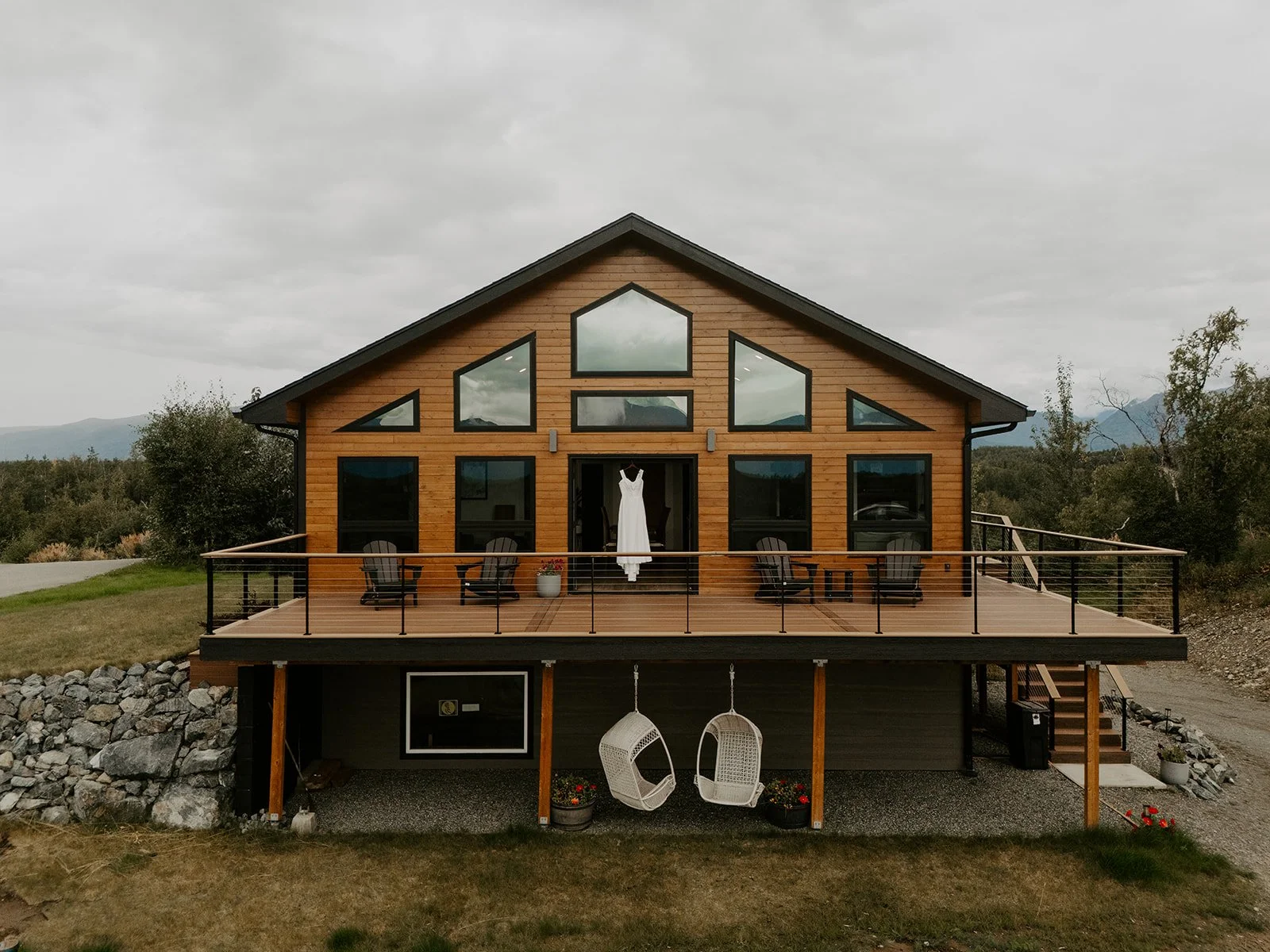
Choosing where to stay isn’t just about finding a beautiful cabin. It’s about aligning lodging location with your ceremony site, guest coordination, and seasonal road access. When those pieces are considered together, your elopement day feels steady instead of rushed.
Alternatives to Rocky Mountain National Park (If It Feels Too Restricted)
Rocky Mountain National Park is iconic — but it isn’t always the best fit.
If your guest count exceeds 30 people, if you want more privacy, or if you don’t love the idea of choosing from a fixed list of designated ceremony sites, there are other areas in Colorado that may align more naturally with your vision.
National Parks prioritize preservation and structure. National Forest and wilderness areas often offer more flexibility.
Here are a few alternatives worth considering.
San Juan Mountains
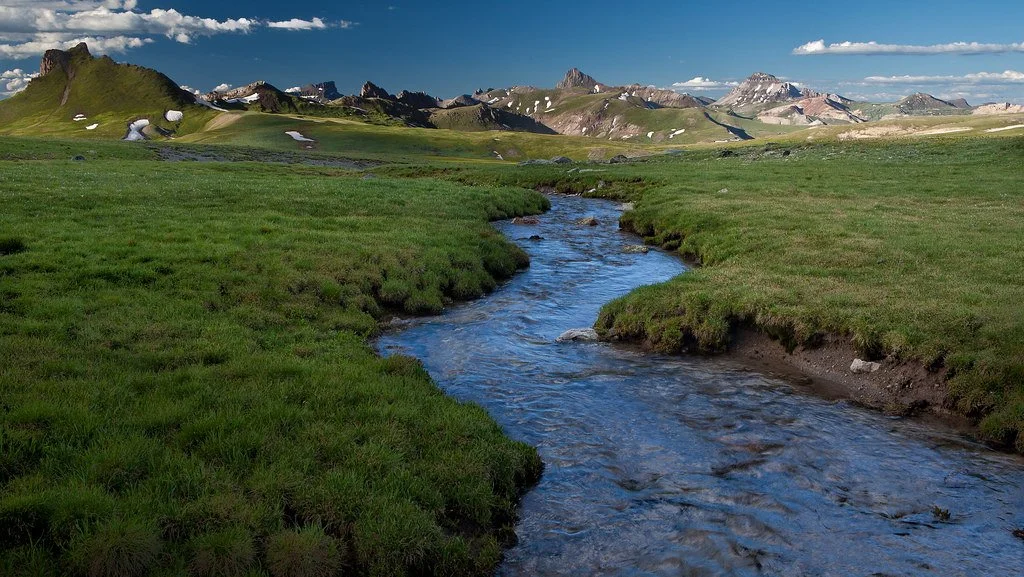
The San Juans offer dramatic alpine terrain, high mountain passes, waterfalls, and expansive views — often with fewer formal ceremony site restrictions than RMNP.
Because much of the region sits on National Forest land, location flexibility is typically greater, especially for small groups. Privacy is also easier to find with the right scouting.
If you’re drawn to mountain scale but don’t want to feel confined to 13 ceremony sites, the San Juans are one of Colorado’s strongest alternatives. (You can explore more in my Best Places to Elope in Colorado guide.)
State Forest State Park
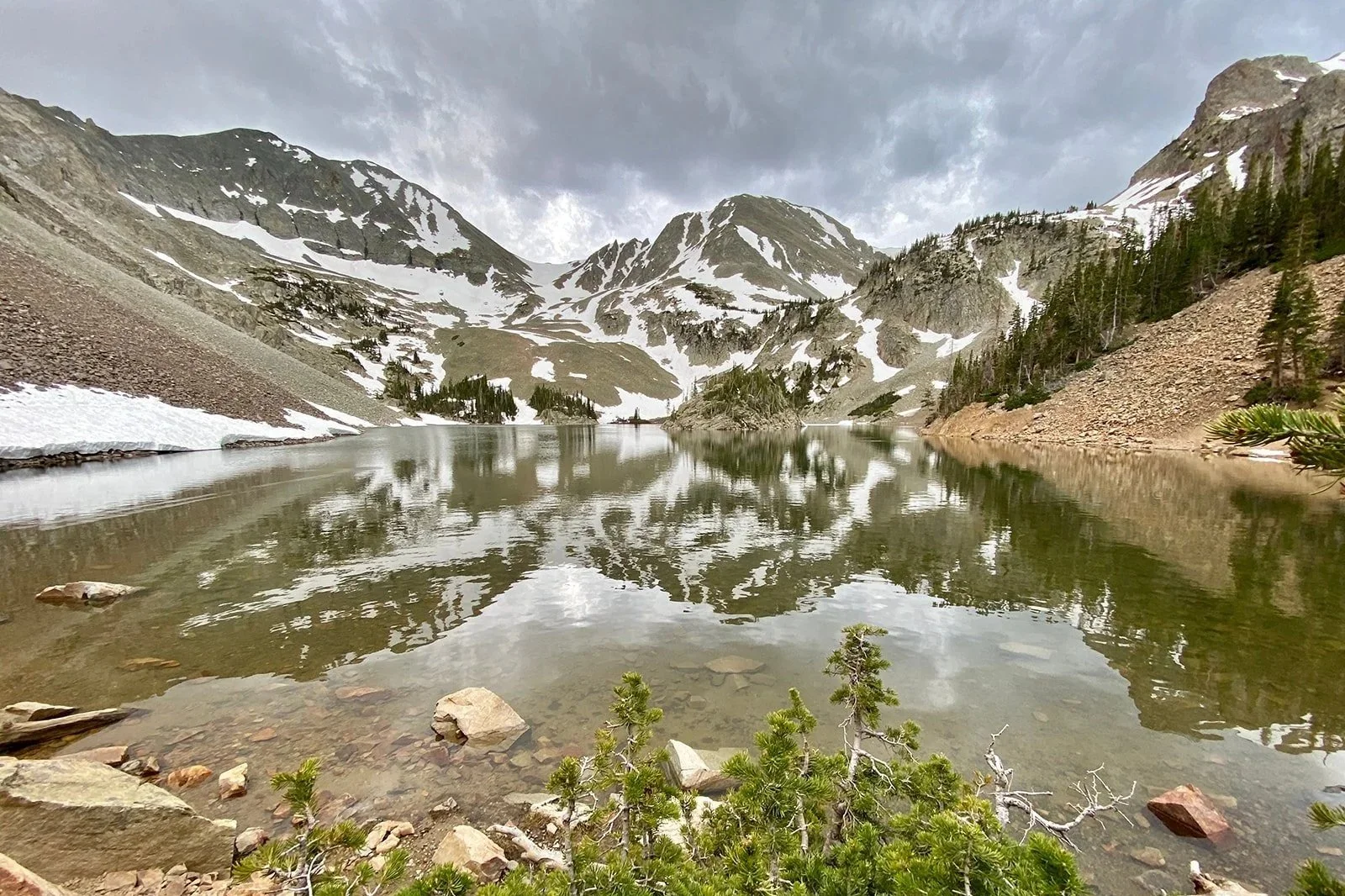
Often referred to as “the moose capital of Colorado,” State Forest State Park offers alpine lakes, mountain backdrops, and open space — but with less tourism volume than Rocky Mountain National Park.
While permits are still required, the overall atmosphere feels quieter. Guest logistics are often simpler, and you may have more flexibility in choosing your ceremony backdrop.
This can be an ideal option for couples wanting alpine scenery without Bear Lake corridor traffic.
Collegiate Peaks Wilderness
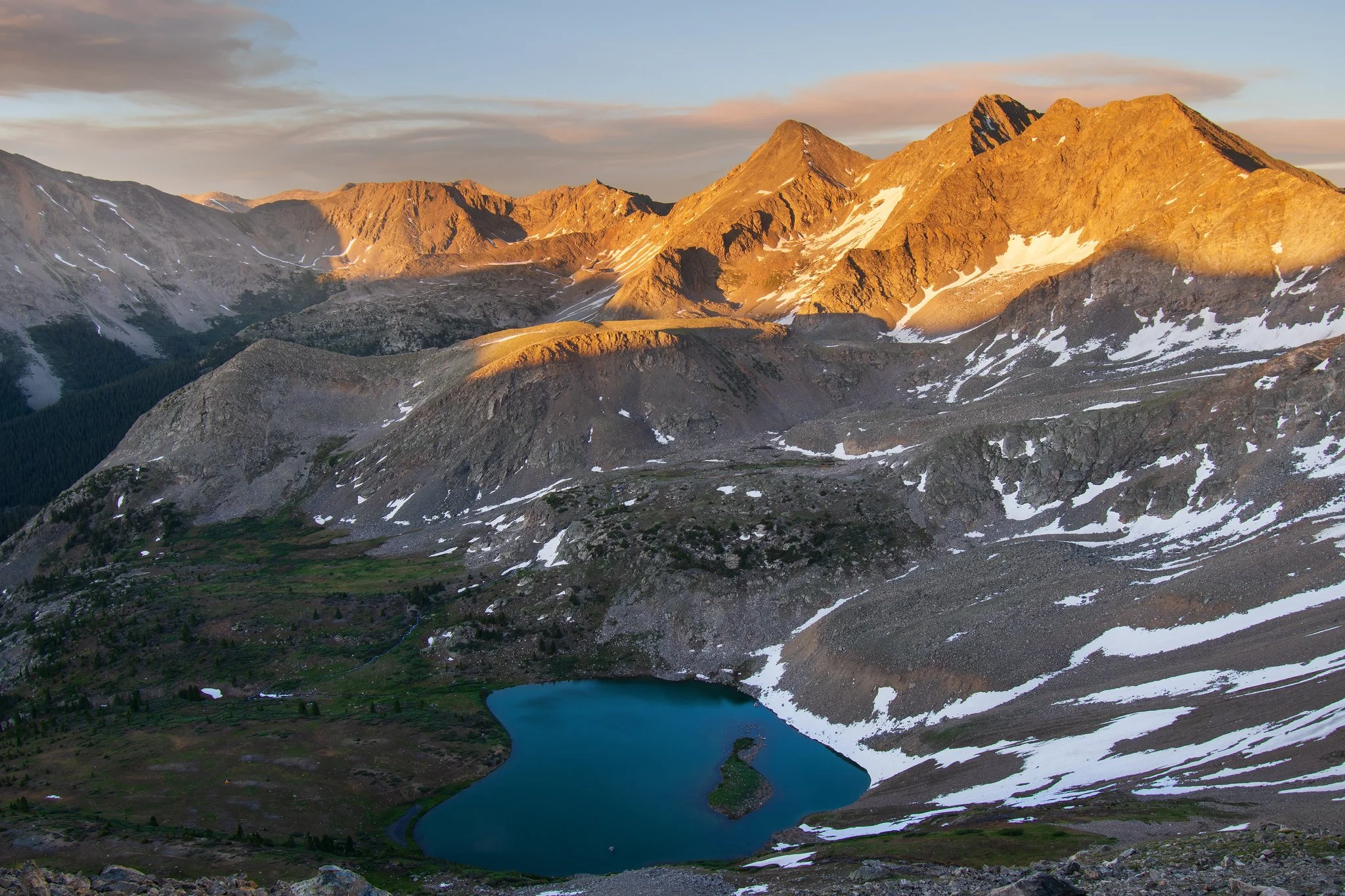
The Collegiate Peaks region offers dramatic mountain views and access to vast National Forest land. Depending on group size and ceremony structure, permit requirements can differ from National Park regulations.
This area is well-suited for couples wanting a more exploratory experience — especially if hiking, dispersed views, or multi-location portraits are part of the vision.
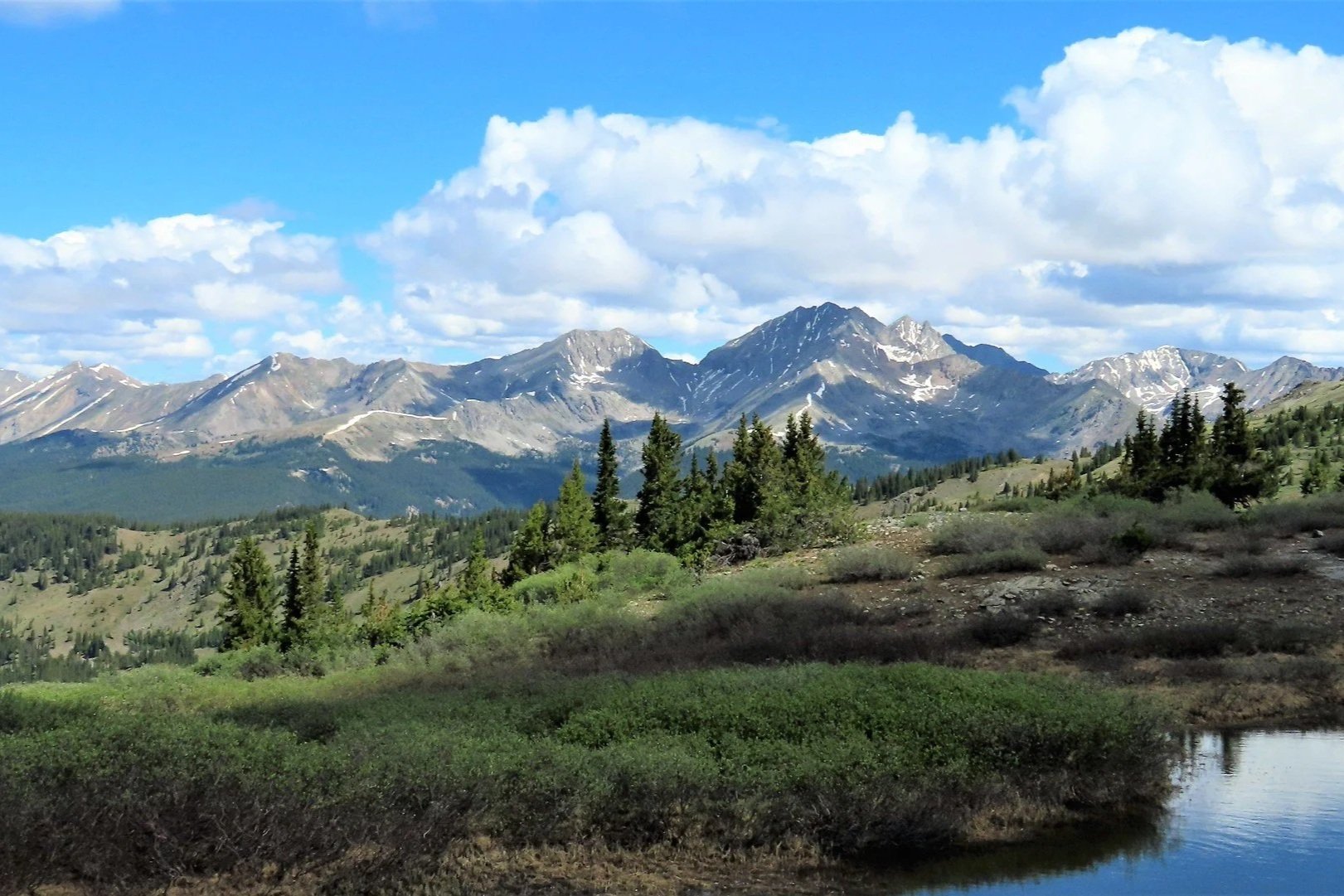
National Forest Options Across Colorado
Outside of National Parks and State Parks, many ceremony-friendly areas sit on National Forest land. Rules vary depending on group size, setup, and impact level, but flexibility is often greater than inside RMNP.
For couples who:
Want a dog-friendly setting
Prefer more privacy
Don’t want strict vehicle caps
Or simply want a location that feels less regulated
National Forest options can provide the same mountain beauty with fewer structural constraints.
Rocky Mountain National Park is a beautiful choice, but it isn’t the only one. Choosing the right location isn’t about the most famous name. It’s about aligning guest count, privacy level, season, and logistics with the kind of day you actually want to experience.
If Rocky Mountain National Park feels too restrictive, we can explore other Colorado mountain regions that better support your guest count and privacy preferences.
Let’s narrow down the right location together →
Guided Rocky Mountain National Park Elopements
Planning an elopement inside Rocky Mountain National Park isn’t complicated, but it is layered.
There are permits to secure, 13 ceremony sites to evaluate, guest and vehicle caps to balance, seasonal road access to consider, and timed entry logistics to coordinate. The difference between a day that feels steady and one that feels rushed usually comes down to how those pieces are handled well before your ceremony date.
When I guide couples through a Rocky Mountain National Park elopement, the process typically includes:
Permit Guidance
Ensuring your selected ceremony site aligns with your guest count, season, and logistical reality — and helping you avoid common application missteps.
Location Narrowing
Instead of defaulting to the most searched site, we narrow your options down to 2–3 ceremony locations that match your priorities — privacy, accessibility, light direction, and overall atmosphere.
Contingency Planning
Mountain weather, wildlife movement, and seasonal access are real factors inside RMNP. Your timeline is built with flexibility in mind so the day feels grounded, not fragile.
Light Direction & Timeline Design
Each ceremony site performs differently depending on the time of day. Planning around sun direction, wind exposure, and visitor flow ensures the experience feels calm and intentional.
Guest & Vehicle Logistics
Carpool coordination, entrance timing, and understanding how vehicle caps function in practice are part of keeping everything smooth.
Timed Entry Coordination
Even though your wedding permit functions as your entry reservation during your ceremony window, coordinating arrival timing during peak season prevents unnecessary stress.
My Rocky Mountain National Park elopement experiences begin at $4,650 for an intimate local experience (up to 4 hours). This allows space for a meaningful ceremony, portraits in multiple areas of the park, and a timeline that doesn’t feel rushed.
If you’re ready to move forward thoughtfully, you can Start Planning Your Rocky Mountain National Park Elopement through the contact form below. From there, we’ll talk through your guest count, season, and overall vision — and determine whether RMNP is the right fit.
You can view full experience details and pricing options here → Elopement Pricing Page

Get Inspired By Real Elopements
Learn More About Eloping In Colorado

Bethany Wolf
Guided Public-Lands Elopement Photographer
✔ permits & logistics handled
✔ timeline design
✔ location guidance
✔ travel included nationwide
Josh and Alexa’s intimate elopement at Blackwater Falls State Park shows what a calm, intentional West Virginia elopement day can look like — from a private waterfall ceremony to a lakeside picnic with champagne and homemade cake.